
Wetlands drained
Florida and Gulf Coast development keeps converting the marsh and swamp alligators depend on, which is the pressure that remains after hunting was controlled.
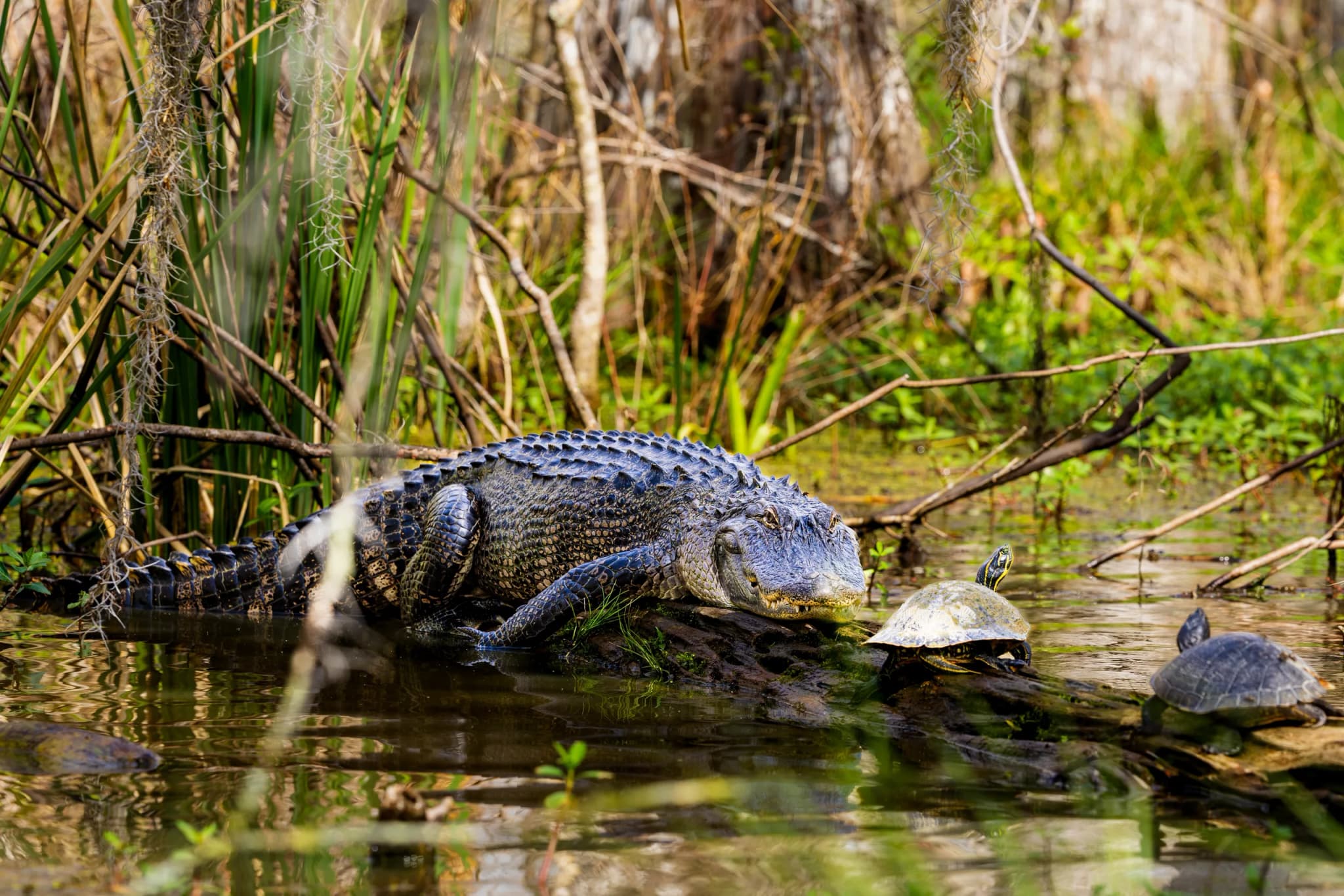
The American alligator (Alligator mississippiensis) is a large freshwater crocodilian native to the southeastern United States, where it inhabits swamps, rivers, lakes, marshes, and brackish coastal wetlands across states including Florida, Louisiana, Georgia, and Texas. Adults can exceed 13 feet in length and 1,000 pounds, with males considerably larger than females, and the species is distinguished from the American crocodile by its broader, rounded snout and the near-invisibility of its lower teeth when its mouth is closed.
American alligators are keystone animals in their wetland habitats: the depressions they excavate with their bodies, known as gator holes, retain water during dry seasons and provide refuge for fish, invertebrates, birds, and other wildlife. The species was listed as Endangered under the U.S. Endangered Species Act in 1967 following severe population declines driven by unregulated hunting for hides, but recovery programs and federal protections brought it back to Least Concern status on the IUCN Red List by 1987. Today, habitat loss from coastal development, prolonged drought linked to climate change, and the spread of invasive species such as the Burmese python (Python bivittatus) in the Florida Everglades remain the primary pressures on local populations.
Florida and Gulf Coast development keeps converting the marsh and swamp alligators depend on, which is the pressure that remains after hunting was controlled.
Canals and flood control change the timing of wet and dry seasons that nesting depends on.
Thousands are trapped and killed each year after complaints, most of them animals that had been fed by people.
Agricultural runoff concentrates in a long-lived predator at the top of the food chain.
No. The American Alligator is assessed as Least Concern on the IUCN Red List, meaning it is currently widespread and abundant enough not to be at risk. That is a global assessment, and a global assessment can sit on top of steep decline in one country or region.
American alligators are opportunistic predators that eat fish, turtles, snakes, wading birds, and mammals such as deer and nutria. Juveniles focus on insects, small fish, and crustaceans, shifting to larger prey as they grow. Adults at the top of the food chain help regulate prey populations across freshwater wetland ecosystems.
American alligators live in freshwater wetlands across the southeastern United States, from North Carolina south through Florida and west to eastern Texas. They favor slow-moving rivers, swamps, marshes, and lakes, and are most densely concentrated in Louisiana and Florida, where habitat remains extensive.
American alligators can reach roughly 11 miles per hour in short bursts on land, though they tire quickly and rarely chase prey away from water. They are far more effective as aquatic ambush predators, lunging from the water's edge to take animals that come to drink.
Male American alligators commonly reach 11 to 13 feet in length and can exceed 14 feet in exceptional cases, while females are notably smaller, typically under 10 feet. Large males in Louisiana and Florida have been recorded weighing more than 1,000 pounds.
American alligators live roughly 35 to 50 years in the wild, with captive individuals occasionally surpassing 70 years. Growth slows considerably once they reach sexual maturity, and older animals in undisturbed habitats such as the Everglades or Atchafalaya Basin can become very large over decades.
No projects have listed this species yet.