
Poisoned carcasses
Baits set out for pumas and foxes kill condors in numbers, and dozens can die at a single carcass.
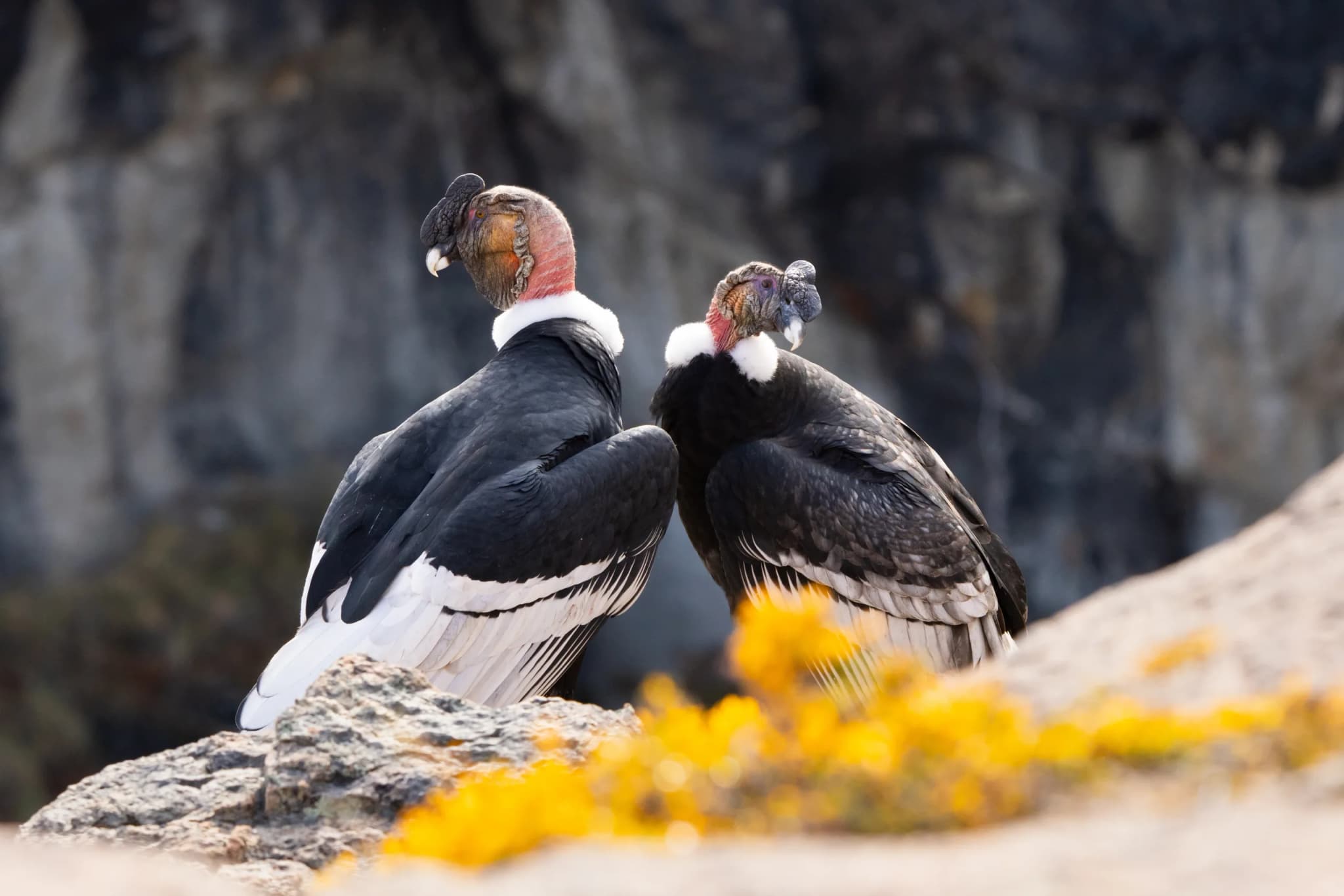
The Andean Condor (Vultur gryphus) is the largest flying bird in the world by combined wingspan and weight, with adults reaching wingspans of up to 3.3 meters and weighing as much as 15 kilograms. It ranges across the full length of the Andes mountain range, from Venezuela and Colombia in the north to Tierra del Fuego in the south, and along adjacent Pacific coastal regions, where it relies on thermal air currents to soar at altitudes exceeding 5,000 meters with minimal effort.
As an obligate scavenger, the Andean Condor plays a precise and measurable role in its environment: it removes large animal carcasses that would otherwise become vectors for disease, and its highly acidic digestive system neutralizes pathogens including anthrax and botulism before they can spread. The species is listed as Vulnerable on the IUCN Red List, with the population facing ongoing pressure from secondary poisoning via lead-contaminated carcasses left by hunters, deliberate persecution rooted in the mistaken belief that condors prey on livestock, habitat loss, and the species' exceptionally slow reproductive rate of one chick every two years at most.
Baits set out for pumas and foxes kill condors in numbers, and dozens can die at a single carcass.
A pair raises a single chick at a time and the young take years to mature, so every adult lost takes a decade to replace.
Condors are still killed on the belief that they take live lambs, which they do not.
Power lines and turbines strike large soaring birds, and the Andes carry an expanding grid.
Not in the strict sense. The Andean Condor is listed as Vulnerable on the IUCN Red List, the first of the three threatened categories and the one below Endangered. It qualifies on a decline of 30% or more, or on a population under 10,000 mature individuals.
The Andean condor has a wingspan of up to 10.5 feet (3.2 meters), making it the largest flying bird in the world by combined wingspan and weight. Adult males can weigh up to 33 pounds (15 kilograms), according to the Cornell Lab of Ornithology.
An Andean condor stands roughly 3.3 feet (1 meter) tall from foot to crown. That height, combined with its massive wingspan, makes it an imposing presence on the Andean cliff ledges where it nests and roosts.
The Andean condor lives along the length of the Andes Mountains, from Venezuela and Colombia south through Chile and Argentina to Tierra del Fuego. It favors open grasslands, alpine zones, and coastal cliffs where carrion is accessible and thermal updrafts support its soaring flight.
Andean condors live across the Andes Mountains and adjacent Pacific coastline of South America, ranging from Colombia to Patagonia. They depend on open, rugged terrain, including high-altitude páramo grasslands and rocky coastal bluffs, where they can spot carcasses from the air.
The Andean condor is a scavenger that feeds almost entirely on the carcasses of large mammals, including deer, llamas, alpacas, and along the Pacific coast, marine mammals such as sea lions. It can go days between meals and will travel more than 100 miles in a single day searching for food.
The Andean condor is a large vulture native to South America and the national symbol of several Andean nations. Listed as Vulnerable on the IUCN Red List, it faces ongoing pressure from lead poisoning, habitat loss, and persecution, with wild populations remaining small and fragmented across the Andes.
No projects have listed this species yet.