
Sandeels fished and shifting
Puffin chicks need small oily fish, and both industrial sandeel fishing and warming water have made them harder to find.
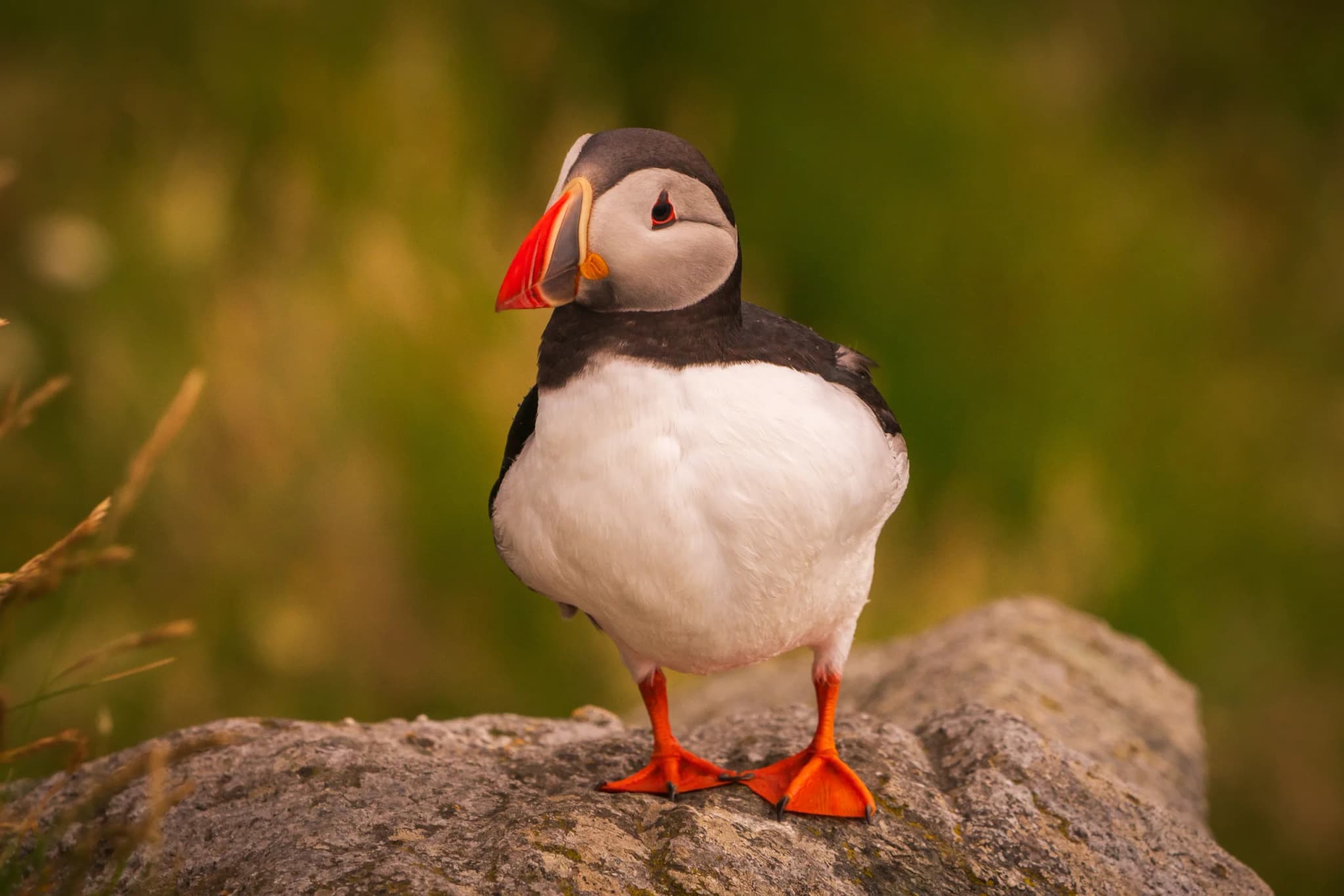
The Atlantic Puffin (Fratercula arctica) is a small seabird in the family Alcidae, recognizable by its triangular, vividly colored bill, which it uses to carry multiple small fish crosswise in a single dive. It spends most of its life on the open North Atlantic Ocean, coming ashore only to breed in clifftop or grassy-slope colonies across Iceland, Norway, the British Isles, and the northeastern coast of North America. Puffins are pursuit divers, propelling themselves underwater with their wings to hunt sand eels, herring, and capelin, and they nest in burrows they excavate themselves or take over from rabbits and other animals.
The Atlantic Puffin is listed as Vulnerable on the IUCN Red List, with the global population having declined significantly over recent decades. The primary drivers of that decline are the collapse of prey fish stocks due to commercial overfishing and climate-driven shifts in sea surface temperatures, which push forage fish away from traditional breeding grounds. Predation by introduced mammals such as rats and American mink at colony sites compounds the pressure, and at-sea mortality from bycatch in gill nets remains a documented concern across parts of the range. Iceland hosts the largest single breeding population in the world, and the productivity of Icelandic colonies is used as a key indicator of broader North Atlantic ecosystem health.
Puffin chicks need small oily fish, and both industrial sandeel fishing and warming water have made them harder to find.
Prey is moving north and deeper, pushing adults to bring back fish too large for a chick to swallow.
Introduced mammals take eggs and chicks from burrows on islands that evolved without them.
Puffins spend most of the year at sea, where they encounter spills, discarded gear, and ingested plastic.
Not in the strict sense. The Atlantic Puffin is listed as Vulnerable on the IUCN Red List, the first of the three threatened categories and the one below Endangered. It qualifies on a decline of 30% or more, or on a population under 10,000 mature individuals.
Atlantic puffins are roughly the size of a robin, standing about 10 inches tall and weighing between 12 and 19 ounces. Their stocky build and waterproof plumage help them dive up to 200 feet to catch sand eels, herring, and capelin in cold North Atlantic waters.
Atlantic puffins breed on rocky coastal cliffs and offshore islands across the North Atlantic, with major colonies in Iceland, Norway, the Faroe Islands, and smaller populations in Maine and Newfoundland. Outside breeding season they spend most of their lives far out at sea, riding open ocean swells through winter.
Atlantic puffins hunt small schooling fish, with sand eels making up the bulk of their diet in most colonies, supplemented by herring, sprats, and capelin. They pursue prey by diving and swimming underwater using their wings as flippers, and can hold a dozen or more fish crosswise in their bill at once thanks to spiny backward-facing projections on their palate.
The IUCN Red List classifies the Atlantic puffin as Vulnerable, driven largely by climate-linked declines in sand eel populations, which reduce breeding success when adults cannot find enough food for chicks. Introduced rats and mink devastate island colonies, and chronic oil pollution kills wintering birds far out at sea.
A puffin pair raises one chick, called a puffling, per year in a burrow dug up to a meter deep into cliff-top turf or soil. Both parents share incubation for about 40 days, then feed the puffling for roughly six weeks before it fledges alone at night, navigating by starlight to the open ocean.
Great black-backed gulls are the most persistent aerial predators at breeding colonies, striking puffins in flight and forcing them to drop fish. Great skuas also harass and occasionally kill adults, while peregrine falcons take birds at some cliff colonies, and introduced mammals like rats and American mink raid burrows to destroy eggs and pufflings.
No projects have listed this species yet.