
Lead from ammunition
Eagles scavenging gut piles and unretrieved carcasses swallow lead fragments, which is now a leading cause of death in the recovered population.
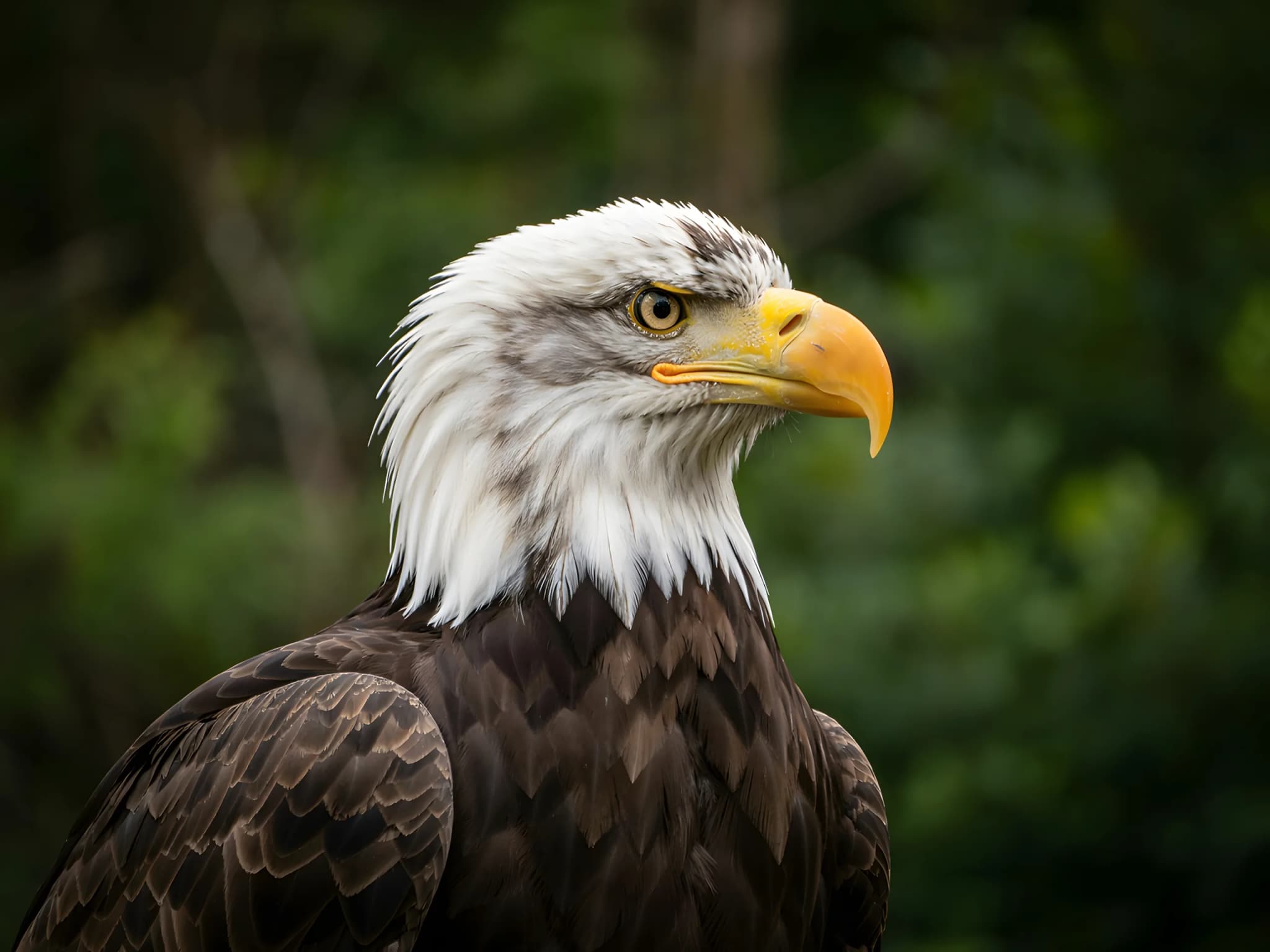
The Bald Eagle (Haliaeetus leucocephalus) is a large bird of prey native to North America, recognized by the white-feathered head and tail of adults, which contrasts with its dark brown body and wings. It inhabits coasts, rivers, lakes, and wetlands from Alaska and northern Canada down through the contiguous United States and into northern Mexico, favoring areas with open water, tall trees for nesting, and reliable fish populations. As an apex predator and obligate scavenger, it helps regulate fish and waterbird populations and plays a significant role in nutrient cycling by consuming carrion, including beached marine mammals along coastal regions.
The species was listed as Endangered under the U.S. Endangered Species Act in 1978, primarily due to the widespread use of the pesticide DDT, which caused eggshell thinning and steep population declines throughout the mid-twentieth century. Following the ban of DDT in the United States in 1972 and decades of legal protection under the Bald and Golden Eagle Protection Act, populations recovered substantially, and the species was delisted in 2007. Today the main threats include lead poisoning from ingesting spent ammunition in carcasses, habitat loss along shorelines, and collision with vehicles and power lines. The IUCN Red List currently classifies it as Least Concern.
Eagles scavenging gut piles and unretrieved carcasses swallow lead fragments, which is now a leading cause of death in the recovered population.
Large raptors bridge the conductors on older power poles, which retrofitting fixes permanently.
DDT is gone but mercury and PCBs still concentrate up the food chain into a fish-eating bird.
Nest trees along lakes and rivers are the first to go when waterfront is built on.
No. The Bald Eagle is assessed as Least Concern on the IUCN Red List, meaning it is currently widespread and abundant enough not to be at risk. That is a global assessment, and a global assessment can sit on top of steep decline in one country or region.
Adult bald eagles measure 28 to 40 inches in length with a wingspan of 6 to 8 feet, making them one of North America's largest raptors. Females are noticeably larger than males, a trait common across eagle species, and can weigh up to 14 pounds along Alaska's coasts where salmon are abundant.
The bald eagle is the national emblem of the United States, representing strength, freedom, and sovereignty since the Great Seal was adopted in 1782. Several Indigenous nations also hold the eagle sacred, associating it with spiritual power, courage, and a connection between the human world and the sky.
Bald eagles produce a series of high-pitched, chirping whistles that many people find surprisingly thin and reedy for such a large bird. The dramatic screech heard in films and television is typically the call of a red-tailed hawk, dubbed over bald eagle footage because the eagle's actual call is considered unimpressive on screen.
Bald eagles can carry roughly four to five pounds in flight, limited by their own body weight and wing-loading physics. They hunt fish, waterfowl, and rabbits, and will drag heavier prey to shore rather than lift it, which is why reports of eagles carrying large animals are almost always exaggerated.
The bald eagle became the national bird of the United States on June 20, 1782, when Congress approved the final design of the Great Seal. The bird's range across the North American continent and its absence from other nations made it a fitting symbol of the newly independent republic.
The bald eagle was chosen because it is native only to North America, giving the new United States a symbol distinct from European heraldic animals. Charles Thomson, who finalized the Great Seal's design, described the species as a long-lived, powerful bird that represented the strength and independence of the emerging nation.
