
Poaching for horn
Horn is keratin with no medicinal effect and still sells for enough to fund organized, armed poaching.
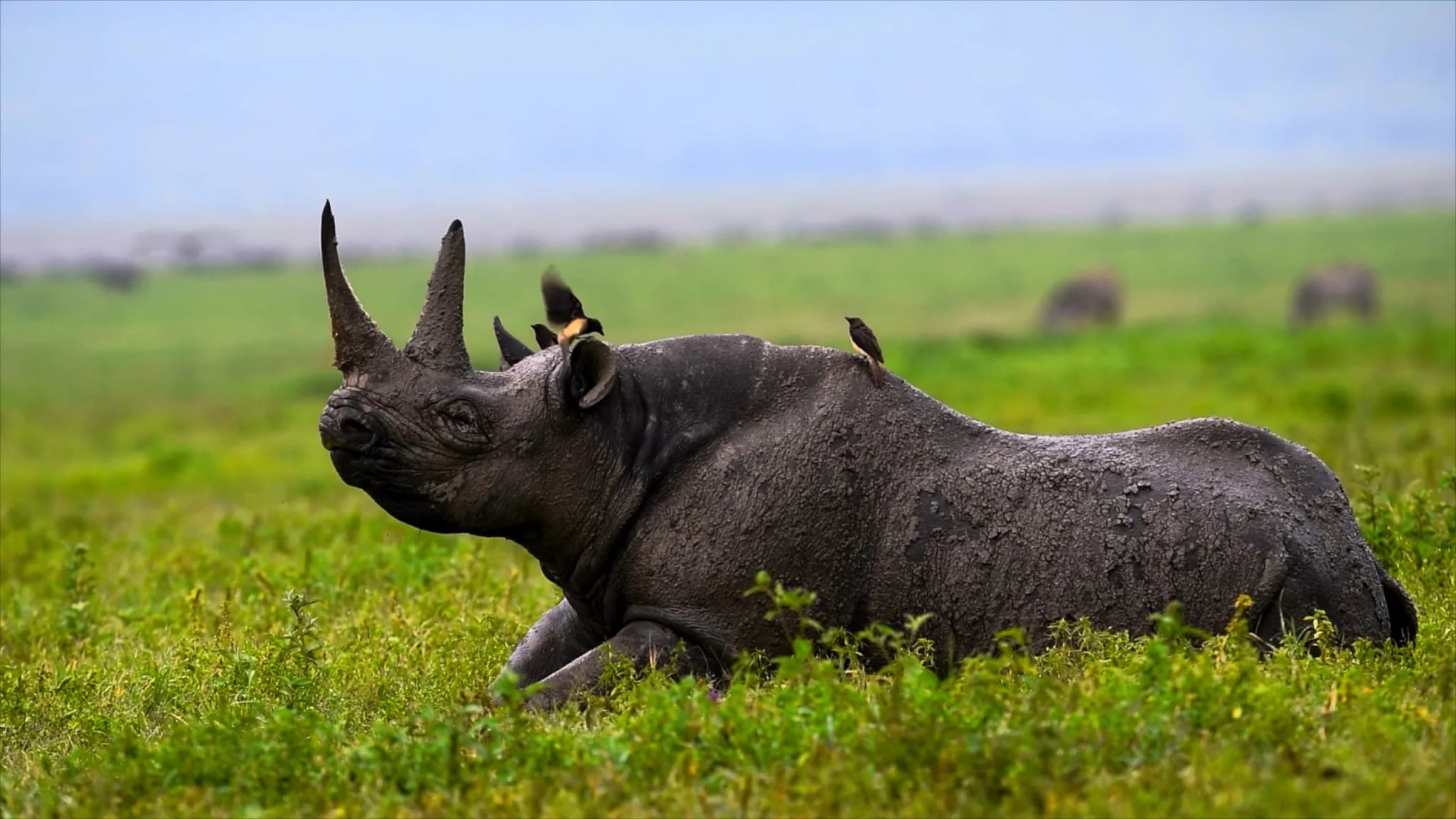
The black rhinoceros (Diceros bicornis) is a large, browsing herbivore native to eastern and southern Africa, distinguishable from the white rhinoceros by its pointed, prehensile upper lip, which it uses to grasp leaves, shoots, and thorny branches from shrubs and trees. Four recognized subspecies exist, of which one, the western black rhinoceros (Diceros bicornis longipes), was declared extinct by the IUCN in 2011. Adults typically weigh between 800 and 1,400 kilograms and are largely solitary, occupying home ranges that vary considerably depending on habitat quality and water availability.
Black rhinoceroses play a meaningful role in shaping the woody vegetation of the savanna and bushveld landscapes they inhabit, with their browsing behavior helping to control shrub density in ways that benefit other species. The primary driver of their Critically Endangered status, as listed on the IUCN Red List, is poaching for their keratin horns, which are trafficked predominantly to markets in Asia. Habitat loss, human-wildlife conflict, and the historically catastrophic commercial hunting of the twentieth century reduced a population estimated at over 70,000 individuals in the 1960s to a low of approximately 2,410 by 1995, according to the IUCN African Rhino Specialist Group. Intensive conservation efforts have since brought numbers to an estimated 6,195 individuals as of the most recent IUCN assessment.
Horn is keratin with no medicinal effect and still sells for enough to fund organized, armed poaching.
Three subspecies are gone and the survivors live in fenced populations that need active genetic management.
Black rhinos are browsers that once ranged widely and now exist almost entirely inside protected areas.
Numbers track enforcement closely, and a reserve that cannot keep rangers in the field loses its rhinos.
Yes. The Black Rhinoceros is listed as Critically Endangered on the IUCN Red List, the last category before a species is considered Extinct in the Wild. A species qualifies on a population decline of 80% or more, or on fewer than 250 mature individuals remaining.
Black rhinoceros live in the savannas, shrublands, and thornbush of eastern and southern Africa, with the largest populations in Kenya, Tanzania, Zimbabwe, Namibia, and South Africa. They favor semi-arid habitats where dense thickets offer cover and water sources are accessible within their home range.
Black rhinoceros are Critically Endangered, according to the IUCN Red List, primarily because of poaching for their keratin horns, which are trafficked illegally to markets in Asia. Habitat loss to agriculture and human settlement has also reduced the species from an estimated 70,000 individuals in the 1960s to roughly 6,500 today.
Black rhinoceros are browsers, feeding on leaves, shoots, thorny shrubs, and fruit from woody plants such as acacia and euphorbia using their distinctive hooked upper lip. This prehensile lip sets them apart from the grazing white rhinoceros and allows them to pull vegetation from dense, thorny thickets.
Roughly 6,400 black rhinoceros remain in the wild, according to the IUCN Red List, a cautious recovery from a low of around 2,400 individuals in the 1990s. Most now live in Kenya, Namibia, South Africa, and Zimbabwe, where intensive anti-poaching patrols and careful translocation programs have driven the slow population rebound.
Black rhinoceros are not black at all, sharing the same grey skin color as white rhinoceros, and the name most likely derives from the dark, wet mud that clings to them after wallowing. The more meaningful distinction is shape: the black rhino has a hooked, prehensile upper lip suited for grasping woody shrubs, while the white rhino has a wide, flat lip for grazing grass.
A black rhinoceros calf, born weighing around 35 to 50 kilograms, stays close to its mother for two to four years, learning which Acacia and Euphorbia species to browse and how to navigate territory marked by communal dung middens. Mothers are fiercely protective and will charge lions or spotted hyenas that threaten a calf, running at speeds up to 55 kilometers per hour despite their bulk.
Know an organization protecting the Black Rhinoceros? Add it, or claim your own page. Listing is free.
Add one