
Ship strikes
Blue whales feed along shipping lanes off California, Sri Lanka, and Chile, and collisions kill animals in a population still recovering from whaling.
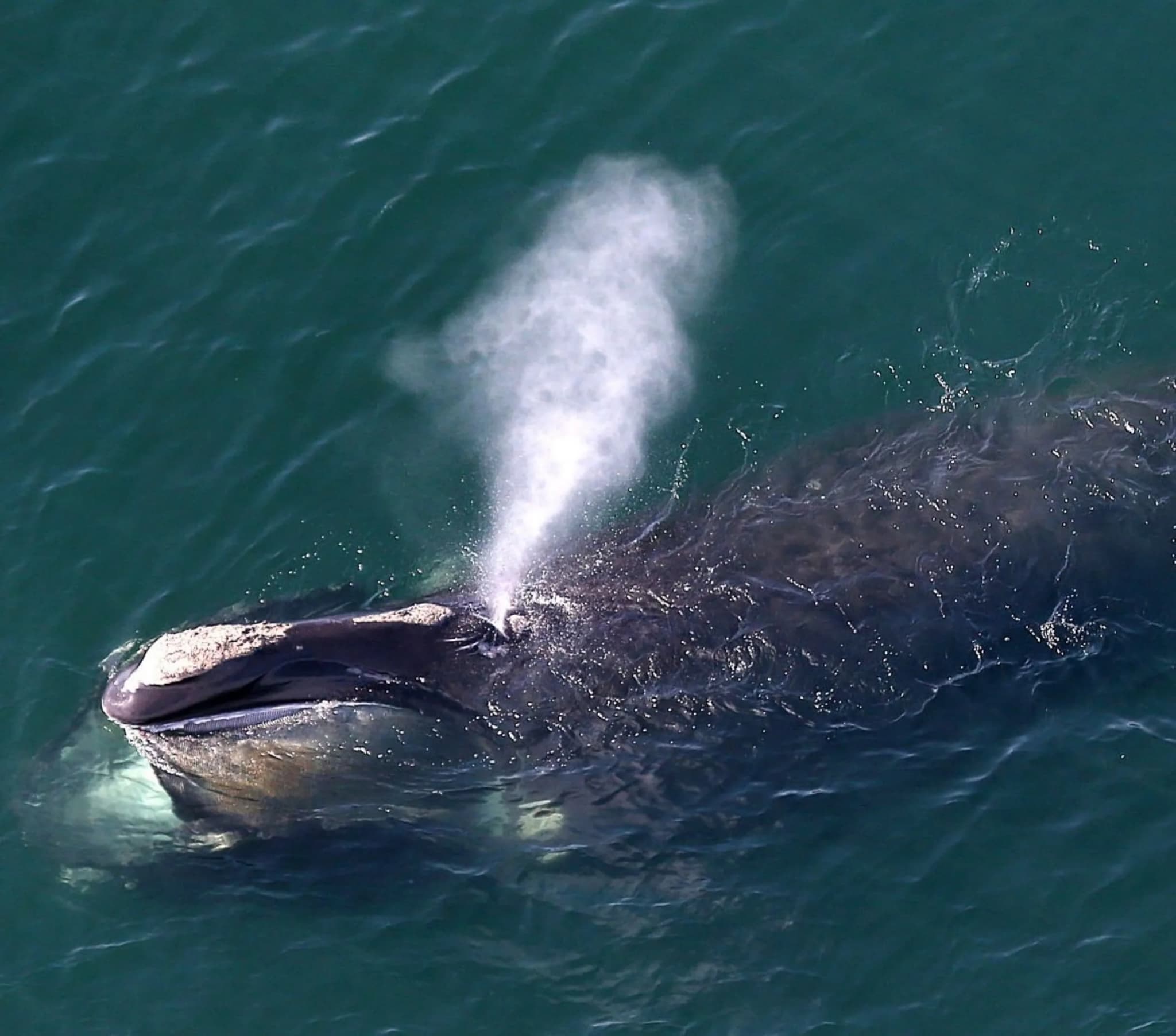
The blue whale (Balaenoptera musculus) is the largest animal known to have ever existed, reaching lengths of up to 33 meters and weights exceeding 150 metric tons. Found in every ocean on Earth, blue whales undertake some of the longest migrations of any mammal, moving between cold, nutrient-rich polar feeding grounds and warmer low-latitude waters where they calve. As filter feeders, they consume up to 4 metric tons of Antarctic krill (Euphausia superba) per day during peak feeding season, and their iron-rich fecal plumes play a measurable role in fertilizing surface waters and supporting the marine food web.
The blue whale was listed as Endangered on the IUCN Red List, a status that reflects the lasting damage inflicted by commercial whaling before the International Whaling Commission moratorium took effect in 1986. The global population, estimated by the IUCN at between 10,000 and 25,000 individuals, remains a fraction of pre-whaling numbers. Recovery is slow because blue whales reach sexual maturity late and typically produce a single calf every two to three years. Today, ship strikes, entanglement in fishing gear, underwater noise pollution that disrupts their low-frequency communication, and the shifting distribution of krill driven by ocean warming are the principal threats the species continues to face.
Blue whales feed along shipping lanes off California, Sri Lanka, and Chile, and collisions kill animals in a population still recovering from whaling.
Blue whales eat almost nothing but krill, and warming water shifts krill away from the feeding grounds they return to.
Low-frequency calls carry across ocean basins, and shipping noise sits in exactly that range.
Fixed fishing gear catches whales on migration routes, and a large whale can tow rope for months.
Yes. The Blue Whale is listed as Endangered on the IUCN Red List, which means it faces a very high risk of extinction in the wild. A species qualifies on a decline of 50% or more over ten years or three generations, or on fewer than 2,500 mature individuals remaining.
The blue whale is the largest animal known to have ever existed, reaching up to 100 feet in length and 200 tons in weight. A single adult heart is roughly the size of a small car, and a newborn calf already measures around 23 feet at birth.
Blue whales can reach up to 100 feet (30 meters) in length, with females generally growing longer than males. The longest reliably measured individual, recorded during the whaling era in the Southern Ocean, was approximately 110 feet.
Blue whales typically weigh between 100 and 150 tons, with some large females exceeding 200 tons. That makes them heavier than any dinosaur species in the fossil record, including the largest known sauropods.
Blue whales feed almost exclusively on krill, tiny shrimp-like crustaceans, consuming up to 16 tons of them per day during peak feeding season in polar waters. They use baleen plates to filter massive gulps of seawater, a method called lunge feeding.
A blue whale typically weighs between 100 and 150 tons, roughly equivalent to 30 adult African elephants. Their tongue alone can weigh as much as an elephant, according to measurements documented by marine biologists.
Blue whales produce low-frequency moans and pulses, typically between 10 and 40 Hz, that can travel thousands of miles through the ocean. These infrasonic calls, among the loudest produced by any animal, are used for long-distance contact between individuals across entire ocean basins, though exactly how whales interpret and respond to one another's calls is still being studied.