
Conflict over livestock and food
Bears that take sheep or raid bins are killed as problem animals, which fencing and secure storage largely prevent.
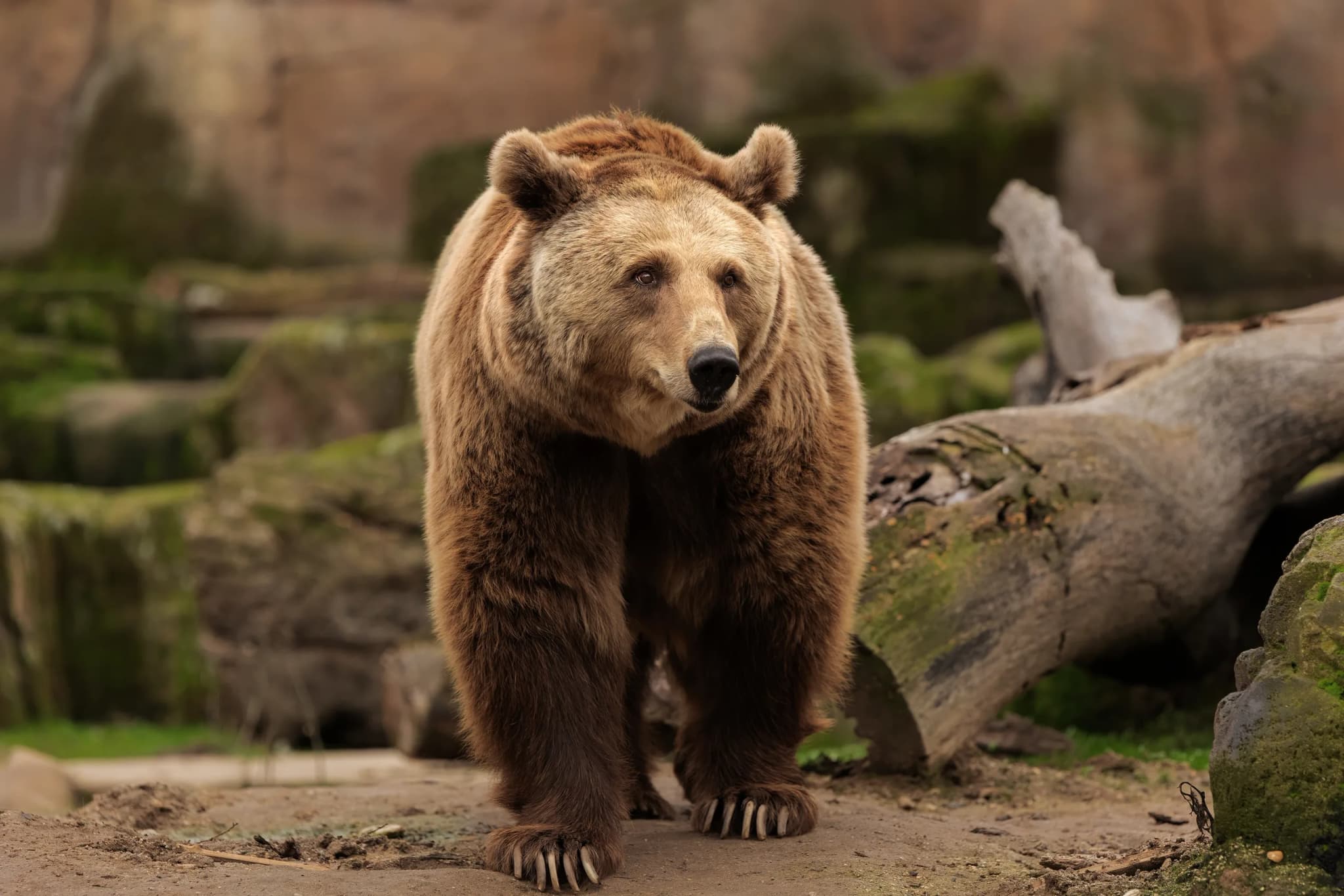
The brown bear (Ursus arctos) is the world's most widely distributed bear species, found across a broad arc of habitat spanning North America, Europe, and Asia. Adults vary dramatically in size depending on geography and diet: coastal brown bears in Alaska, which feed heavily on Pacific salmon, are among the largest terrestrial carnivores on Earth, while interior populations in Central Asia tend to be significantly smaller. Brown bears are omnivores, and their foraging behavior directly shapes the landscapes they inhabit. By digging for roots and ground squirrels, dispersing berry seeds across wide territories, and carrying marine nutrients inland from salmon streams, they function as a significant driver of soil turnover and forest nutrient cycling.
Despite an IUCN Red List status of Least Concern, brown bear populations are unevenly distributed and face real pressure in parts of their range. Habitat fragmentation from agriculture, road infrastructure, and human settlement isolates bear populations and reduces genetic diversity, particularly in Western Europe, where small and fragmented groups persist in the Cantabrian Mountains of Spain, the Pyrenees, and the Dinaric Alps. Retaliatory killing following livestock predation remains one of the primary causes of mortality in human-adjacent populations. Legal hunting, where permitted, is regulated in most range countries, but poaching for bear parts, driven by demand in some traditional medicine markets, continues to affect populations in parts of Asia.
Bears that take sheep or raid bins are killed as problem animals, which fencing and secure storage largely prevent.
European and Asian populations are split into small groups by highways and settlement, with little movement between them.
The Cantabrian, Apennine, and Pyrenean bears number in the tens and are genetically cut off from the rest of Europe.
Bears are still shot outside legal seasons across much of the range, and in some regions poaching exceeds legal harvest.
No. The Brown Bear is assessed as Least Concern on the IUCN Red List, meaning it is currently widespread and abundant enough not to be at risk. That is a global assessment, and a global assessment can sit on top of steep decline in one country or region.
Yes, grizzly bears are brown bears, specifically the North American inland subspecies Ursus arctos horribilis. Coastal brown bears in Alaska and Canada tend to grow larger than grizzlies because salmon, a rich seasonal food source, is far more abundant along the coast than in interior habitats.
Brown bears have color vision and see roughly at the level of a color-blind human, with strong sensitivity to movement. Their eyesight is considered less important than their sense of smell, which they rely on to locate food, including ungulates, spawning salmon, and berry patches, across large territories.
Yes, the grizzly is a brown bear, classified as Ursus arctos horribilis, one of several North American and Eurasian subspecies of Ursus arctos, which the IUCN Red List rates as Least Concern globally. Grizzly populations in the contiguous United States remain far smaller and are listed as threatened under the U.S. Endangered Species Act.
Stay calm, speak in low tones, and back away slowly without turning your back or running, as flight can trigger a chase response. If a brown bear makes contact, bear spray deployed at close range is highly effective, and in a predatory attack, fighting back targets the nose and eyes.
Brown bears are opportunistic omnivores, eating whatever is most abundant by season, from whitebark pine seeds and glacier lilies in spring to ground squirrels, elk calves, and spawning salmon such as sockeye in late summer and fall. In years when salmon runs are strong, a single bear can gain several pounds of fat per day before entering its winter den.
Brown bear cubs, born blind and weighing less than a pound in the winter den, stay with their mother for two to three years while learning to find food, avoid threats, and navigate territory. The mother, called a sow, aggressively defends her cubs from adult males, which are the leading cause of cub mortality in most populations.
