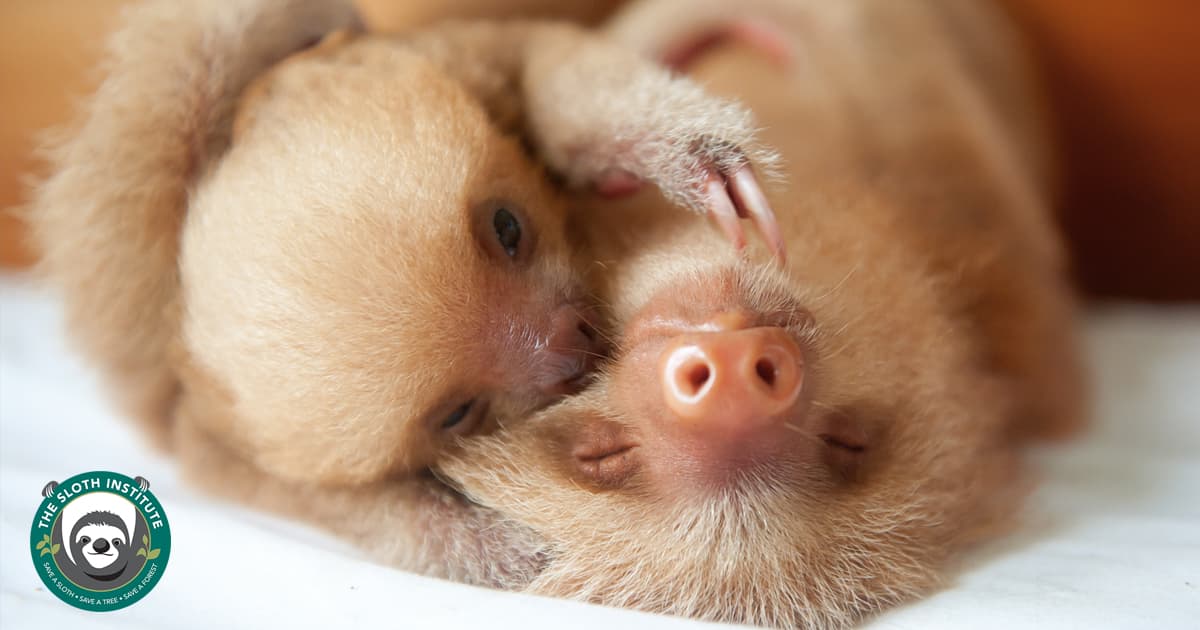
A canopy with gaps in it
Clearing breaks the continuous canopy a sloth moves through, forcing it to the ground where almost all its injuries happen.
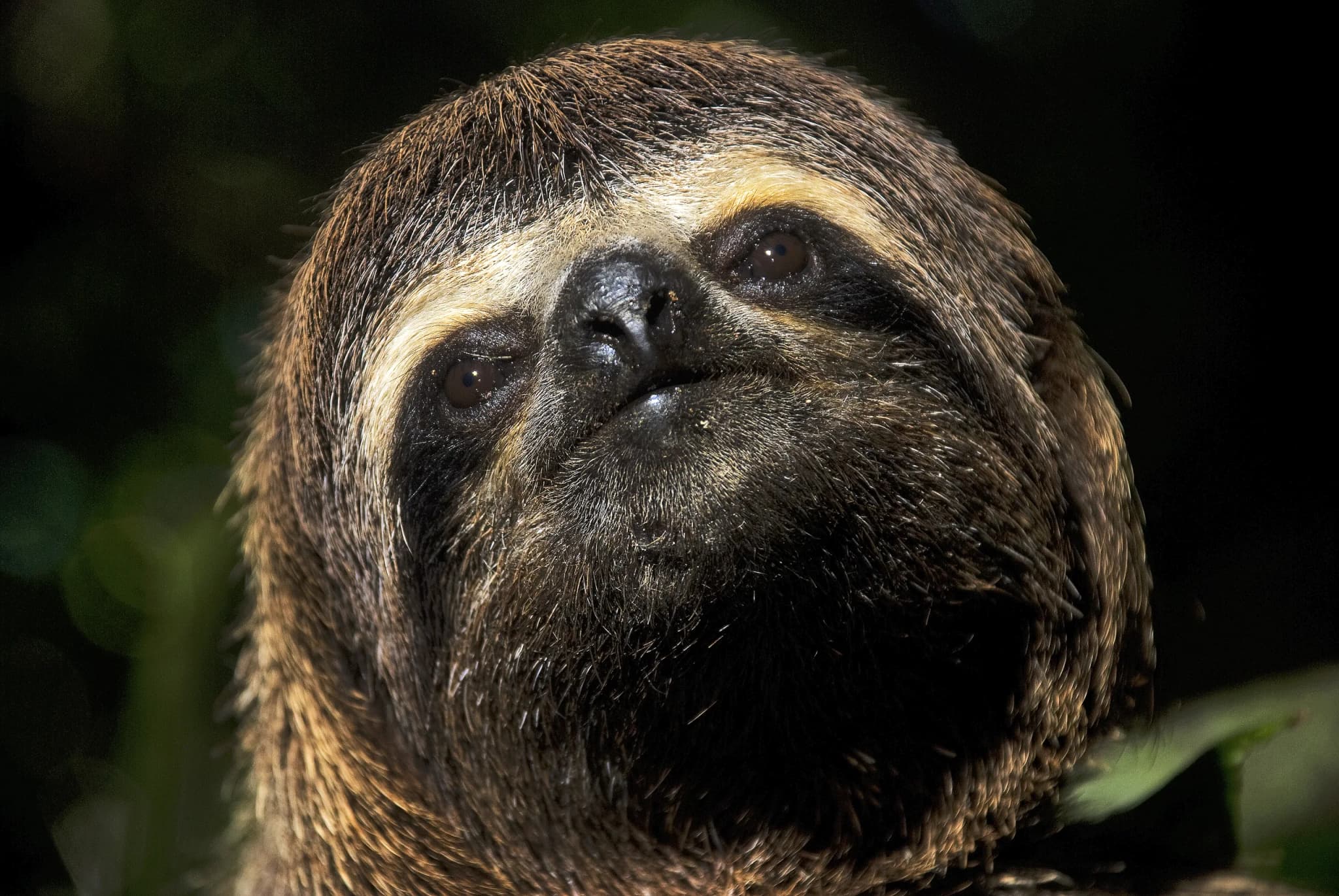
The brown-throated sloth (Bradypus variegatus) is a three-toed sloth and the most widespread of the four Bradypus species, found across a broad arc of Central and South America from Honduras to northern Argentina. It lives almost entirely in the forest canopy, sleeping up to 15 to 20 hours a day and descending to the ground roughly once a week to defecate, a vulnerability that accounts for a significant share of recorded predation events. Its coarse outer fur hosts a dedicated community of algae, moths, beetles, and mites, making the individual animal a functioning microhabitat. As a folivore that feeds on the leaves of dozens of tree species, it disperses seeds and contributes to canopy structure in the tropical and subtropical forests it occupies.
Despite holding a Least Concern status on the IUCN Red List, the brown-throated sloth faces mounting pressure from habitat loss driven by agricultural expansion, cattle ranching, and urban development throughout its range. Electrocution on uninsulated power lines and injury from road traffic are documented causes of mortality in fragmented landscapes, particularly in Costa Rica and Panama where forest corridors have been significantly reduced. The illegal pet trade removes individuals from wild populations, and because sloths reproduce slowly, typically one offspring per year, local populations recover gradually from localized losses. Researchers continue to monitor regional subpopulations, as the species' broad range can obscure declines in specific areas.
Clearing breaks the continuous canopy a sloth moves through, forcing it to the ground where almost all its injuries happen.
Sloths climbing lines strung through the canopy are electrocuted, and insulating a stretch of line ends the problem on it permanently.
A sloth takes minutes to cross a road, which is long enough that many do not finish.
Dogs attack sloths caught on the ground, and these cases fill rehabilitation centers across Costa Rica and Colombia.
No. The Brown-throated Sloth is assessed as Least Concern on the IUCN Red List, meaning it is currently widespread and abundant enough not to be at risk. That is a global assessment, and a global assessment can sit on top of steep decline in one country or region.
Brown-throated sloths eat mainly leaves, supplemented by flowers and fruit, drawing most of their diet from a small number of preferred tree species such as Cecropia. Their digestive system is so slow that a single meal can take a month to fully process, which is why they rarely need to descend from the canopy.
Brown-throated sloths range across Central and South America, from Honduras south through Colombia, Venezuela, and Brazil to Bolivia and Peru. They favor lowland tropical rainforests, dry forests, and forest fragments, spending nearly all their lives in the canopy of trees such as Cecropia, which also supplies much of their food.
Harpy eagles are their most significant aerial predator, snatching sloths directly from the canopy with talons strong enough to crush bone. Ocelots, margays, and anacondas also take sloths, though the sloth's cryptic stillness and algae-tinted fur provide its primary defense by making it nearly invisible against lichen-covered branches.
A mother gives birth to a single pup after roughly six months of gestation, and the infant clings to her chest for four to six months, learning which leaves are safe to eat by licking its mother's lips. After weaning, the young sloth typically inherits a portion of its mother's home range.
On the ground a brown-throated sloth travels roughly 0.03 mph, making it one of the slowest mammals on Earth. That sluggishness is a survival strategy: an extremely low metabolic rate allows the animal to subsist on nutrient-poor leaves, and near-total stillness keeps heat loss and predator detection both minimized.
Grooved, moisture-retaining hairs create a microhabitat where green algae, fungi, and at least one moth species live year-round on a single animal. The algae tints the fur greenish, improving camouflage in the rainforest canopy, and some researchers suggest sloths may occasionally lick and ingest the algae as a supplemental nutrient source.