
Lead poisoning
Fragments of lead ammunition in carcasses poison condors, and a large share of the wild population needs testing and treatment every season.
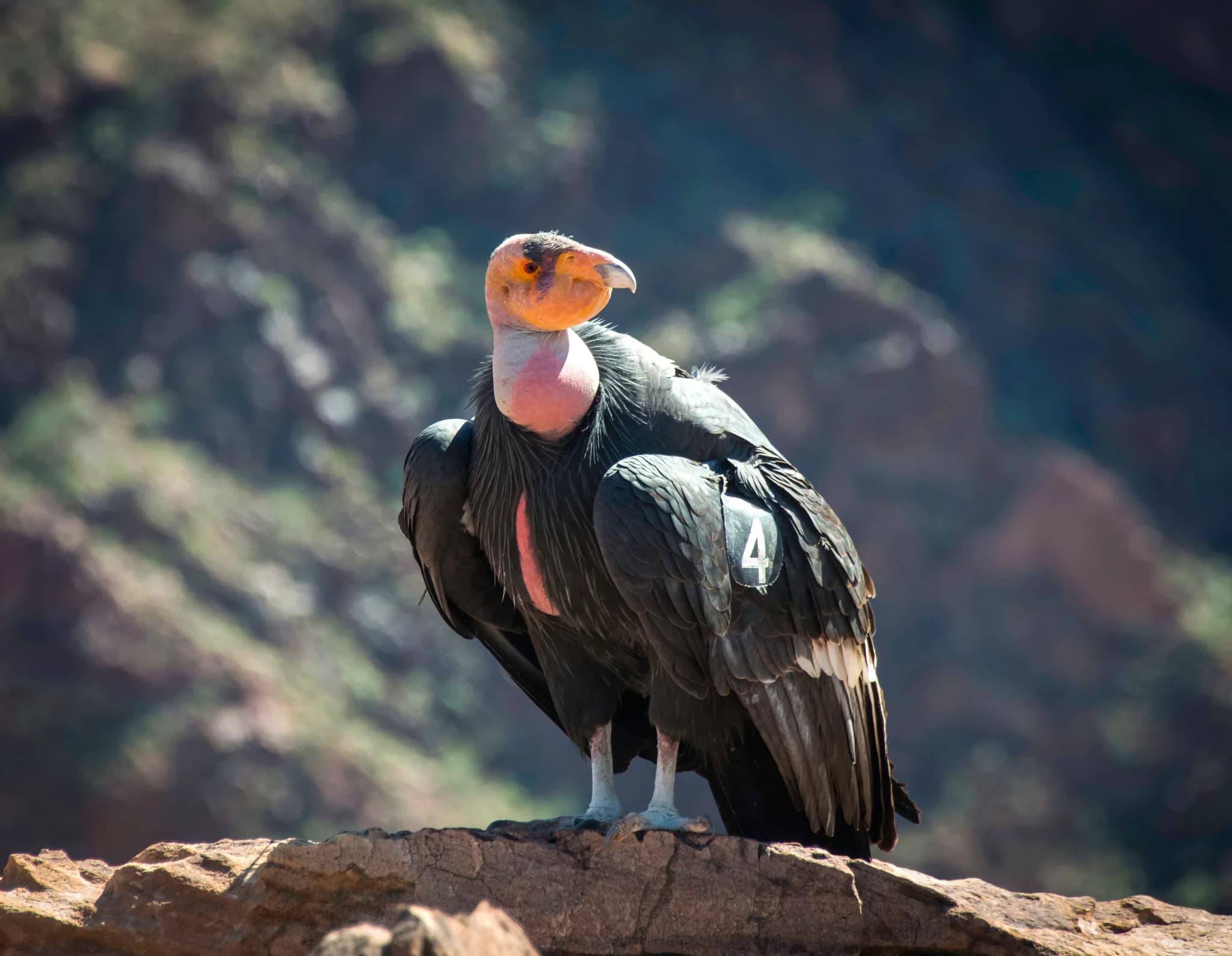
The California Condor (Gymnogyps californianus) is the largest land bird in North America, with a wingspan reaching up to 3 meters (9.8 feet) and a lifespan that can exceed 60 years in the wild. It is a New World vulture, not closely related to Old World vultures despite sharing a similar ecological role, and it ranges across open country, rocky shrubland, and coniferous forest from the Pacific coast inland through parts of California, Arizona, Utah, and Baja California, Mexico. Condors are obligate scavengers whose feeding on large carcasses accelerates the return of nutrients to the soil and limits the spread of disease through carrion, making them a functionally significant part of the landscapes they inhabit.
The species came within a handful of individuals of extinction in the 20th century, with the entire wild population captured for a captive breeding program in 1987 when only 27 birds remained, according to the U.S. Fish and Wildlife Service. The primary threats driving that collapse have not disappeared: lead poisoning from ingesting fragments of lead ammunition in hunter-killed carcasses and gut piles remains the leading cause of condor mortality today, alongside microtrash ingestion, collision with power lines, and habitat loss. The IUCN Red List currently assesses the California Condor as Critically Endangered, and while the wild population has grown substantially through sustained reintroduction efforts, the species depends heavily on ongoing intervention to survive.
Fragments of lead ammunition in carcasses poison condors, and a large share of the wild population needs testing and treatment every season.
Condors raise a single chick at a time and mature slowly, so the population cannot absorb adult losses.
Adults pick up bottle caps, glass, and wire and feed them to chicks, which kills nestlings outright.
Released birds are now trained to avoid poles, because collisions were killing them in their first year.
Yes. The California Condor is listed as Critically Endangered on the IUCN Red List, the last category before a species is considered Extinct in the Wild. A species qualifies on a population decline of 80% or more, or on fewer than 250 mature individuals remaining.
The California condor is the largest flying bird in North America, with a body length of roughly 45 to 55 inches from bill to tail. Adults stand about 4 feet tall when perched, and their sheer bulk makes them unmistakable alongside the turkey vultures and ravens they share thermals with over the Transverse Ranges and Grand Canyon.
California condors have a wingspan of up to 9.5 feet, the widest of any North American bird. That span lets them soar for hours on thermal updrafts above the Diablo Range and Baja California's Sierra de San Pedro Mártir without a single wingbeat, conserving energy while scanning for deer, elk, and cattle carcasses below.
The California condor (Gymnogyps californianus) is a critically endangered New World vulture and North America's largest flying bird, listed as Critically Endangered on the IUCN Red List. It is a scavenger that feeds on large mammal carcasses, plays a key role in nutrient cycling, and can live more than 60 years in the wild.
California condors range across rugged terrain in California, Arizona, Utah, and Baja California, Mexico, including the Grand Canyon, Big Sur coast, and Zion National Park. They nest on cliff ledges and in caves, and depend on open country, including chaparral, oak savanna, and conifer forest, where large carcasses are accessible.
California condors are critically endangered, according to the IUCN Red List, primarily because of lead poisoning from ingesting bullet fragments left in gut piles and carcasses by hunters. Microtrash fed to chicks, habitat loss, and a historically tiny population that bottomed out at 27 wild birds in 1987 compounded the crisis significantly.
California condors typically weigh between 17 and 25 pounds, with males generally heavier than females. That mass, combined with their broad wings and pronounced finger-like primary feathers, allows them to exploit rising thermals efficiently while traveling more than 100 miles in a single day searching for carrion.
