Wetlands drained and built on
Capybaras need water they can retreat into, and marsh converted for cattle and housing removes it.
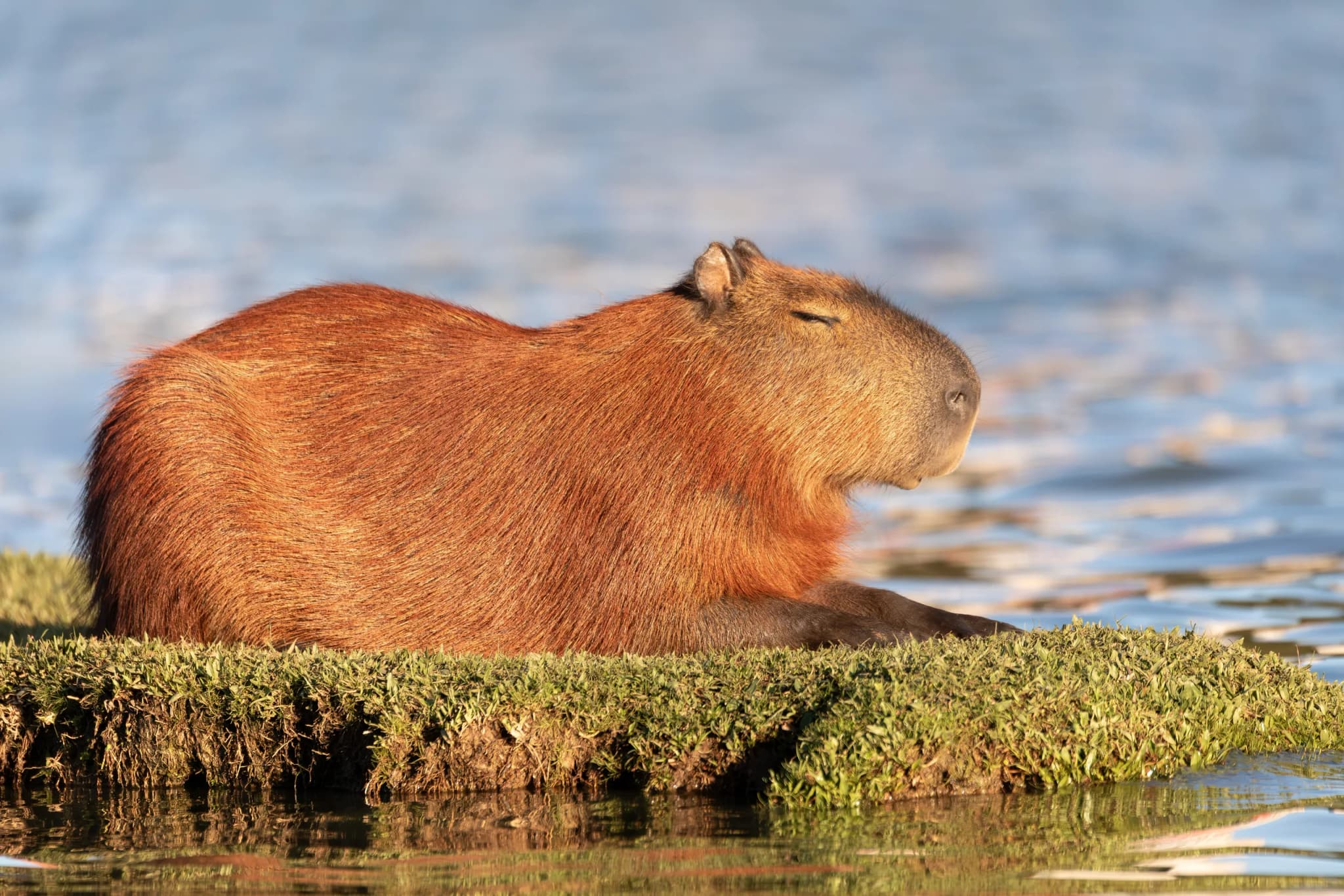
The capybara (Hydrochoerus hydrochaeris) is the world's largest living rodent, a semi-aquatic mammal closely related to guinea pigs and rock cavies. Adults typically weigh between 35 and 66 kilograms, with females generally larger than males. They are highly social animals, living in groups that typically range from 10 to 20 individuals, though dry-season aggregations around shrinking water sources can swell to well over 100. Their range spans the tropical and subtropical lowlands of South America, from the Llanos of Venezuela and Colombia through the Amazon Basin, the Pantanal wetlands of Brazil and Bolivia, and south into the grasslands of Argentina and Uruguay.
Capybaras are keystone herbivores in their habitats, grazing on grasses, aquatic plants, and bark, and their feeding patterns help maintain the structure of riverbank and floodplain vegetation. They are also a critical food source for a wide range of predators, including the jaguar (Panthera onca), ocelot (Leopardus pardalis), anaconda (Eunectes murinus), and caiman. The IUCN Red List currently lists the species as Least Concern, reflecting its broad range and adaptable nature, but localized hunting for meat and hide, habitat loss from agricultural expansion, and persecution by ranchers who view them as livestock competitors represent real and ongoing pressures in parts of their range.
Capybaras need water they can retreat into, and marsh converted for cattle and housing removes it.
Hunting is legal in parts of the range and unregulated in others, with meat and leather both traded.
Capybaras grazing sugarcane and grain are shot by farmers across parts of South America.
In parts of Brazil capybaras are culled over their role in spreading the tick that carries spotted fever.
No. The Capybara is assessed as Least Concern on the IUCN Red List, meaning it is currently widespread and abundant enough not to be at risk. That is a global assessment, and a global assessment can sit on top of steep decline in one country or region.
The capybara is the world's largest rodent, native to South America, where it lives in forests and wetlands close to rivers, lakes, and swamps from Panama to northern Argentina. Adults typically weigh between 35 and 66 kilograms, and their semi-aquatic lifestyle makes them strong swimmers capable of staying submerged for several minutes.
Capybaras are legal to keep as pets in some U.S. states, including Texas and Pennsylvania, but banned in California, Georgia, and several others, and regulations vary widely by country. They are highly social animals that live in groups of ten to twenty in the wild, so keeping a single capybara typically causes it significant stress.
Capybaras are herbivores that feed mainly on grasses and aquatic plants, supplementing their diet with fruit, bark, and reeds during dry seasons when vegetation is scarce. Like other hindgut fermenters, they also practice coprophagy, eating their own feces to extract additional protein from partially digested plant matter.
Yes, the capybara is a rodent and belongs to the family Caviidae, making it a close relative of guinea pigs and rock cavies. At up to 66 kilograms, it holds the title of the largest living rodent species on Earth according to current mammalian taxonomy.
Capybaras are preyed on by jaguars, pumas, ocelots, caimans, anacondas, and harpy eagles across their South American range. Their main defense is water: they are strong swimmers and will submerge almost entirely, leaving only their nostrils exposed, to wait out a predator on the bank of a river or oxbow lake.
Capybara young, called pups, are born fully furred and able to walk within hours of birth, joining a communal nursery group where females other than the mother share nursing duties. A typical litter in the Llanos wetlands of Venezuela or the Pantanal of Brazil contains four to five pups, which begin grazing on grasses alongside adults within their first week.