
Commercial bushmeat
Hunting for meat is the most direct cause of decline, and it reaches deep into forest along logging roads.
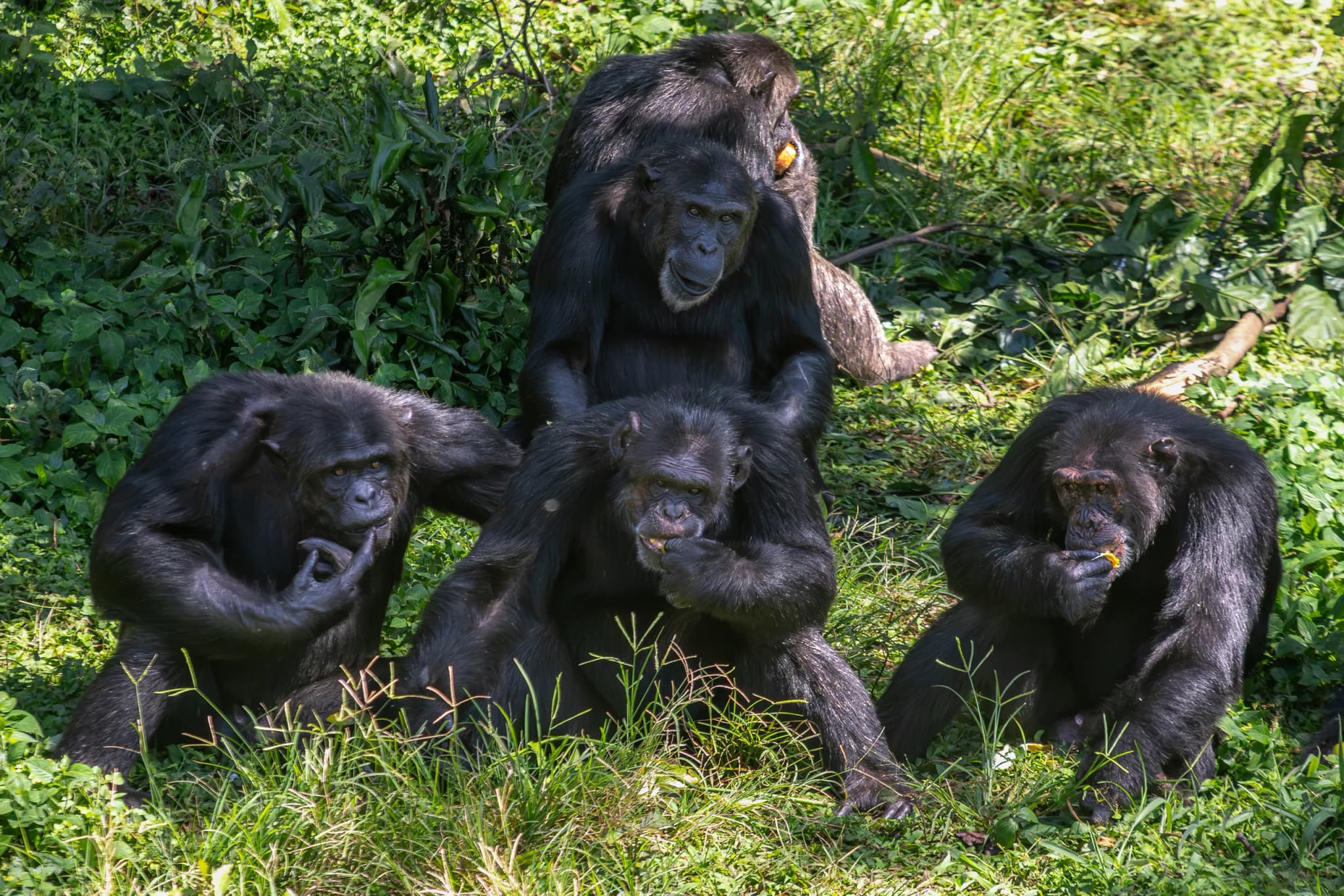
The chimpanzee (Pan troglodytes) is a great ape native to the forests and savannas of sub-Saharan Africa, and our closest living relative, sharing approximately 98.7% of our DNA. Four subspecies are recognized, each occupying a distinct geographic range across western, central, and eastern Africa, from lowland rainforests to montane woodland edges. Chimpanzees live in fission-fusion communities that can number up to 150 individuals, and they play a measurable role in forest regeneration by dispersing the seeds of dozens of plant species across large territories.
The IUCN Red List classifies the chimpanzee as Endangered, with populations in decline across most of their range. Habitat loss driven by agricultural expansion, logging, and human settlement is the primary pressure, compounded by hunting for bushmeat, the illegal pet trade, and disease transmission from humans, including respiratory illnesses and Ebola virus disease. Populations are now fragmented across roughly 21 countries, with the largest remaining concentrations found in the Congo Basin.
Hunting for meat is the most direct cause of decline, and it reaches deep into forest along logging roads.
West African forest in particular has been cleared for farming and mining, stranding communities in isolated patches.
Disease moves easily between people and chimpanzees, which makes tourism and research a risk as well as a protection.
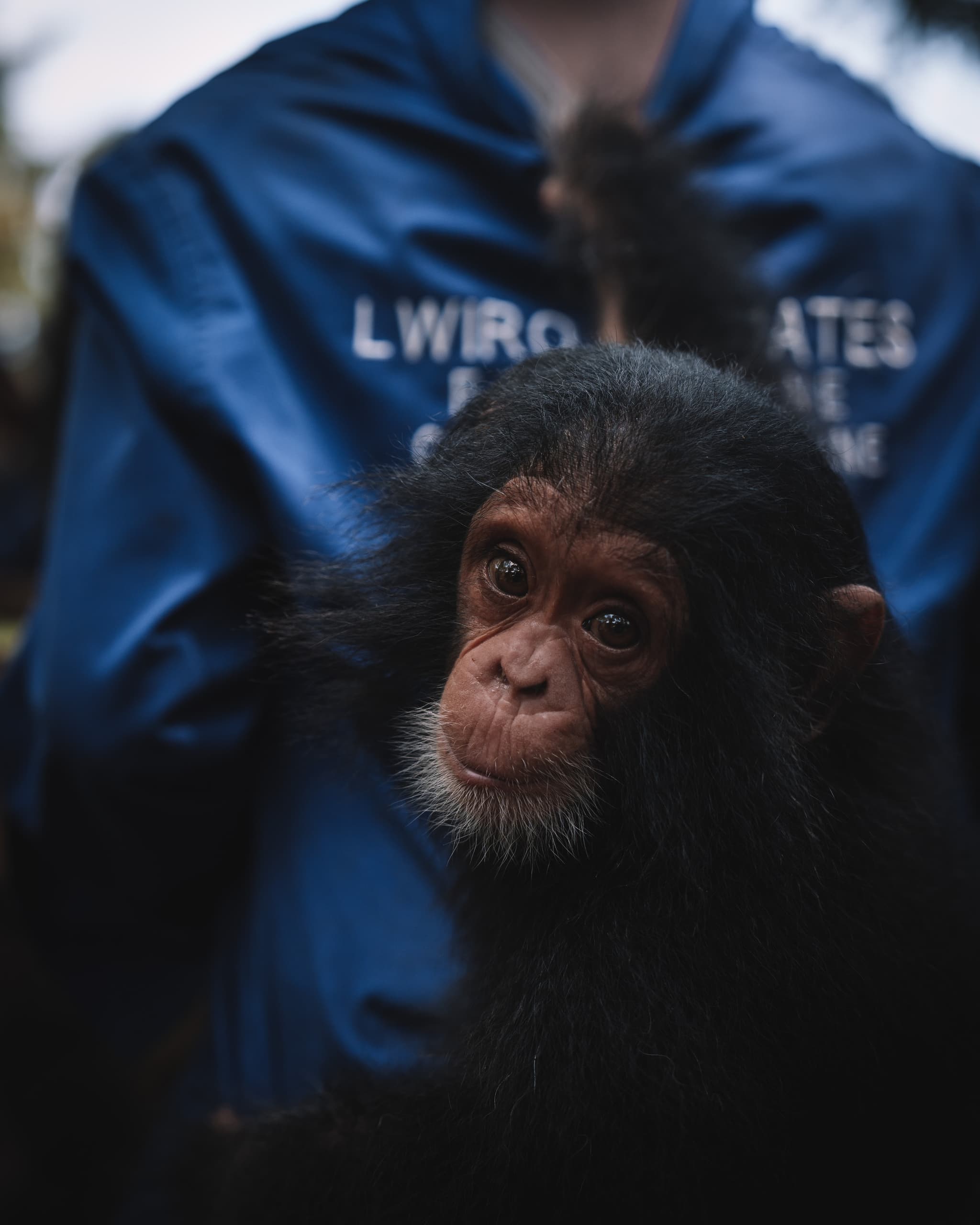
Taking one infant alive usually means killing several adults, and the orphan needs forty years of care.
Yes. The Chimpanzee is listed as Endangered on the IUCN Red List, which means it faces a very high risk of extinction in the wild. A species qualifies on a decline of 50% or more over ten years or three generations, or on fewer than 2,500 mature individuals remaining.
Chimpanzees are roughly two to three times stronger than adult humans, pound for pound, according to research on muscle fiber composition published in PNAS (2017). Their muscles contain a higher proportion of fast-twitch fibers, which generates exceptional force useful for climbing, branch-breaking, and dominance displays in forests across central and west Africa.
No, chimpanzees are apes, not monkeys. Unlike monkeys, they have no tail, possess a much larger brain relative to body size, and share roughly 98.7% of their DNA with humans, making them one of our two closest living relatives alongside bonobos.
Adult male chimpanzees typically weigh between 88 and 130 pounds (40 to 60 kilograms), with females somewhat lighter at roughly 60 to 110 pounds (27 to 50 kilograms). Individuals living in the dense forests of the Congo Basin tend to carry more muscle mass than those in drier, more open woodland habitats.
A chimpanzee is a great ape native to sub-Saharan Africa, classified as Endangered on the IUCN Red List, with wild populations threatened by habitat loss, bushmeat hunting, and disease. They live in social communities of up to 150 individuals, use tools such as sticks to extract termites, and communicate through vocalizations including the distinctive pant-hoot call.
Chimpanzees can reach speeds of around 25 miles per hour (40 kilometers per hour) over short distances on the ground. They travel primarily by knuckle-walking, but in open woodland habitats like Senegal's Fongoli savanna they cover ground quickly when pursuing prey such as bushbabies or fleeing predators like leopards.
Yes, chimpanzees are apes, belonging to the family Hominidae alongside gorillas, orangutans, bonobos, and humans. They share the defining ape characteristics of no tail, a broad chest, and complex social cognition, and are listed as Endangered on the IUCN Red List due to ongoing population decline across their African range.


Know an organization protecting the Chimpanzee? Add it, or claim your own page. Listing is free.
Add one