
Introduced rats, pigs, and ants
Eggs and hatchlings are eaten by animals the islands evolved without, which stopped recruitment on several islands entirely.
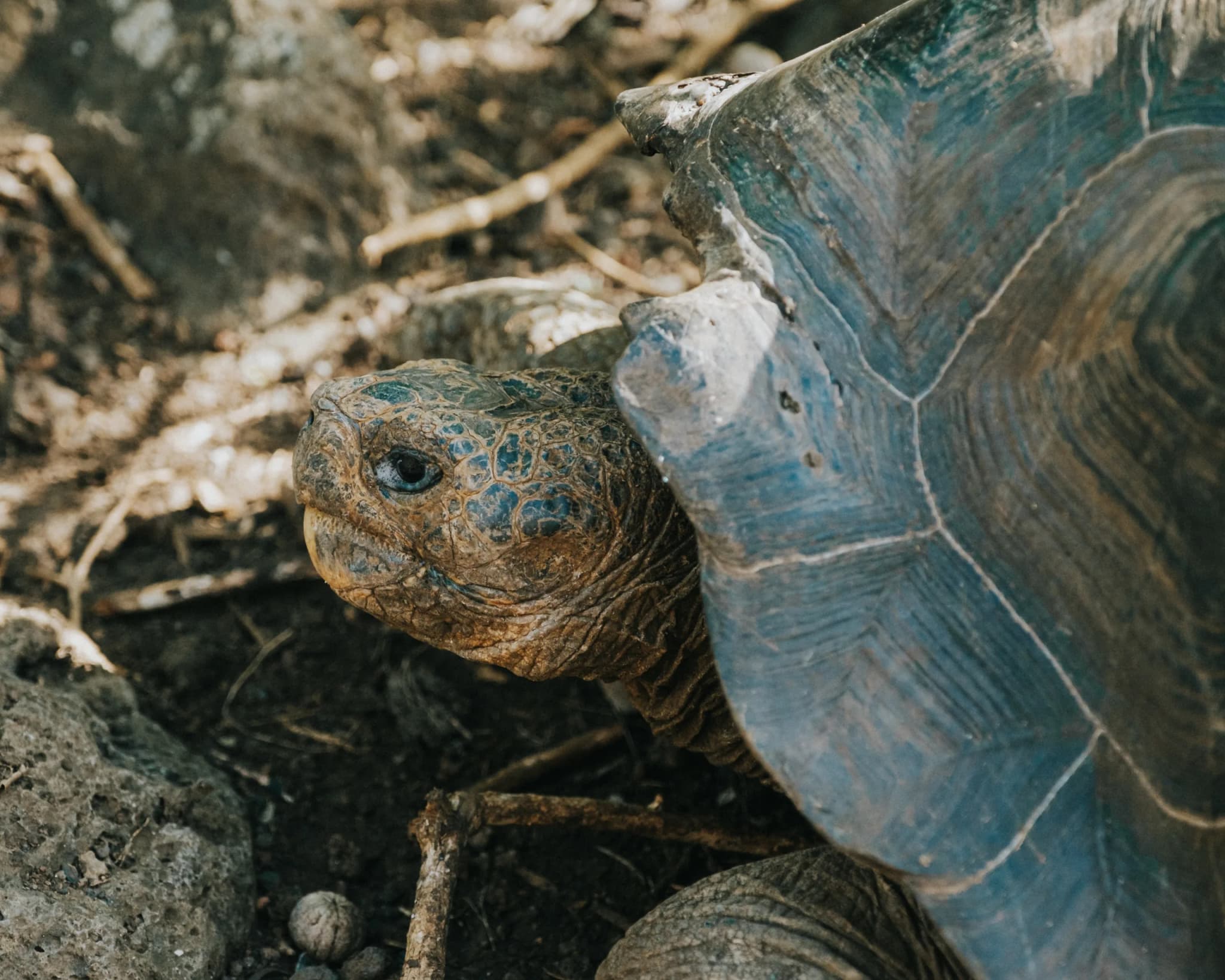
The Galapagos tortoise (Chelonoidis niger) is the largest living tortoise species in the world, native exclusively to the Galapagos Islands of Ecuador. Different island populations have developed distinct shell shapes over millennia: domed shells are typical of humid highland environments, while saddle-backed shells evolved in drier lowland areas where tortoises must stretch to reach taller vegetation. Individuals can live well over 100 years in the wild, and some captive specimens have exceeded 170 years.
Galapagos tortoises are keystone herbivores, shaping vegetation structure across the islands by grazing, trampling, and dispersing seeds across large distances. The IUCN Red List currently classifies the species as Vulnerable, reflecting population recovery efforts that have pulled several subspecies back from the brink, while others remain critically endangered or are already extinct. The primary historical driver of decline was hunting by sailors and whalers who took tortoises as living food supplies; today, introduced predators such as black rats (Rattus rattus), feral pigs, and goats continue to threaten nests and hatchlings, and habitat degradation from invasive plants remains a persistent pressure.
Eggs and hatchlings are eaten by animals the islands evolved without, which stopped recruitment on several islands entirely.
Introduced grazers strip the vegetation tortoises feed on, and invasive plants replace what they can eat.
A tortoise takes twenty to thirty years to breed, so a conservation measure takes a generation to show in the numbers.
Each population lives on one island or one volcano, where tourism, farming, and water use all concentrate.
Not in the strict sense. The Galapagos Tortoise is listed as Vulnerable on the IUCN Red List, the first of the three threatened categories and the one below Endangered. It qualifies on a decline of 30% or more, or on a population under 10,000 mature individuals.
Adult Galápagos tortoises typically weigh between 300 and 500 pounds (135 to 225 kg), with large males reaching the upper end of that range. Dome-shelled tortoises from humid highland islands like Santa Cruz tend to grow heavier than the saddle-backed tortoises found on drier islands such as Española.
Galápagos tortoises routinely live more than 100 years in the wild, and captive individuals have been documented living well past that. Jonathan, a Seychelles giant tortoise of the same family, is the most famous example of extreme longevity in giant tortoises, though wild Galápagos individuals are rarely tracked from birth to death.
Galápagos tortoises can live at least 150 years, and possibly longer, making them among the longest-lived vertebrates on Earth. Their slow metabolism, which allows them to survive months without food or fresh water by metabolizing fat reserves, is closely linked to that exceptional lifespan.
Roughly 20,000 to 25,000 Galápagos tortoises survive across the archipelago today, according to the Galápagos Conservancy. That is a partial recovery from an estimated low of around 3,000 in the mid-twentieth century, driven by restoration work on islands including Española, where feral goat removal allowed native vegetation to rebound.
Galápagos tortoises are the world's largest living tortoises, with adults reaching up to 5 feet (1.5 m) in shell length. Shell shape varies significantly by island: dome-shaped shells appear on tortoises from vegetated highlands, while the distinctive saddle-back shape evolved on arid islands where tortoises must stretch to reach cactus pads.
No projects have listed this species yet.