
Rivers dammed and diverted
Gharials need deep pools with sandbanks to nest on, and barrages have removed both along most of the Ganges and Indus systems.
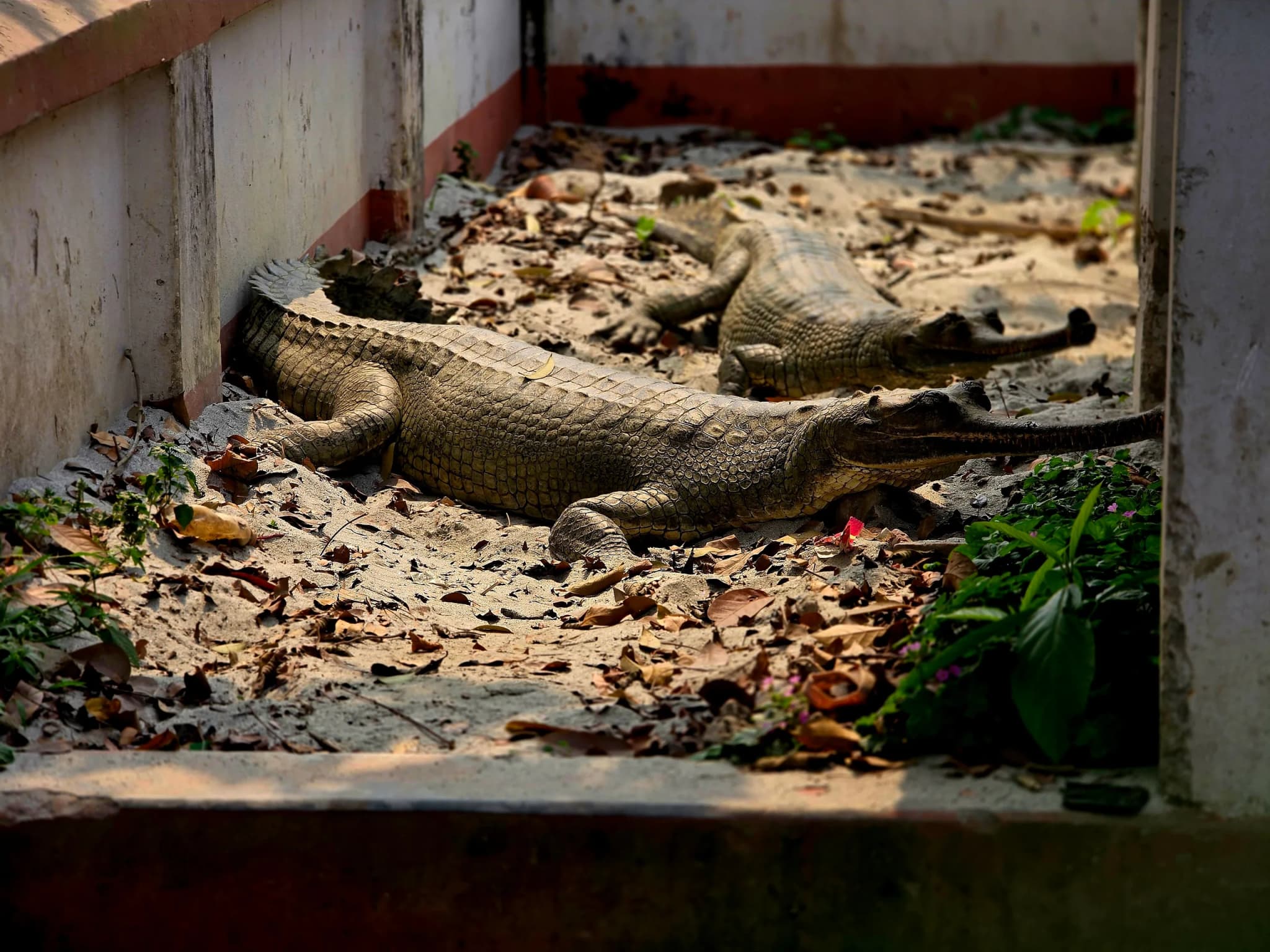
The gharial (Gavialis gangeticus) is a large, fish-eating crocodilian native to the river systems of the Indian subcontinent. Its long, slender snout, lined with interlocking teeth, is precisely adapted for catching fish underwater, and adult males develop a distinctive bulbous growth at the tip of the snout, called a ghara, which is used in vocalizations and courtship displays. Gharials are among the longest crocodilians in the world, with large males reaching up to 6 meters in length.
Once distributed across the major river systems of South Asia, the gharial is now restricted to a small number of rivers in northern India and Nepal, with the Chambal, Girwa, and Rapti rivers holding the most significant remaining populations. The IUCN Red List classifies the species as Critically Endangered, with the wild population estimated at fewer than 1,000 mature individuals. Gharials play a specific ecological role as apex aquatic predators that help regulate fish populations and, as large reptiles, contribute nutrients to riverbank soils through nesting activity. The primary threats driving their decline include river habitat degradation, sand mining, fishing net entanglement, reduced river flow from irrigation withdrawals, and the historical collection of eggs and adults.
Gharials need deep pools with sandbanks to nest on, and barrages have removed both along most of the Ganges and Indus systems.
Gharials tangle in gillnets set across the rivers they hunt in, and the long thin snout makes escape impossible.
Extraction removes the banks the species hauls out and nests on, directly destroying breeding habitat.
Pollution in the Chambal and Ganges has been linked to mass mortality events in the remaining population.
Yes. The Gharial is listed as Critically Endangered on the IUCN Red List, the last category before a species is considered Extinct in the Wild. A species qualifies on a population decline of 80% or more, or on fewer than 250 mature individuals remaining.
The gharial (Gavialis gangeticus) is a Critically Endangered freshwater crocodilian native to the Indian subcontinent, recognized by its extremely long, narrow snout and, in adult males, a bulbous nasal growth called a ghara. It is one of the longest living crocodilians, reaching up to 6 meters, and feeds almost exclusively on fish.
Gharial live in the fast-moving, deep rivers of the Indian subcontinent, primarily the Chambal, Girwa, and Gandak rivers in India and the Rapti-Narayani river system in Nepal. They depend on sandy riverbanks for nesting and are highly sensitive to river fragmentation, sand mining, and fishing net entanglement.
Fewer than 1,000 mature gharial are believed to remain in the wild, according to the IUCN Red List, with the largest breeding population concentrated in the Chambal River in north-central India. The species declined by over 96 percent during the latter half of the twentieth century due to hunting, habitat loss, and fisheries bycatch.
Fewer than 1,000 mature individuals are estimated to survive in the wild, according to the IUCN Red List, making the gharial one of the most threatened crocodilians on Earth. The Chambal River, shared by India's Madhya Pradesh, Rajasthan, and Uttar Pradesh states, holds the species' most viable remaining population.
The gharial is not a true crocodile but a distinct Critically Endangered crocodilian in its own family, Gavialidae, sharing only a distant common ancestor with crocodiles and alligators. Its needle-thin jaws are adapted for catching fish in Himalayan-fed rivers such as the Chambal and Gandak, rather than taking large prey.
Gharial live in a small number of fast-flowing, deep-water river systems on the Indian subcontinent, with strongholds in the Chambal River in India and the Rapti-Narayani system in Nepal. They require clean water, abundant fish such as mahseer and catfish, and undisturbed sandy banks for laying eggs.
No projects have listed this species yet.