Woodland converted
Savanna cleared for farming and charcoal removes the browse a herd needs, and this does most of the damage.
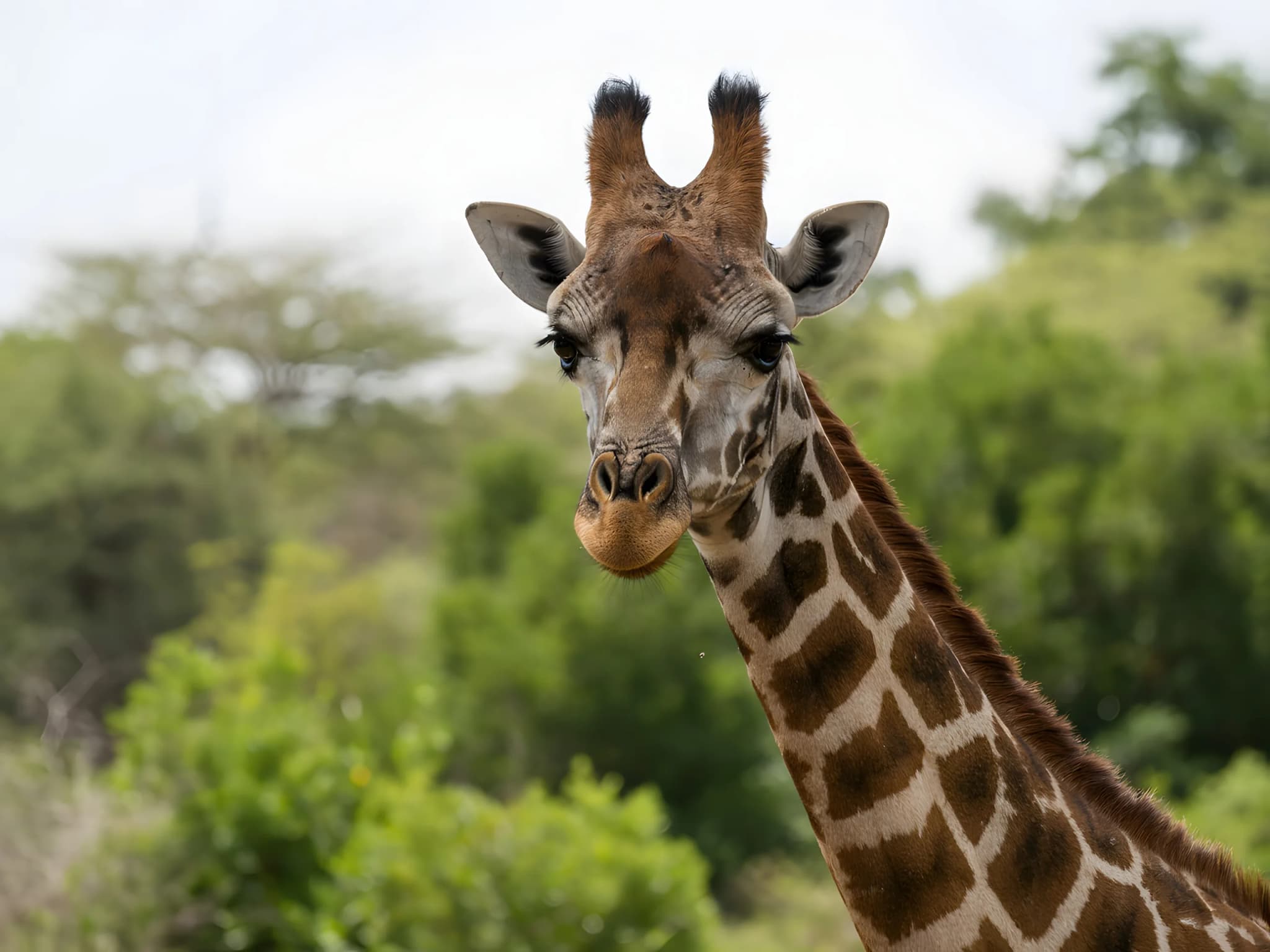
The giraffe (Giraffa camelopardalis) is the world's tallest living terrestrial animal, reaching heights of up to 5.8 meters, and is native to the savannas, grasslands, and open woodlands of sub-Saharan Africa. Nine subspecies are recognized across this range, each associated with distinct geographic regions and coat patterns, from the reticulated giraffe of northern Kenya to the Masai giraffe of Tanzania and southern Kenya.
Giraffes are browsers rather than grazers, feeding primarily on the leaves, flowers, and pods of acacia and other trees, which places them in a foraging niche largely inaccessible to other large herbivores. This feeding behavior influences tree structure and seed dispersal across wide areas. The IUCN Red List classifies the species as Vulnerable, with the global population estimated at fewer than 117,000 individuals as of recent assessments, having declined by up to 40 percent over the past three decades. Habitat loss from agricultural expansion, illegal hunting, human-wildlife conflict, and the effects of civil unrest in parts of the range are the primary drivers of that decline.
Savanna cleared for farming and charcoal removes the browse a herd needs, and this does most of the damage.
Giraffes are caught in wire snares set along game trails and killed for meat, hides, and tails.
Nubian and Kordofan giraffes live where instability makes consistent protection almost impossible.
The overall figure hides populations of a few hundred animals that are isolated from each other.
Not in the strict sense. The Giraffe is listed as Vulnerable on the IUCN Red List, the first of the three threatened categories and the one below Endangered. It qualifies on a decline of 30% or more, or on a population under 10,000 mature individuals.
Adult male giraffes typically stand 5 to 6 meters (16 to 20 feet) tall, making them the tallest living terrestrial animals on Earth. Females are noticeably shorter, usually reaching around 4.5 meters. That height lets them browse acacia and combretum leaves well above the reach of competing herbivores on the African savanna.
Giraffes communicate mainly through low humming, grunting, and infrasonic vibrations that are largely inaudible to human ears. Calves will bleat or make flute-like calls when separated from their mothers, and adults hum at night, a behavior researchers at Giraffe Conservation Foundation documented in a 2015 study.
Giraffes produce a low, sustained hum, roughly similar to a distant foghorn, along with occasional grunts and snorts. The hum is most often recorded at night and may serve as contact communication between individuals, though its full social function is still being studied by researchers.
Giraffes hum, grunt, snort, and produce infrasonic calls below the threshold of human hearing. The audible hum, documented in captive populations across multiple European zoos, tends to occur after dark, while snorts and grunts are used in shorter-range social interactions during the day.
Giraffes can reach speeds of around 55 kilometers per hour (35 mph) over short distances. Their distinctive pacing gait, moving both legs on the same side together, is efficient enough to outdistance lions across open savanna, though calves remain vulnerable to predation by lions, leopards, and spotted hyenas.
A giraffe's primary defense is a forward kick powerful enough to kill a lion with a single blow. Adults are rarely taken by predators for this reason, and lions typically target calves or individuals weakened by drought. Nile crocodiles pose a serious ambush threat when giraffes splay their legs to drink at rivers.