
Illegal killing
Shooting, trapping, and poisoning remain the leading causes of death for wolves across Europe and North America.
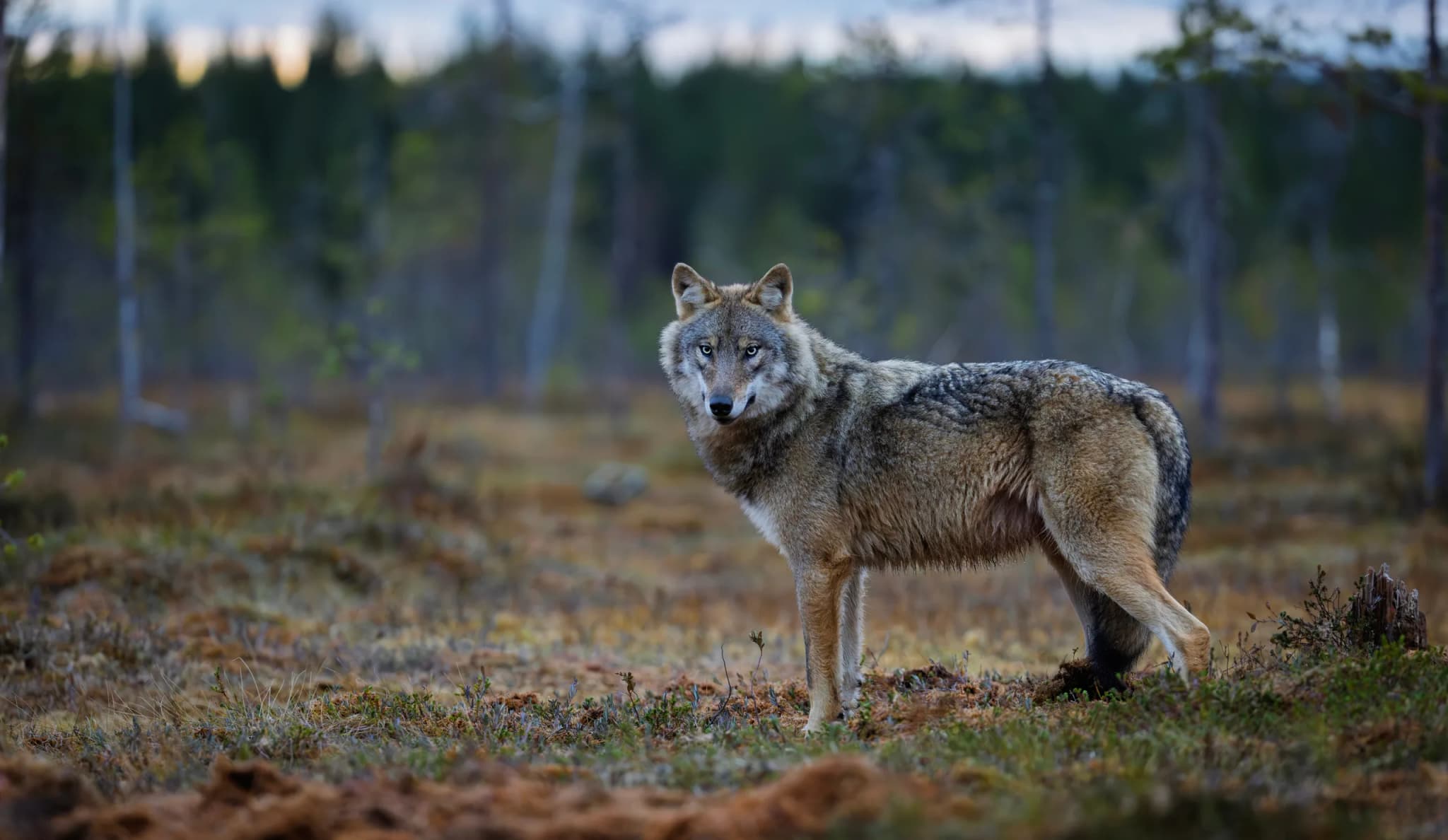
The gray wolf (Canis lupus) is the largest wild member of the family Canidae, with adults typically weighing between 40 and 175 pounds depending on sex and geographic range. Wolves are highly social animals that live in family-based packs, typically led by a breeding pair, and communicate through howling, scent marking, and body language across territories that can span hundreds of square miles. They are found across a broad range of habitats, including Arctic tundra, boreal forest, temperate woodland, grassland, and semi-arid steppe, with populations present across North America, Europe, and Asia.
As apex predators, gray wolves regulate prey populations, most notably ungulates such as elk, white-tailed deer, and moose, which in turn shapes vegetation structure and benefits a wide range of other species. The reintroduction of wolves to Yellowstone National Park in 1995 is one of the most studied examples of trophic cascade in modern ecology. Despite their Least Concern status on the IUCN Red List, many regional populations remain under significant pressure from habitat loss, human-wildlife conflict, retaliatory killing by livestock producers, and in some areas, legal hunting. Populations in parts of Western Europe and the contiguous United States are still recovering from near-total extirpation in the twentieth century.
Shooting, trapping, and poisoning remain the leading causes of death for wolves across Europe and North America.
Wolves that take stock are killed in retaliation, which deterrents, guard dogs, and compensation can largely prevent.
Scandinavian wolves descend from a handful of founders and need immigrants to stay viable.
Legal status changes with politics rather than numbers, and each delisting is followed by a spike in killing.
No. The Gray Wolf is assessed as Least Concern on the IUCN Red List, meaning it is currently widespread and abundant enough not to be at risk. That is a global assessment, and a global assessment can sit on top of steep decline in one country or region.
Gray wolves typically weigh between 50 and 110 pounds and measure 4.5 to 6 feet from nose to tail tip, with males running larger than females. Wolves in northern regions such as Canada and Alaska tend to be significantly heavier than those in Mexico or southern Europe.
Gray wolves are apex predators that hunt large ungulates, primarily elk, moose, caribou, white-tailed deer, and bison, depending on their range. They also take smaller prey such as beavers and hares when larger animals are scarce, and packs cooperative-hunt to bring down animals several times their own size.
The scientific name for the gray wolf is Canis lupus, where canis means dog and lupus means wolf. This binomial was assigned by Carl Linnaeus in 1758 and applies to all recognized gray wolf subspecies worldwide.
Healthy adult gray wolves have no natural predators, though bears and mountain lions occasionally kill pups or injured individuals. Humans are by far the leading cause of wolf mortality, through hunting, trapping, and vehicle collisions, according to long-term studies from Yellowstone National Park and the Greater Yellowstone Ecosystem.
Gray wolves have a thick double coat that ranges from white and cream through tawny, brown, and black, with a broad muzzle, tall pointed ears, and long legs built for distance travel. They are noticeably larger and longer-legged than coyotes, with a deeper chest and a straight, bushy tail they typically carry horizontally while running.
Gray wolves use howling, body posture, facial expressions, and scent marking together as an integrated communication system that coordinates pack movements across territories spanning hundreds of square miles. A single howl can carry up to 10 miles in open terrain, allowing separated pack members in places like Yellowstone or the Carpathians to locate one another without direct contact.


Know an organization protecting the Gray Wolf? Add it, or claim your own page. Listing is free.
Add one