
Caught in fishing gear
More green turtles drown in nets and on longlines set for other species than die from any deliberate cause.
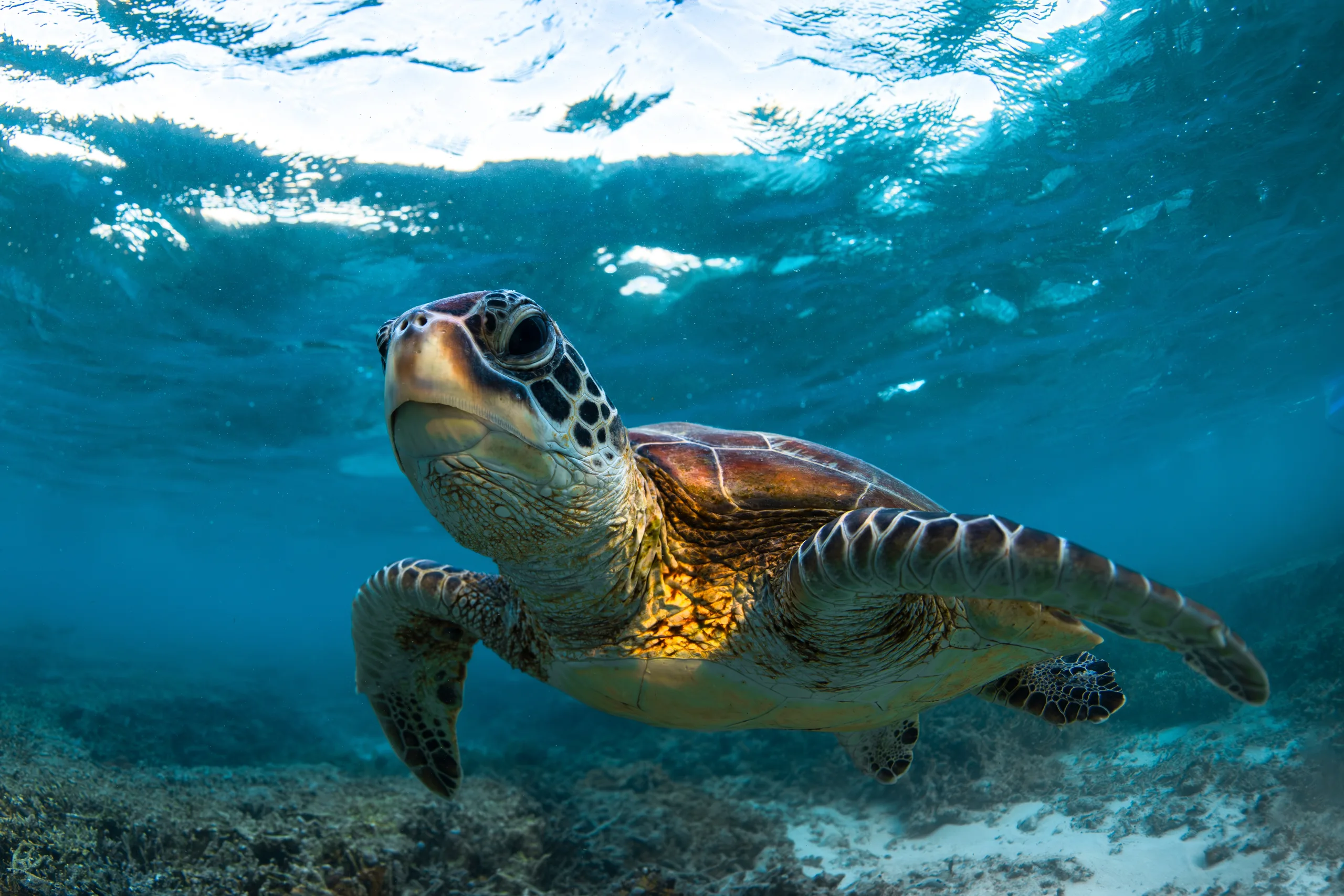
The green sea turtle is named not for its shell but for the greenish fat beneath it, a color that comes from its diet. Adults are among the few large animals that graze seagrass meadows, and by keeping those meadows cropped and healthy they support fish nurseries and lock carbon into the seabed. A single female may swim more than a thousand miles between the waters where she feeds and the beach where she nests, often the beach where she hatched.
The IUCN Red List moved the green sea turtle from Endangered to Least Concern in October 2025, after global nesting numbers rose roughly 28% since the 1970s. That change is a result rather than a reprieve: it followed decades of beach protection at sites such as Tortuguero in Costa Rica, international trade bans, and turtle excluder devices in trawl fisheries. Several regional subpopulations remain threatened, and the pressures that caused the original decline have not gone away. Hunting of adults and eggs, entanglement in fishing gear, coastal development that lights and erodes nesting beaches, and warming sand that skews the sex ratio of hatchlings all still weigh on the species.
More green turtles drown in nets and on longlines set for other species than die from any deliberate cause.
Seawalls, resorts, and lighting take beaches out of use or send hatchlings inland instead of to the water.
A tumour-causing disease linked to coastal pollution affects green turtles more than any other sea turtle.
Nest temperature decides sex, and some beaches now produce almost entirely female clutches.
No. The Green Sea Turtle is assessed as Least Concern on the IUCN Red List, meaning it is currently widespread and abundant enough not to be at risk. That is a global assessment, and a global assessment can sit on top of steep decline in one country or region.
Adult green sea turtles are primarily herbivores, grazing on seagrasses and algae in shallow coastal waters. Juveniles are more omnivorous, also eating jellyfish, invertebrates, and small prey before shifting to a plant-based diet as they mature. Seagrass beds in the Caribbean and Indo-Pacific are critical feeding habitats.
Tiger sharks are the primary natural predator of adult green sea turtles, while eggs and hatchlings face heavy predation from raccoons, ghost crabs, birds, and large fish. Orca attacks on adults have been documented but are rare. Hatchlings are most vulnerable during the dash from nest to sea.
Green sea turtles live in tropical and subtropical oceans worldwide, foraging in shallow seagrass meadows and coral reef habitats and nesting on sandy beaches. Key nesting beaches include Tortuguero in Costa Rica, Ascension Island in the South Atlantic, and the Great Barrier Reef in Australia.
Green sea turtles were listed as Endangered because of egg harvesting, accidental capture in fishing gear, coastal development that destroys nesting beaches, and vessel strikes. Ingestion of plastic waste and the loss of seagrass habitat added further pressure on a slow-reproducing animal. The IUCN moved the species to Least Concern in October 2025 after sustained beach protection and trade bans reversed the decline, but those threats still apply to individual populations.
Adult green sea turtles typically weigh between 150 and 400 pounds (68 to 181 kilograms), with large individuals occasionally exceeding that range. Their size varies by population and foraging habitat, with turtles feeding on nutrient-rich seagrass beds in areas like the Indian Ocean tending to grow especially large.
Largest green turtle rookery in the Western Hemisphere nests on our beach.
View project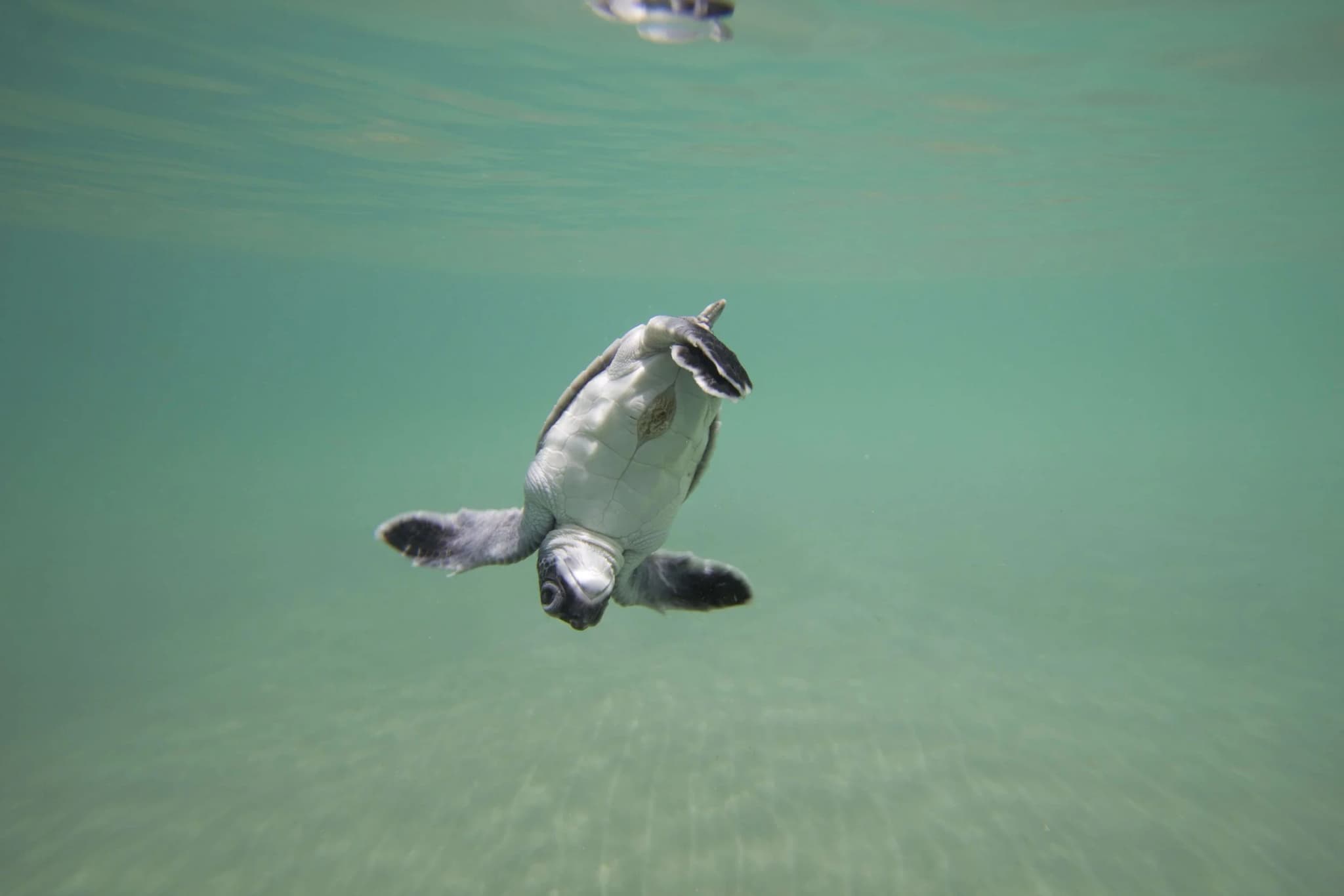
Protected on key nesting beaches through the Billion Baby Turtles program.
View projectKnow an organization protecting the Green Sea Turtle? Add it, or claim your own page. Listing is free.
Add one