
Tortoiseshell
The hawksbill's shell is the source of tortoiseshell, and a trade that is banned internationally still operates in tourist markets.
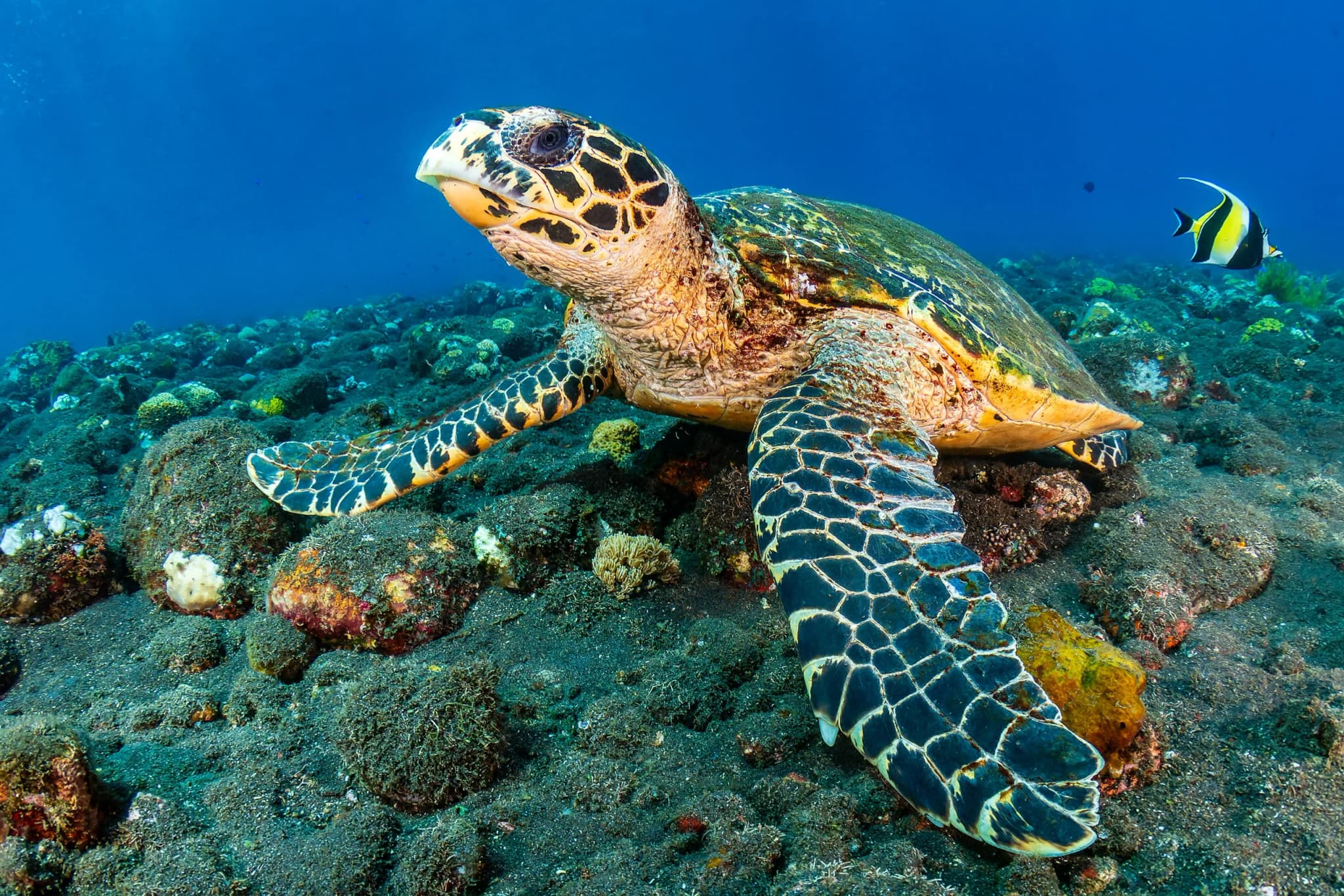
The Hawksbill Turtle (Eretmochelys imbricata) is a medium-sized sea turtle named for its narrow, pointed beak, which allows it to reach into crevices in coral reefs to feed on sponges. Adults typically weigh between 100 and 150 pounds and are distinguished by their richly patterned, overlapping scutes, a feature unique among sea turtles. Listed as Critically Endangered on the IUCN Red List, the species has declined by an estimated 80 percent over the last three generations, driven by the illegal trade in its shell, egg collection, entanglement in fishing gear, and the degradation of the coral reef and beach habitats it depends on.
Hawksbill Turtles play a measurable role in coral reef health: by controlling sponge populations, they allow corals to compete more effectively for space on the reef. They nest on tropical beaches across the Atlantic, Indian, and Pacific Oceans, often returning to the same beaches where they were born. Key nesting sites include beaches in the Caribbean, the Coral Triangle of Southeast Asia, and along the coasts of northern Australia. The species is also threatened by climate change, which skews hatchling sex ratios toward females as sand temperatures rise, and by the loss of nesting beaches to coastal development.
The hawksbill's shell is the source of tortoiseshell, and a trade that is banned internationally still operates in tourist markets.
Hawksbills feed on sponges in reef systems that are bleaching, acidifying, and being fished out.
Incidental capture in coastal fisheries kills hawksbills across the range.
The beaches hawksbills return to are among the most heavily developed coastlines in the tropics.
Yes. The Hawksbill Turtle is listed as Critically Endangered on the IUCN Red List, the last category before a species is considered Extinct in the Wild. A species qualifies on a population decline of 80% or more, or on fewer than 250 mature individuals remaining.
The hawksbill turtle is Critically Endangered, according to the IUCN Red List, primarily because humans have harvested it for centuries for its distinctive patterned shell, used in jewelry and ornaments. Egg poaching, entanglement in fishing gear, and the destruction of coral reefs and nesting beaches in the Caribbean, Indian Ocean, and Pacific have compounded that pressure severely.
Hawksbill sea turtles live in tropical and subtropical oceans worldwide, favoring coral reefs, rocky outcrops, and shallow coastal lagoons across the Caribbean Sea, the Great Barrier Reef, and the Indo-Pacific. They nest on sandy beaches in places like Barbados, the Seychelles, and northern Australia.
Hawksbill turtles inhabit tropical and subtropical waters across the Atlantic, Indian, and Pacific Oceans, spending most of their lives around coral reefs where their primary food, sea sponges, is abundant. Key habitats include reefs around Cuba, the Coral Triangle, and the Red Sea.
The hawksbill sea turtle is listed as Critically Endangered by the IUCN because of long-running commercial exploitation for its shell, along with ongoing egg collection, bycatch in fisheries, and severe coral reef degradation. Its slow reproductive rate, reaching maturity only after roughly two decades, makes population recovery exceptionally slow.
The global nesting population of hawksbill turtles is estimated at fewer than 25,000 females, according to the IUCN Red List assessment. That figure represents a dramatic decline from historical levels, driven by centuries of shell trade and persistent threats to nesting beaches and foraging reefs.
Hawksbill turtles feed mainly on sea sponges, which are toxic to most other animals, making the hawksbill a rare specialist in coral reef ecosystems. They also consume sea anemones, jellyfish, and algae, and their sponge grazing helps keep reefs healthy by preventing sponges from overgrowing corals.
Recorded nesting and foraging along the Tortuguero coast.
View project
Focus of the Too Rare To Wear campaign against the illegal turtleshell trade.
View projectKnow an organization protecting the Hawksbill Turtle? Add it, or claim your own page. Listing is free.
Add one