
Teeth and meat
Hippo ivory moved into the gap left by elephant ivory controls, and the meat trade is substantial and largely unrecorded.
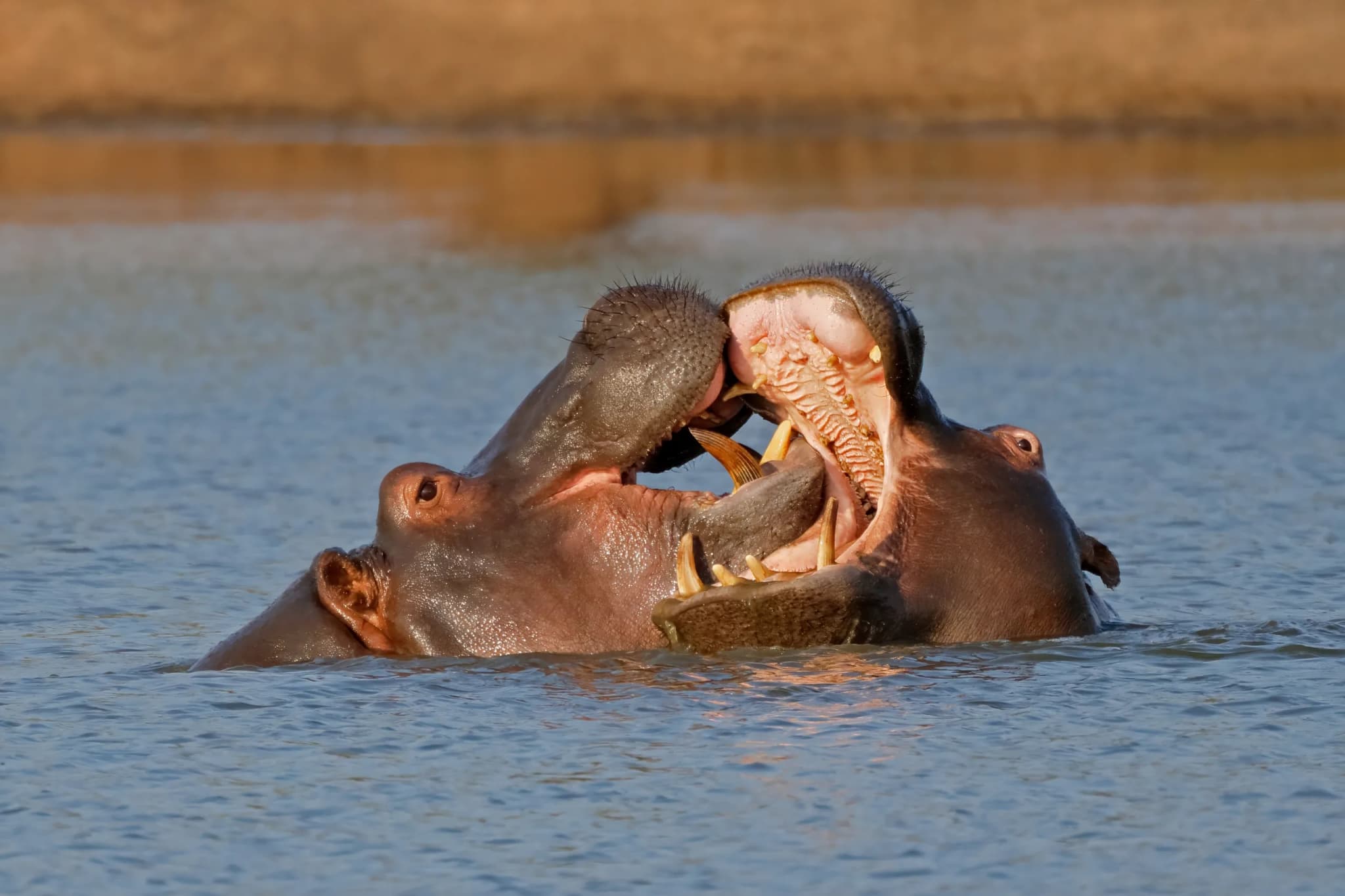
The hippopotamus (Hippopotamus amphibius) is the third-largest land mammal on Earth, after the elephant and white rhinoceros, and one of the most ecologically significant animals in sub-Saharan Africa. Despite their bulk, hippos are not closely related to pigs or other ungulates; their nearest living relatives are cetaceans, the group that includes whales and dolphins. Hippos spend the majority of the day submerged in rivers, lakes, and wetlands to regulate their body temperature, emerging at dusk to graze on grasses across several kilometers of shoreline each night.
Hippos play a structurally important role in freshwater ecosystems: their dung transfers nutrients from terrestrial grasslands into rivers and lakes, fueling the food chains that support fish populations relied upon by millions of people. The IUCN Red List currently classifies the species as Vulnerable, with population numbers declining primarily due to habitat loss, conflict with agricultural communities, and illegal hunting for their ivory teeth and meat. Political instability across parts of Central and West Africa has made enforcement of existing protections difficult, and the species has already been extirpated from several countries where it was historically present.
Hippo ivory moved into the gap left by elephant ivory controls, and the meat trade is substantial and largely unrecorded.
Hippos must stay in water through the day, and extraction for irrigation leaves pools too shallow to hold them.
Hippos raiding crops and blocking river access are killed in retaliation across much of the range.
Hippos leave the water at night to graze, and farmland has replaced that grass along most African rivers.
Not in the strict sense. The Hippopotamus is listed as Vulnerable on the IUCN Red List, the first of the three threatened categories and the one below Endangered. It qualifies on a decline of 30% or more, or on a population under 10,000 mature individuals.
Hippopotamuses have elongated canine teeth that function as tusks, growing up to 50 centimeters or more in adults. These tusks are used in combat between rivals rather than for feeding, and they are a primary reason hippos are targeted by poachers across sub-Saharan Africa.
Adult hippopotamuses typically weigh between 1,500 and 3,000 kilograms, with males considerably heavier than females. They are the third-largest land mammals on Earth, after elephants and white rhinoceroses.
Hippopotamuses can run at speeds of up to 30 kilometers per hour over short distances on land, which is faster than most people expect from an animal of their size. This speed, combined with an unpredictable temperament, makes them one of the most dangerous large mammals in Africa.
Hippos are almost entirely herbivorous, grazing on short grasses for four to five hours each night and consuming roughly 35 kilograms of vegetation in a single session. They leave the water at dusk, follow well-worn paths up to 10 kilometers from shore, and return before dawn, making the riverbank corridor essential to their survival.
The IUCN Red List classifies the hippopotamus as Vulnerable, driven primarily by habitat loss along African rivers and lakes, as well as illegal hunting for ivory canine teeth and bushmeat. Populations have declined significantly in the Democratic Republic of Congo and West Africa, where conflict zones have made enforcement of wildlife protections nearly impossible.
Hippos do not sweat blood; the reddish oily secretion from their skin pores is a unique fluid containing hipposudoric acid and norhipposudoric acid, which act as a natural sunscreen and antimicrobial agent. The pigments absorb ultraviolet light and inhibit bacterial growth, making the secretion a genuinely functional adaptation rather than a cosmetic one.
No projects have listed this species yet.