
Shrimp trawls
Kemp's ridleys share the Gulf of Mexico with the shrimp fishery, and trawl capture is the largest cause of death.
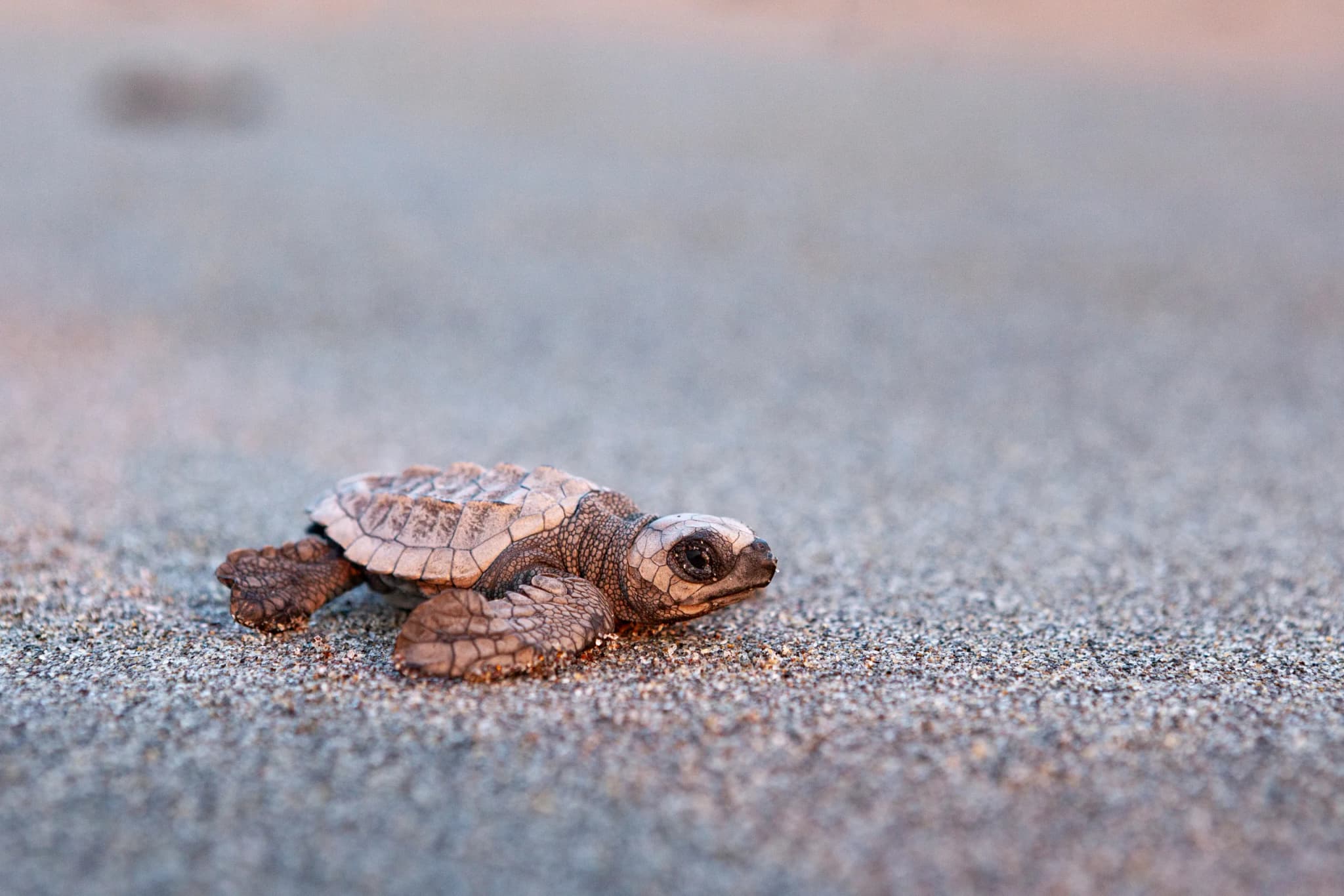
The Kemp's Ridley sea turtle (Lepidochelys kempii) is the smallest and most endangered of all sea turtle species, with adults typically weighing between 79 and 100 pounds and measuring around 24 to 28 inches in length. It inhabits the shallow coastal waters of the Gulf of Mexico for most of its life, feeding primarily on swimming crabs, though it also consumes mollusks, fish, and jellyfish. Its foraging behavior helps regulate crab populations in Gulf seagrass beds and nearshore habitats, and unhatched eggs and hatchlings contribute nutrients to the beach dunes where they are laid.
The species is best known for its remarkable nesting behavior called an arribada, in which large groups of females come ashore simultaneously on the same beach to nest, almost exclusively at Rancho Nuevo in Tamaulipas, Mexico. A secondary nesting colony has been established at Padre Island National Seashore in Texas through decades of head-starting and translocation efforts led by the U.S. Fish and Wildlife Service and NOAA. The primary threats to Kemp's Ridley turtles include incidental capture in shrimp trawl nets, known as bycatch, as well as coastal development that degrades nesting beaches, marine debris ingestion, and the compounding effects of climate change on sand temperatures, which influence hatchling sex ratios.
Kemp's ridleys share the Gulf of Mexico with the shrimp fishery, and trawl capture is the largest cause of death.
Almost the entire species nests on a short stretch of coast at Rancho Nuevo in Mexico.
Deepwater Horizon hit the species during its recovery, and the Gulf remains an industrial sea.
Hurricanes scour the nesting beach and warming sand skews hatchling sex ratios.
Yes. The Kemp's Ridley Turtle is listed as Critically Endangered on the IUCN Red List, the last category before a species is considered Extinct in the Wild. A species qualifies on a population decline of 80% or more, or on fewer than 250 mature individuals remaining.
Kemp's ridley sea turtles are Critically Endangered, according to the IUCN Red List, primarily because of accidental capture in shrimp trawl nets in the Gulf of Mexico, along with decades of egg harvesting at their main nesting beach, Rancho Nuevo in Tamaulipas, Mexico. Coastal development and marine debris add further pressure on a species with an extremely limited nesting range.
The global nesting population has recovered from a low of roughly 700 nesting females in the 1980s to tens of thousands today, though the species remains Critically Endangered according to the IUCN Red List. Most nesting still occurs in a single stretch of beach at Rancho Nuevo, Mexico, making the population vulnerable to localized threats such as Gulf oil spills and hurricane activity.
Kemp's ridley sea turtles feed mainly on crabs, with blue crab being a primary prey in the Gulf of Mexico. They also take shrimp, jellyfish, and small fish using strong, crushing jaws well suited to hard-shelled prey. This specialized diet makes them particularly vulnerable to habitat degradation in shallow coastal feeding grounds.
Kemp's ridley turtles are almost entirely confined to the Gulf of Mexico, with the world's primary nesting beach at Rancho Nuevo in Tamaulipas, Mexico. Juveniles forage along the U.S. Atlantic coast as far north as New England, but adults return to Gulf of Mexico waters to breed throughout their lives.
An arribada is a mass synchronized nesting event in which hundreds or thousands of females come ashore on the same beach within days of each other, and Kemp's ridley turtles are one of very few species that nest this way. Rancho Nuevo hosts the largest arribadas for this species, a behavior thought to overwhelm nest predators through sheer numbers.
Hatchlings face heavy predation from ghost crabs, coyotes, and coastal birds on the beach, while sharks and large fish take them in the surf. Adults are less vulnerable to natural predators but face drowning in shrimp trawl nets, a threat so significant that the U.S. and Mexico legally require Turtle Excluder Devices on commercial trawlers operating in Gulf waters.
No projects have listed this species yet.