
Forest cleared across South and Southeast Asia
The species needs undisturbed forest with intact prey, and conversion for plantations removes both.
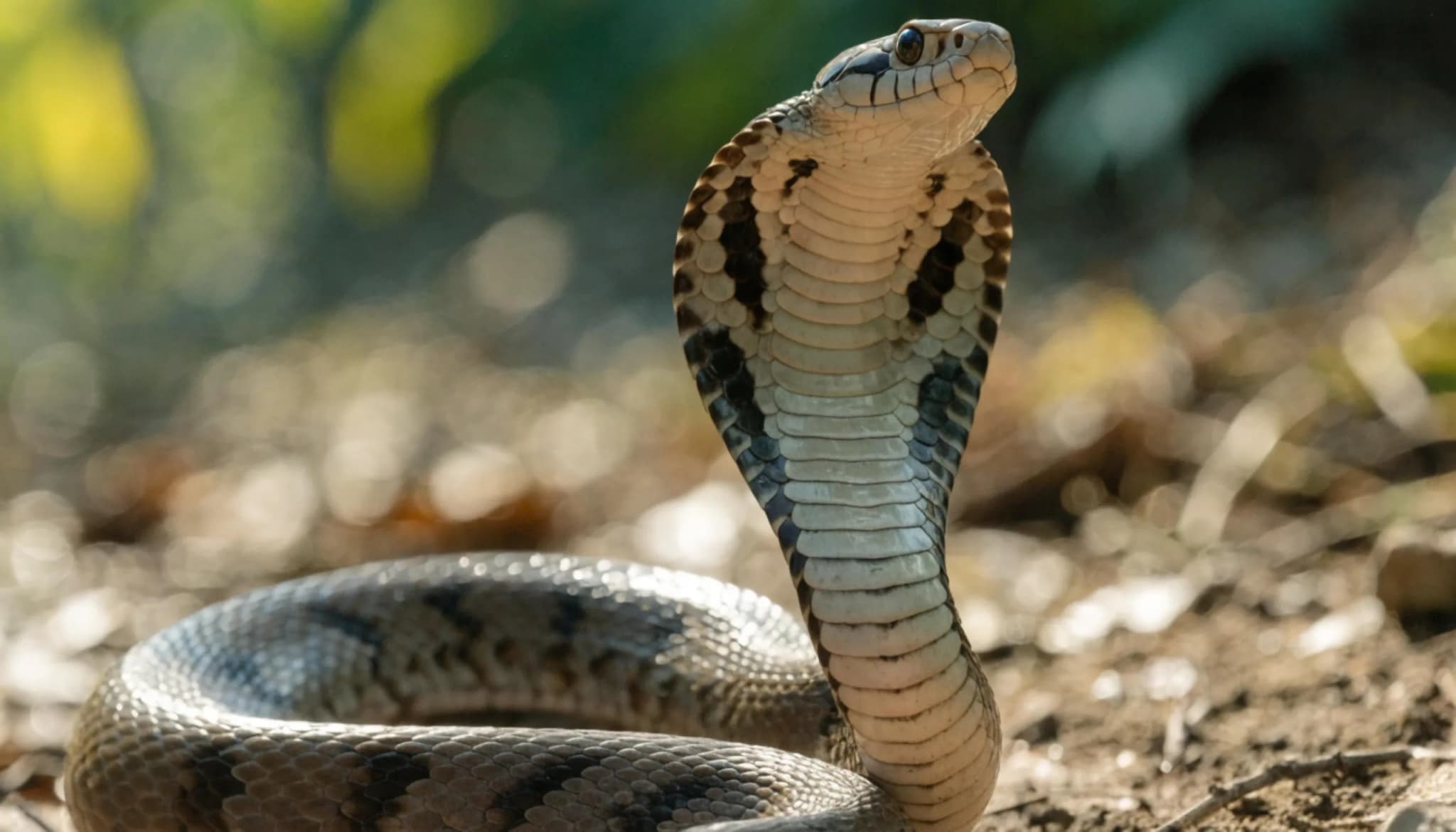
The king cobra (Ophiophagus hannah) is the world's longest venomous snake, capable of reaching lengths of up to 5.5 meters, and the sole member of its genus. It inhabits dense highland forests, bamboo thickets, and mangrove swamps across South and Southeast Asia, where it depends on intact forest cover and proximity to water. Unlike most snakes, the king cobra is an ophiophage, meaning it feeds almost exclusively on other snakes, including large pythons and other venomous species, making it a rare apex predator among reptiles.
Listed as Vulnerable on the IUCN Red List, the king cobra faces mounting pressure from habitat loss driven by agricultural expansion and logging, as well as collection for the live animal trade, traditional medicine, and skin markets. Across much of its range, forest fragmentation is isolating populations and limiting the availability of both prey and nesting habitat. The species is legally protected in several countries, including India under the Wildlife Protection Act, but enforcement remains inconsistent and its forest home continues to shrink.
The species needs undisturbed forest with intact prey, and conversion for plantations removes both.
King cobras are killed out of fear and taken for skins, meat, and traditional medicine.
Wild animals are collected for private keepers and for venom extraction.
King cobras eat other snakes, so declines further down the chain take the species with them.
Not in the strict sense. The King Cobra is listed as Vulnerable on the IUCN Red List, the first of the three threatened categories and the one below Endangered. It qualifies on a decline of 30% or more, or on a population under 10,000 mature individuals.
King cobras are the world's longest venomous snakes, typically reaching 10 to 13 feet, with exceptional individuals recorded at nearly 19 feet. Adults in the forests of Southeast Asia and India grow larger on average than most other cobra species, supported by a diet of other snakes throughout their lives.
King cobras typically reach 10 to 13 feet in length and can weigh up to around 20 pounds, making them the largest venomous snakes on Earth. Adults in the dense forests of India, southern China, and Southeast Asia can rear up to one-third of their body height when threatened.
King cobras feed almost exclusively on other snakes, including rat snakes, pythons, and other cobra species, which is reflected in their genus name Ophiophagus, meaning "snake-eater." They will occasionally take monitor lizards, and they locate prey using both their forked tongue and specialized heat-sensitive pit organs.
King cobras can strike at speeds estimated at roughly 8 feet per second and move across ground at up to around 12 miles per hour in short bursts. Despite this speed, king cobras classified as Vulnerable by the IUCN Red List typically prefer to retreat from humans rather than pursue them.
King cobras range across South and Southeast Asia, from the Western Ghats of India through southern China, the Philippines, and Indonesia. They favor dense highland forests, bamboo thickets, and areas near streams, and are strongly associated with the eastern Himalayas foothills. Deforestation across their range is fragmenting these habitats at an accelerating rate.
King cobras are the only snake species known to build a nest, scraping together leaves and forest debris into a mound where the female guards her clutch of 20 to 40 eggs for roughly 60 to 90 days. She maintains the nest temperature through decomposition heat and leaves only when the eggs hatch, abandoning the site before she could eat the hatchlings.
No projects have listed this species yet.