
Land clearing
Koalas eat from a narrow list of eucalypts and cannot move to the next patch of bush when theirs is cleared.
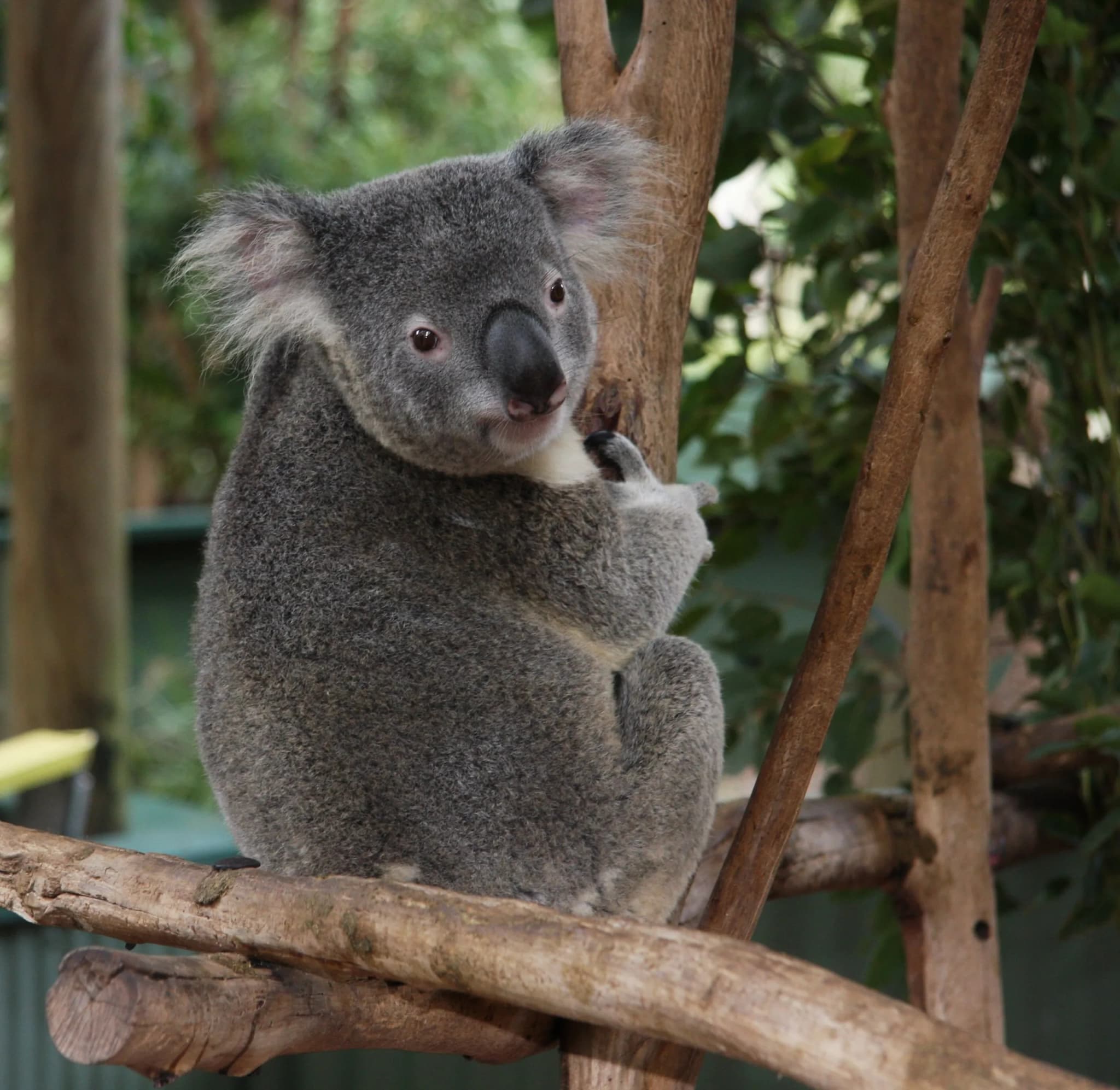
The koala (Phascolarctos cinereus) is an arboreal marsupial native to eastern and southeastern Australia, where it lives almost entirely in eucalyptus forests and woodlands. It is one of the few mammals capable of surviving on a diet of eucalyptus leaves, which are toxic to most other animals and provide so little nutrition that koalas sleep up to 18 to 22 hours a day to conserve energy. Their gut bacteria are highly specialized to detoxify the compounds in the leaves, and individual koalas show strong preferences for particular eucalyptus species within their local range.
The IUCN Red List classifies the koala as Vulnerable, a status that reflects steep population declines driven by habitat clearing for agriculture and urban development, disease, vehicle strikes, and dog attacks. Chlamydia infection is widespread in many wild populations and causes blindness, infertility, and death in affected animals. The 2019 to 2020 bushfire season burned an estimated 24 percent of koala habitat in New South Wales alone, according to the WWF, killing or displacing large numbers of animals and compressing already fragmented populations into smaller, more isolated patches of forest.
Koalas eat from a narrow list of eucalypts and cannot move to the next patch of bush when theirs is cleared.
The 2019 and 2020 fires burned a large share of koala habitat, and the trees need decades they have not had.
The infection is widespread in wild populations and causes blindness and infertility, turning a bad year into a long one.
Koalas moving between fragments are hit by vehicles and attacked by dogs, which is what fills the wildlife hospitals.
Not in the strict sense. The Koala is listed as Vulnerable on the IUCN Red List, the first of the three threatened categories and the one below Endangered. It qualifies on a decline of 30% or more, or on a population under 10,000 mature individuals.
Koalas are not bears; they are marsupials more closely related to wombats than to any bear species. The "koala bear" label dates to early European settlers in Australia who thought the animal resembled a bear, but the two share no meaningful evolutionary connection.
Yes, koalas are marsupials, meaning females carry undeveloped young in a pouch. At birth, a koala joey is roughly the size of a jellybean and crawls unaided into the pouch, where it nurses and develops for around six months before emerging.
A koala is a tree-dwelling marsupial native to eastern and southeastern Australia, listed as Vulnerable on the IUCN Red List. It feeds almost exclusively on eucalyptus leaves, relying on a specialized digestive system to neutralize toxins that would harm most other mammals.
Koalas are generally not dangerous, but a stressed or cornered animal will scratch and bite with enough force to cause serious wounds. Their claws are adapted for gripping rough eucalyptus bark and can easily break skin, so handling wild koalas without training is strongly discouraged.
A baby koala is called a joey, the same term used for the young of other marsupials such as kangaroos and wallabies. Newborn joeys are blind, furless, and under two centimeters long, and spend their first months attached to a teat inside the mother's pouch.
Koalas sleep up to 22 hours a day because eucalyptus leaves are so low in nutrition and high in toxic phenolic compounds that digesting them demands most of the animal's energy budget. A specialized hindgut, including a cecum that can exceed two meters in length, slowly detoxifies the leaves, leaving little metabolic surplus for activity.
No projects have listed this species yet.