
Rising seas
The dragons live on low coastal islands, and much of the forest they use sits close to sea level.
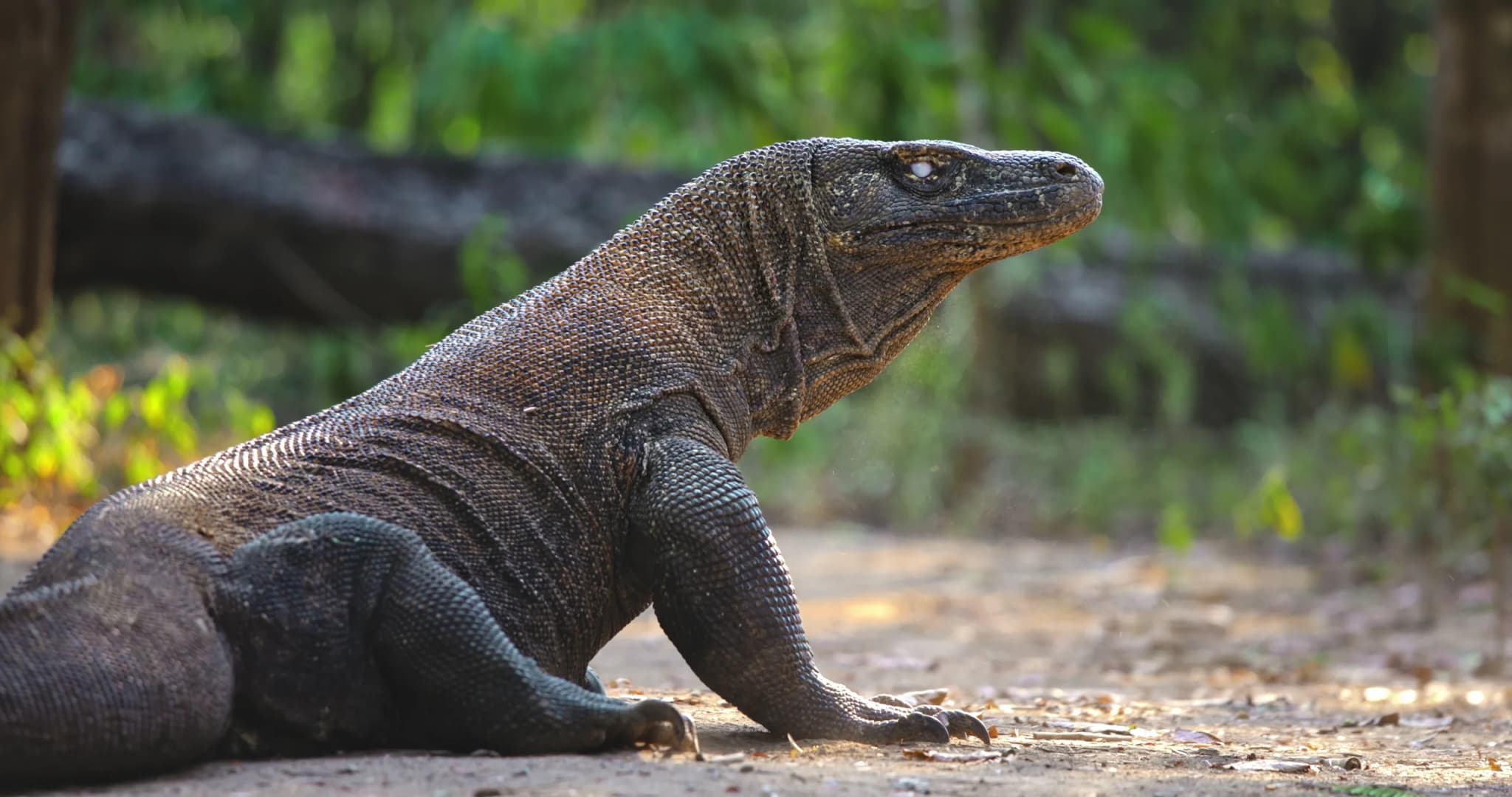
The Komodo dragon (Varanus komodoensis) is the world's largest living lizard, native to a small cluster of islands in eastern Indonesia, including Komodo, Rinca, Flores, and Gili Motang. Adults typically reach 2.5 to 3 meters in length and can weigh over 70 kilograms, hunting deer, wild boar, and water buffalo through a combination of ambush, serrated teeth, and venom-producing oral glands that prevent blood clotting in prey.
The species plays a critical role as an apex predator in its island habitats, regulating prey populations and influencing vegetation structure across a landscape it has occupied for millions of years. The IUCN Red List reclassified Varanus komodoensis as Endangered in 2021, citing climate-driven sea-level rise as a direct threat to the low-lying coastal habitat on which the species depends, alongside prey depletion from poaching and the restricted geographic range that leaves wild populations with little room to adapt.
The dragons live on low coastal islands, and much of the forest they use sits close to sea level.
Illegal hunting of the dragons' main prey is harder to police than poaching of the dragons themselves.
The entire wild population lives on Komodo, Rinca, Flores, and two smaller islands.
Tourism brings money and disturbance to the same few beaches at once, and fed dragons change their behavior.
Yes. The Komodo Dragon is listed as Endangered on the IUCN Red List, which means it faces a very high risk of extinction in the wild. A species qualifies on a decline of 50% or more over ten years or three generations, or on fewer than 2,500 mature individuals remaining.
Adult male Komodo dragons typically reach 8 to 9 feet in length, making them the world's largest living lizards. Females are smaller, usually under 6 feet. They are found only on a handful of Indonesian islands, including Komodo, Rinca, and Flores, where prey size and island ecology shape their growth.
Komodo dragons can sprint at roughly 12 miles per hour over short distances, fast enough to ambush deer, pigs, and water buffalo. They rely on stealth and a venomous bite rather than sustained pursuit, tracking wounded prey across Komodo National Park using their forked tongue to detect carrion from miles away.
Komodo dragons eat large prey including Timor deer, wild boar, water buffalo, and goats, as well as carrion and smaller animals. They deliver a venomous bite that prevents blood clotting and then track the weakening animal, sometimes over several days, before feeding on nearly the entire carcass.
A Komodo dragon is a giant monitor lizard native to a small group of Indonesian islands and listed as Endangered on the IUCN Red List. It is the apex predator of its island ecosystem, capable of killing prey many times its own size using venom, powerful claws, and serrated teeth.
Large male Komodo dragons commonly weigh around 150 to 175 pounds, with some individuals recorded above 200 pounds. Weight varies significantly with age, sex, and recent feeding, since a dragon can consume up to 80 percent of its body weight in a single meal.
Komodo dragons live on four islands in eastern Indonesia: Komodo, Rinca, Gili Motang, and Flores. Most of the population is protected within Komodo National Park, a UNESCO World Heritage Site, but rising sea levels and habitat loss threaten their range, which is why the IUCN Red List classifies them as Endangered.
No projects have listed this species yet.