
Killed over livestock
Retaliation after stock losses accounts for more leopard deaths than any other single cause.
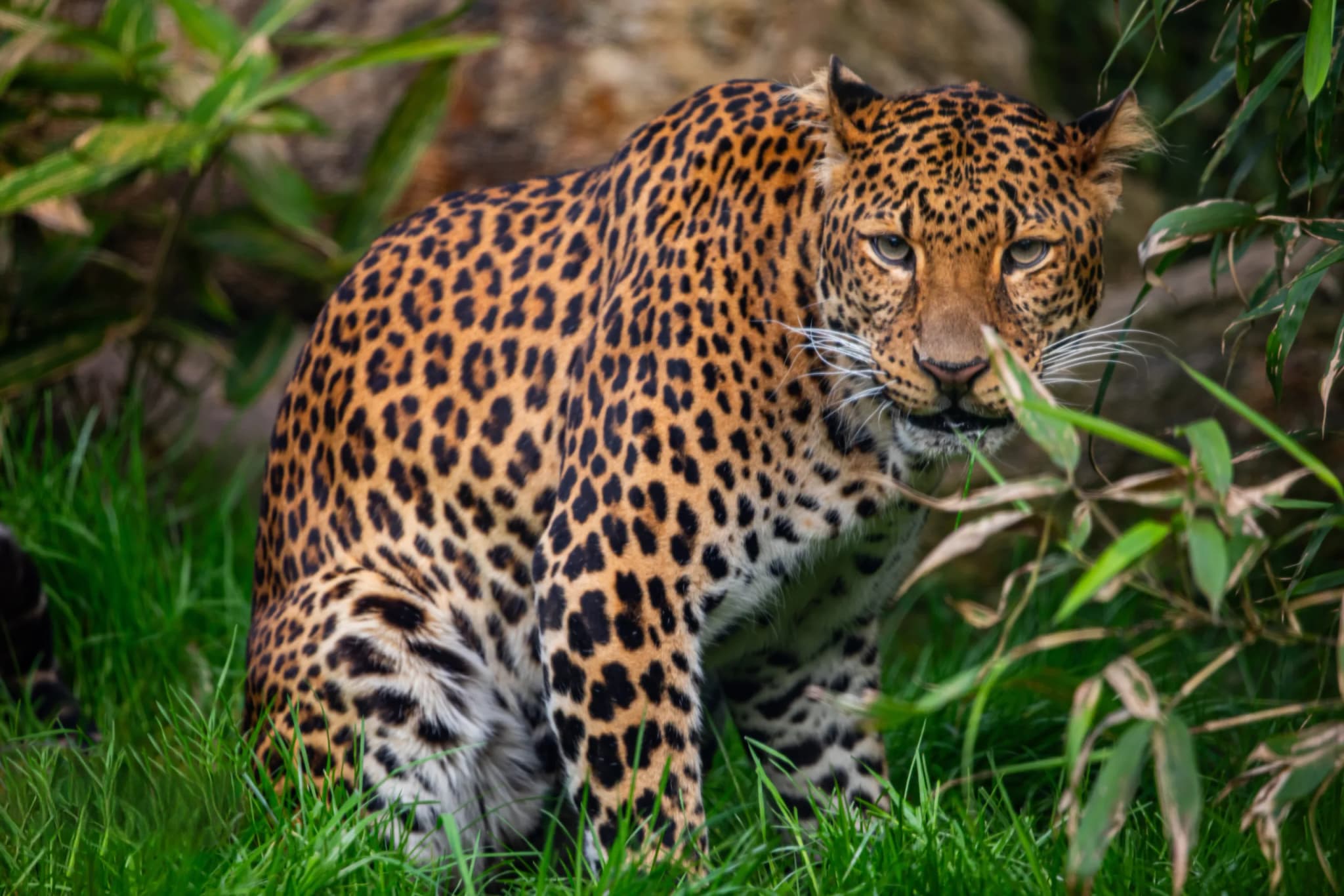
The leopard (Panthera pardus) is the most widely distributed wild cat on Earth, found across sub-Saharan Africa, parts of North Africa, the Middle East, Central Asia, South Asia, and Southeast Asia. Solitary and largely nocturnal, leopards are ambush predators capable of taking prey ranging from dung beetles to adult elands, and they are known for hauling carcasses weighing more than themselves into trees to cache them away from lions and spotted hyenas.
Despite their adaptability, leopards are listed as Vulnerable on the IUCN Red List, with populations declining across much of their range. The primary pressures are habitat loss and fragmentation driven by agricultural expansion, direct persecution by farmers protecting livestock, and poaching for the illegal wildlife trade, which targets their spotted pelts and bones used in traditional medicine. Some regional subspecies, including the Amur leopard (Panthera pardus orientalis) and the Arabian leopard (Panthera pardus nimr), face a far more acute risk of extinction than the species-level assessment suggests.
Retaliation after stock losses accounts for more leopard deaths than any other single cause.
Leopards are killed for their pelts and for bones sold as a substitute for tiger in traditional medicine.
Bushmeat snaring strips reserves of the antelope and deer leopards live on, even where the cats are protected.
Leopards persist nearer to people than any other big cat, but the land they hunt over keeps shrinking.
Not in the strict sense. The Leopard is listed as Vulnerable on the IUCN Red List, the first of the three threatened categories and the one below Endangered. It qualifies on a decline of 30% or more, or on a population under 10,000 mature individuals.
Leopards are the most adaptable hunters of all the big cats, taking prey from antelope and deer down to monkeys, birds, and rodents. They often haul kills high into trees to keep them from lions and hyenas, a behavior that helps them survive alongside larger predators across Africa and Asia.
Leopards range across sub-Saharan Africa and parts of Asia, from Indian forests and the Russian Far East to African savannas and mountains, making them the most widely distributed wild cat. Despite that reach, the IUCN lists them as Vulnerable, with populations shrinking and several subspecies critically endangered.
A black panther is usually a leopard with melanism, a genetic trait that darkens the coat. The rosette markings are still there, visible in the right light. In Africa and Asia a black panther is almost always a melanistic leopard, Panthera pardus, rather than a separate species.
Leopards live in Africa and Asia while jaguars live in the Americas, so the two never meet in the wild. Leopards are lighter and more slender, and their rosettes have no central spots, whereas a jaguar's rosettes usually enclose small dots. Jaguars are also far stronger for their size.
Adult leopards typically weigh between 60 and 140 pounds, with males roughly half again as heavy as females. Size varies widely across their range: leopards in South Africa's Cape are much smaller than those in the forests of Central Africa, an adaptation to local prey and terrain.
The leopard is listed as Vulnerable on the IUCN Red List, and several subspecies are far worse off. The Amur leopard of the Russian Far East numbers only around 100 individuals, and the Javan and Arabian leopards are critically endangered. Habitat loss, poaching, and prey depletion drive the decline.


Know an organization protecting the Leopard? Add it, or claim your own page. Listing is free.
Add one