
Retaliatory poisoning
Lions that take cattle are killed with poison, which also kills the vultures and hyenas at the same carcass.
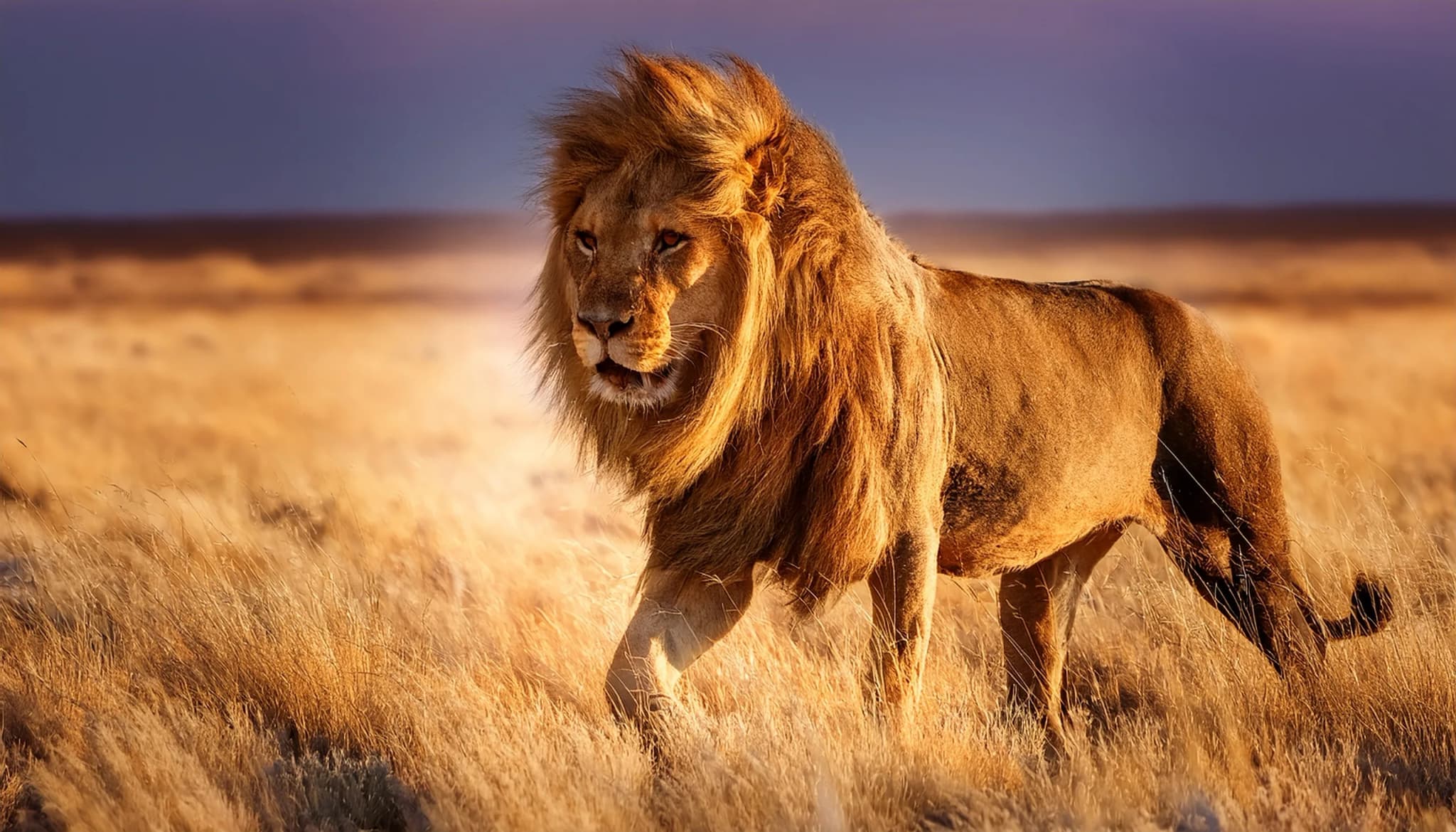
The lion (Panthera leo) is the largest cat in Africa and the only felid species that lives in structured social groups, called prides, which typically consist of related females, their cubs, and a coalition of males. Lions occupy a wide range of habitats, including savanna grasslands, open woodlands, and scrubland, with the largest remaining wild populations concentrated in sub-Saharan Africa, particularly in Tanzania, Kenya, Botswana, and Zimbabwe. A small, critically pressured population of Asiatic lions (Panthera leo persica) persists in the Gir Forest of Gujarat, India.
As apex predators, lions regulate prey populations such as wildebeest, zebra, and buffalo, which in turn shapes vegetation structure and supports broader ecological balance across savanna systems. The IUCN Red List classifies the lion as Vulnerable, with the African lion population estimated to have declined by approximately 43 percent over the past three lion generations, roughly 21 years. The primary threats are habitat loss and fragmentation driven by expanding human settlement, retaliatory killing by livestock herders, prey depletion from bushmeat hunting, and in some subregions, poorly managed trophy hunting and disease transmission from domestic animals.
Lions that take cattle are killed with poison, which also kills the vultures and hyenas at the same carcass.
Wire snaring for bushmeat empties the parks lions should be safest in.
Lions need very large areas, and land outside reserves is being converted faster than reserves can expand.
A trade in lion bone grew as tiger substitutes became harder to source, and it now draws on wild animals.
Not in the strict sense. The Lion is listed as Vulnerable on the IUCN Red List, the first of the three threatened categories and the one below Endangered. It qualifies on a decline of 30% or more, or on a population under 10,000 mature individuals.
Adult male lions typically weigh between 330 and 550 pounds, while females weigh between 265 and 395 pounds. Males in the Serengeti tend to be heavier than those in smaller, more fragmented habitats across sub-Saharan Africa and India's Gir Forest.
Lions are apex predators that hunt large ungulates, primarily wildebeest, zebra, and buffalo across African savannas, and chital deer in India's Gir Forest. Females do most of the hunting cooperatively, while males defend the kill and feed first.
Healthy adult lions have no natural predators, but hyenas, leopards, and African wild dogs will kill unguarded cubs. Spotted hyena clans can also drive weakened or solitary lions off kills, and Nile crocodiles occasionally take lions drinking at river crossings.
Lions live in prides because cooperative hunting and communal cub-rearing on open savanna outweigh the costs of sharing food. A pride of related females can bring down Cape buffalo and zebra that a solitary cat could not, and group vigilance deters spotted hyenas, which regularly steal kills in the Serengeti.
Fewer than 25,000 lions remain in the wild, according to the IUCN Red List, with the largest populations concentrated in Tanzania's Serengeti ecosystem, the Okavango Delta in Botswana, and Kruger National Park in South Africa. A small, critically isolated population of around 700 Asiatic lions survives only in Gujarat's Gir Forest, India.
Lionesses use silent positional tactics, fanning into a semicircle so that flanking cats drive prey toward a center ambusher waiting in cover. Research in the Etosha pan in Namibia has shown that individual females consistently adopt the same role, whether center or wing, across repeated hunts.