
Longlines and trawls
Loggerheads are caught in pelagic longline fisheries across both the Atlantic and Pacific, which is the largest cause of death.
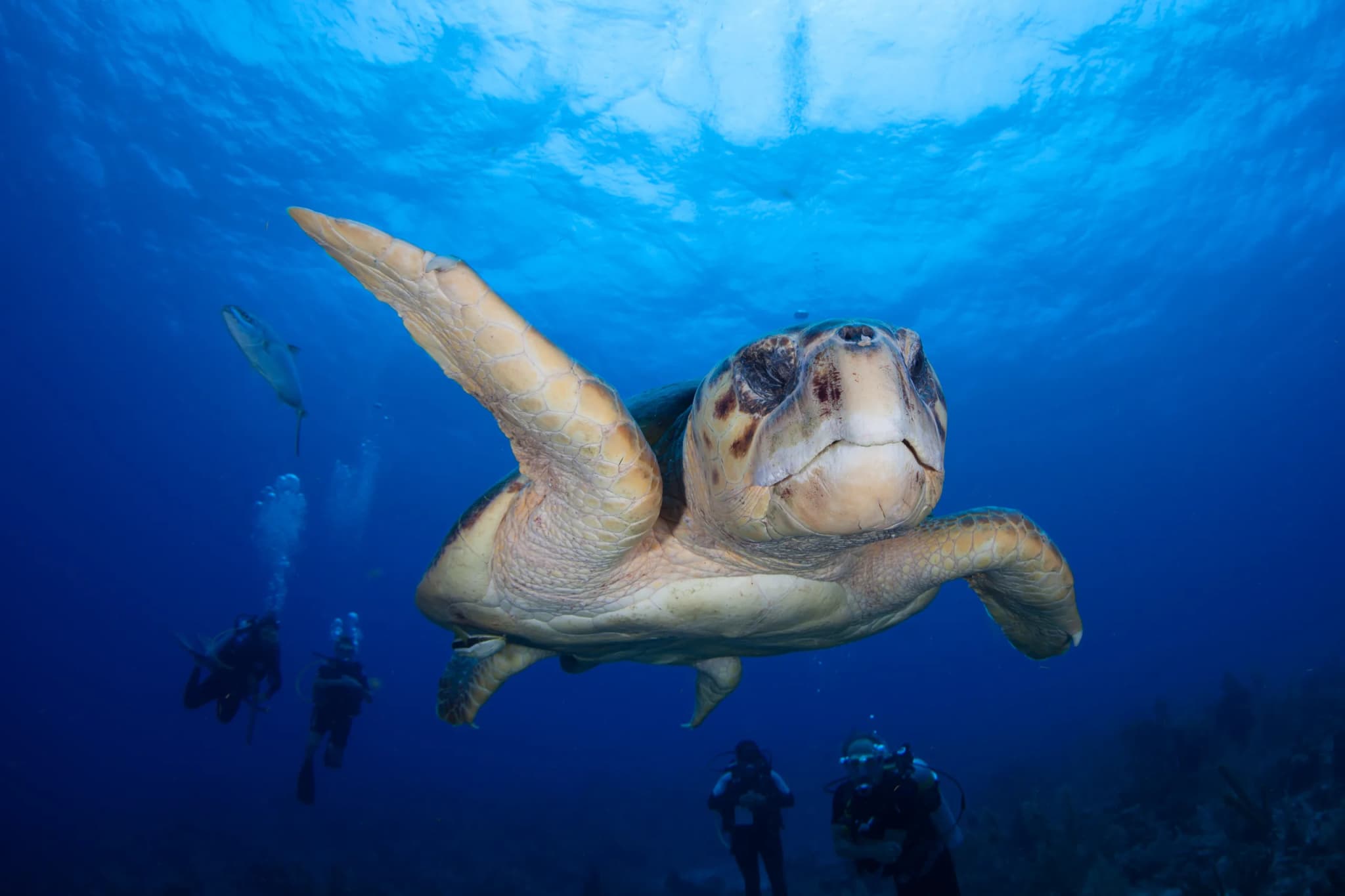
The loggerhead sea turtle (Caretta caretta) is the world's largest hard-shelled sea turtle, named for its disproportionately large head, which houses powerful jaw muscles capable of crushing the hard-shelled prey it favors. Adults typically weigh between 155 and 375 pounds and measure around 3 feet in carapace length, according to NOAA Fisheries. They are highly migratory, ranging across the Atlantic, Pacific, and Indian Oceans, with females making remarkable transoceanic journeys to return to the beaches where they hatched in order to nest.
Loggerheads play a measurable role in marine food webs: by preying on benthic invertebrates such as horseshoe crabs, whelks, and sponges, they help regulate populations of organisms that would otherwise dominate those communities. The IUCN Red List classifies the species as Vulnerable globally, though some subpopulations are listed as Endangered or Critically Endangered. Bycatch in longline and trawl fisheries is the most significant driver of adult mortality worldwide, compounded by coastal development that degrades nesting beaches, artificial lighting that disorients hatchlings, and the increasing effects of climate change on sand temperatures, which influence hatchling sex ratios.
Loggerheads are caught in pelagic longline fisheries across both the Atlantic and Pacific, which is the largest cause of death.
Loggerheads nest on some of the most built-up coastline in the world, in Florida, Greece, and Turkey.
Nest temperature decides sex, and several major rookeries are now producing overwhelmingly female hatchlings.
Loggerheads swallow plastic and become entangled in discarded gear during their long oceanic phase.
Not in the strict sense. The Loggerhead Turtle is listed as Vulnerable on the IUCN Red List, the first of the three threatened categories and the one below Endangered. It qualifies on a decline of 30% or more, or on a population under 10,000 mature individuals.
Loggerhead turtles are large, reddish-brown sea turtles named for their broad, heavy heads, which house powerful jaw muscles. Adults typically weigh between 200 and 350 pounds, and their heart-shaped carapace can reach roughly 35 inches in length, making them one of the largest hard-shelled sea turtles in the world.
The loggerhead turtle (Caretta caretta) is a large marine reptile found in the Atlantic, Pacific, and Indian Oceans, listed as Vulnerable on the IUCN Red List. It is the world's largest hard-shelled sea turtle and plays a key role in ocean ecosystems by controlling populations of hard-shelled prey like horseshoe crabs and conch.
The loggerhead is listed as Vulnerable, not endangered, by the IUCN Red List, though some regional populations face a higher threat level. Primary pressures include accidental capture in longline fishing gear and trawl nets, coastal development that degrades nesting beaches in Florida, Greece, and Oman, and disorientation of hatchlings caused by artificial lighting.
Loggerhead sea turtles eat hard-shelled invertebrates, including horseshoe crabs, whelks, conch, and sea urchins, crushing them with their powerful jaws. They also consume jellyfish, fish, and sponges opportunistically, foraging across the Atlantic, Mediterranean, and Pacific depending on their life stage and seasonal migration routes.
Loggerhead turtles eat primarily hard-shelled prey such as horseshoe crabs, clams, mussels, and conch, using their large, strong jaws to crush through shells. Juveniles drifting in open-ocean currents also feed on jellyfish and floating invertebrates before moving to coastal foraging grounds as they mature.
Loggerhead sea turtles range across the Atlantic, Pacific, and Indian Oceans, with major nesting beaches in Florida, Greece, Turkey, and Oman. They use open-ocean currents like the North Atlantic Gyre during their juvenile years, then shift to coastal foraging habitats in seagrass beds, coral reefs, and shallow continental shelf waters as adults.
No projects have listed this species yet.