
Hotter, drier Kalahari
Rising temperatures reduce foraging time and pup survival, and long-term study groups show declining body condition.
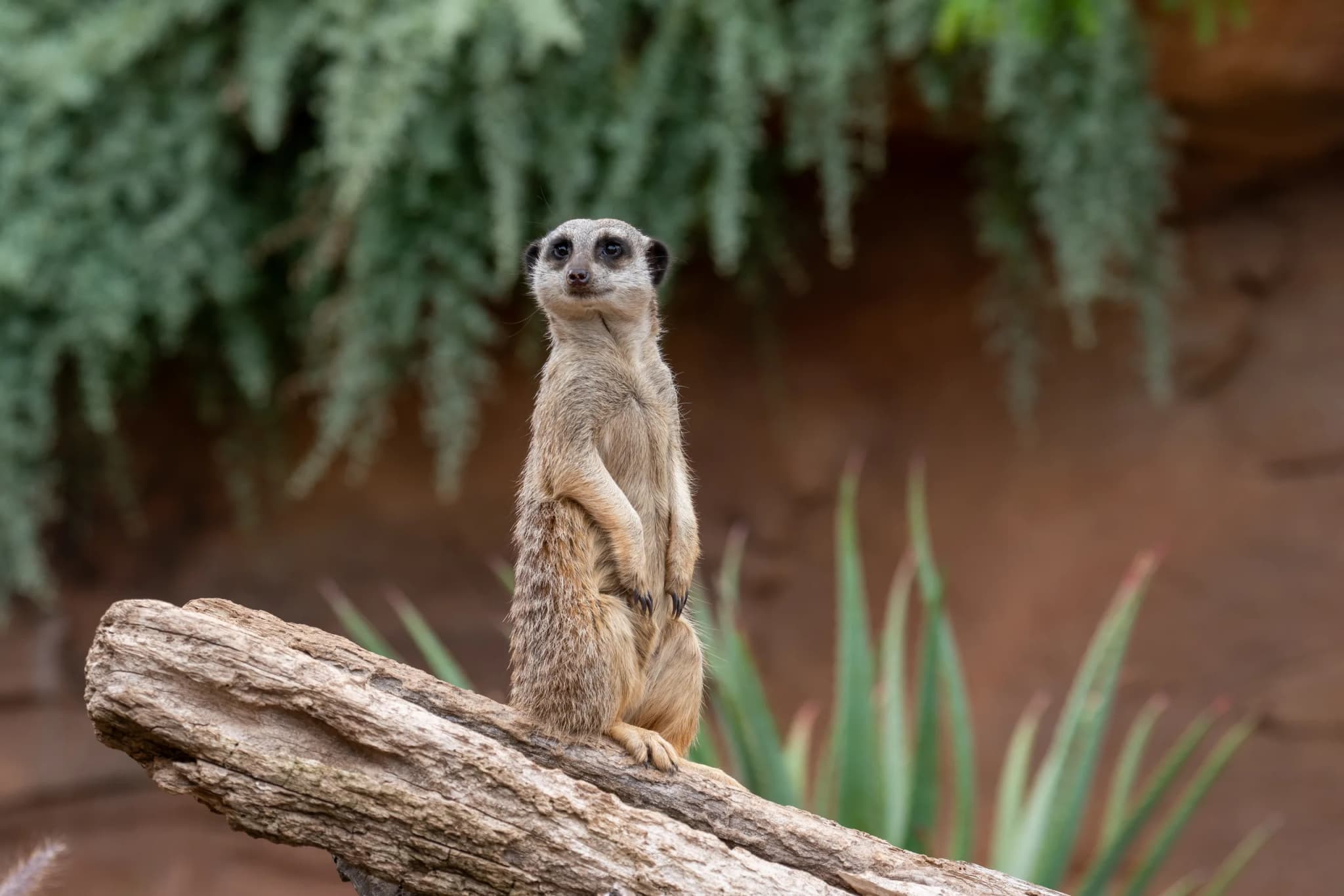
The meerkat (Suricata suricatta) is a small, social mongoose native to the arid regions of southern Africa, where it lives in tightly coordinated groups called mobs or gangs, typically numbering between 20 and 30 individuals. It occupies open, semi-arid habitats including the Kalahari Desert across Botswana, Namibia, and South Africa, as well as the Namib Desert and parts of Angola, foraging by day for insects, scorpions, small lizards, and plant matter while rotating sentinel duty among group members.
Meerkats play a meaningful role in their local food webs, both as predators of invertebrates and small vertebrates and as prey for raptors, jackals, and snakes. They are listed as Least Concern on the IUCN Red List, reflecting a stable and relatively widespread population, though localized pressures including habitat degradation from overgrazing, road mortality, and capture for the illegal pet trade do affect certain populations. Their dependence on complex social structures and communal burrow systems means that disruption to group cohesion, whether from disease, predation pressure, or human interference, can have disproportionate effects on individual survival.
Rising temperatures reduce foraging time and pup survival, and long-term study groups show declining body condition.
Bovine TB spreads through meerkat groups and can wipe one out entirely.
Fencing and farming break up the open ground the species forages across.
Meerkats are captured for the exotic pet trade, driven by their popularity in media.
No. The Meerkat is assessed as Least Concern on the IUCN Red List, meaning it is currently widespread and abundant enough not to be at risk. That is a global assessment, and a global assessment can sit on top of steep decline in one country or region.
A meerkat is a small, highly social mongoose native to the arid regions of southern Africa, living in cooperative groups called mobs or gangs that can number up to 30 individuals. Listed as Least Concern on the IUCN Red List, they are among the most studied wild mammals due to long-running research projects in the Kalahari Desert.
Meerkats eat insects, larvae, scorpions, small lizards, snakes, eggs, and plant material foraged by rooting through Kalahari sand and scrub. They are immune to venom from species such as the cape cobra, which allows them to safely eat prey that would kill animals of similar size.
A meerkat has a slender, sandy-brown body about 25 to 35 centimeters long, with dark eye patches that reduce sun glare, a tapered tail, and dark bands across its back. It typically weighs under one kilogram and stands upright on its hind legs to scan for predators.
Keeping a meerkat as a pet is legal in some countries but is generally discouraged by wildlife experts and is restricted or prohibited in many others, including the United Kingdom. Meerkats are wild animals with complex social needs that cannot be met in a domestic setting, and demand for pets fuels harmful wild capture.
Meerkats live in the semi-arid deserts and open scrublands of southern Africa, primarily in the Kalahari Desert across Botswana, Namibia, and South Africa, and in parts of Angola. They dig elaborate burrow systems that provide shelter from predators and extreme daytime heat.
Martial eagles and other raptors are the primary predators of meerkats, which is why mobs post dedicated sentinels that give distinct aerial alarm calls at the sight of a flying threat. Jackals, caracals, and cape cobras also prey on meerkats, particularly young pups near burrow entrances.
No projects have listed this species yet.