
Armed groups in the range
Militia activity inside the Ituri Forest makes protection dangerous, and the reserve headquarters at Epulu was attacked in 2012.
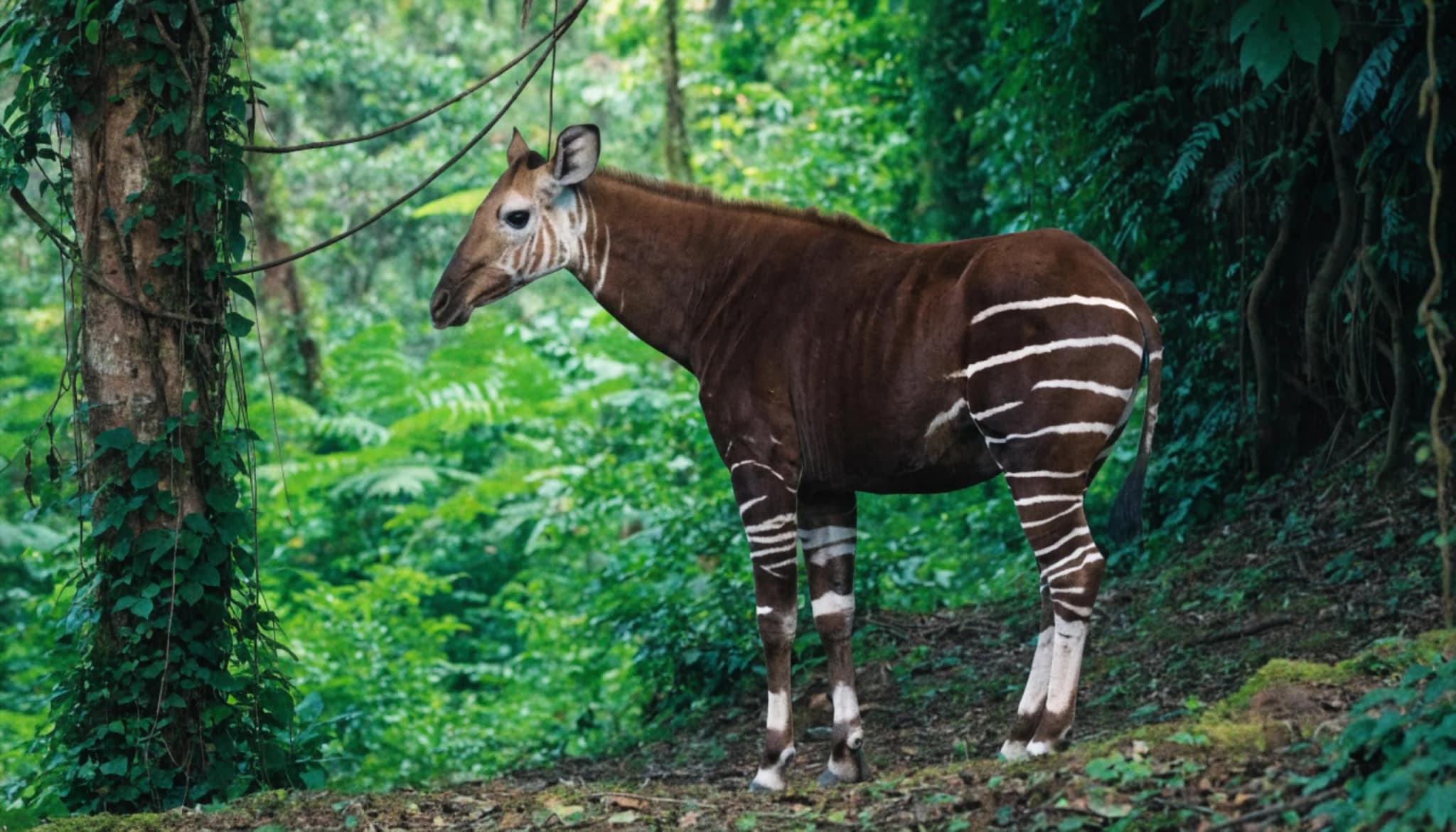
The okapi (Okapia johnstoni) is the only living relative of the giraffe, though its striped hindquarters and compact build make it look more like a forest-adapted horse. It lives exclusively in the dense tropical rainforests of the Democratic Republic of Congo, particularly in the Ituri Forest, where it browses on leaves, buds, grasses, and fungi using a long, dark prehensile tongue. Largely solitary and secretive, it plays a meaningful role in seed dispersal across the forest understory, and its presence is considered an indicator of intact, old-growth forest health.
The okapi is listed as Endangered on the IUCN Red List, with the population estimated to have declined by more than 50 percent over the past two decades. The primary threats are habitat loss driven by illegal logging and agricultural encroachment, intensified poaching for bushmeat and skin, and the persistent instability caused by armed conflict in eastern DRC. The Okapi Wildlife Reserve, a UNESCO World Heritage Site covering roughly 13,700 square kilometers, provides the species' most significant protected habitat, but ranger patrols and conservation infrastructure within the reserve have repeatedly been disrupted by militia activity.
Militia activity inside the Ituri Forest makes protection dangerous, and the reserve headquarters at Epulu was attacked in 2012.
Mining camps bring roads, settlement, and hunting into forest that was otherwise intact.
Okapis are caught wherever access allows, and they are difficult to monitor even where protected.
Timber extraction opens the canopy and brings the roads that everything else follows.
Yes. The Okapi is listed as Endangered on the IUCN Red List, which means it faces a very high risk of extinction in the wild. A species qualifies on a decline of 50% or more over ten years or three generations, or on fewer than 2,500 mature individuals remaining.
The okapi (Okapia johnstoni) is a large forest mammal native to the Democratic Republic of Congo and the only living relative of the giraffe. Despite its zebra-striped legs, it is far more closely related to giraffes than to zebras, and like giraffes it uses a long, dark tongue to strip leaves from branches.
Okapi live exclusively in the dense tropical rainforest of the Ituri Forest in northeastern Democratic Republic of Congo. They depend on this closed-canopy habitat for cover and food, and are rarely found outside it, which makes them highly vulnerable to deforestation and armed conflict in the region.
The wild population is estimated at fewer than 25,000 individuals, according to the IUCN Red List, and the trend is declining. Habitat loss driven by logging and agricultural encroachment, combined with poaching and instability in the DRC, continues to reduce their numbers across the Ituri Forest.
Yes, the okapi is listed as Endangered on the IUCN Red List, a status it has held since 2013. The primary threats are illegal logging, bushmeat poaching, and armed conflict, which has repeatedly disrupted conservation work inside the Okapi Wildlife Reserve in the DRC.
The okapi (Okapia johnstoni) is a large, hoofed mammal in the family Giraffidae, making it the giraffe's closest and only living relative. It has a dark chestnut-brown body, boldly striped hindquarters and legs, and a prehensile tongue long enough to clean its own eyes and ears.
Okapi are browsers that feed on leaves, buds, grasses, ferns, and fruit foraged from the understory of the Ituri Forest. They use their long, flexible tongue to pull foliage from branches, and have been observed eating clay and charcoal from riverbanks, likely to supplement essential minerals in their diet.
No projects have listed this species yet.