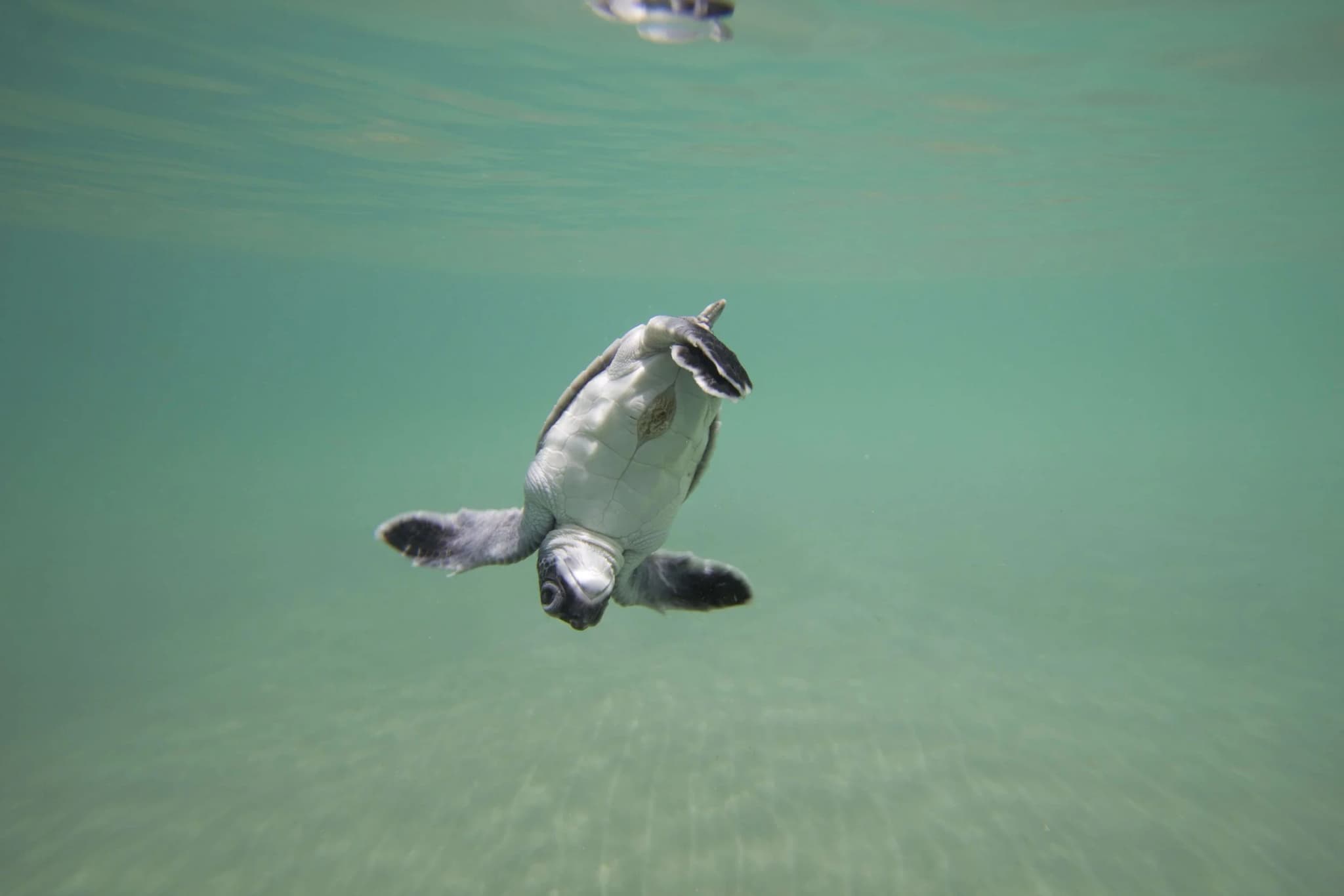
Trawls and gillnets
Olive ridleys drown in coastal fisheries in very large numbers, particularly off India and Central America.
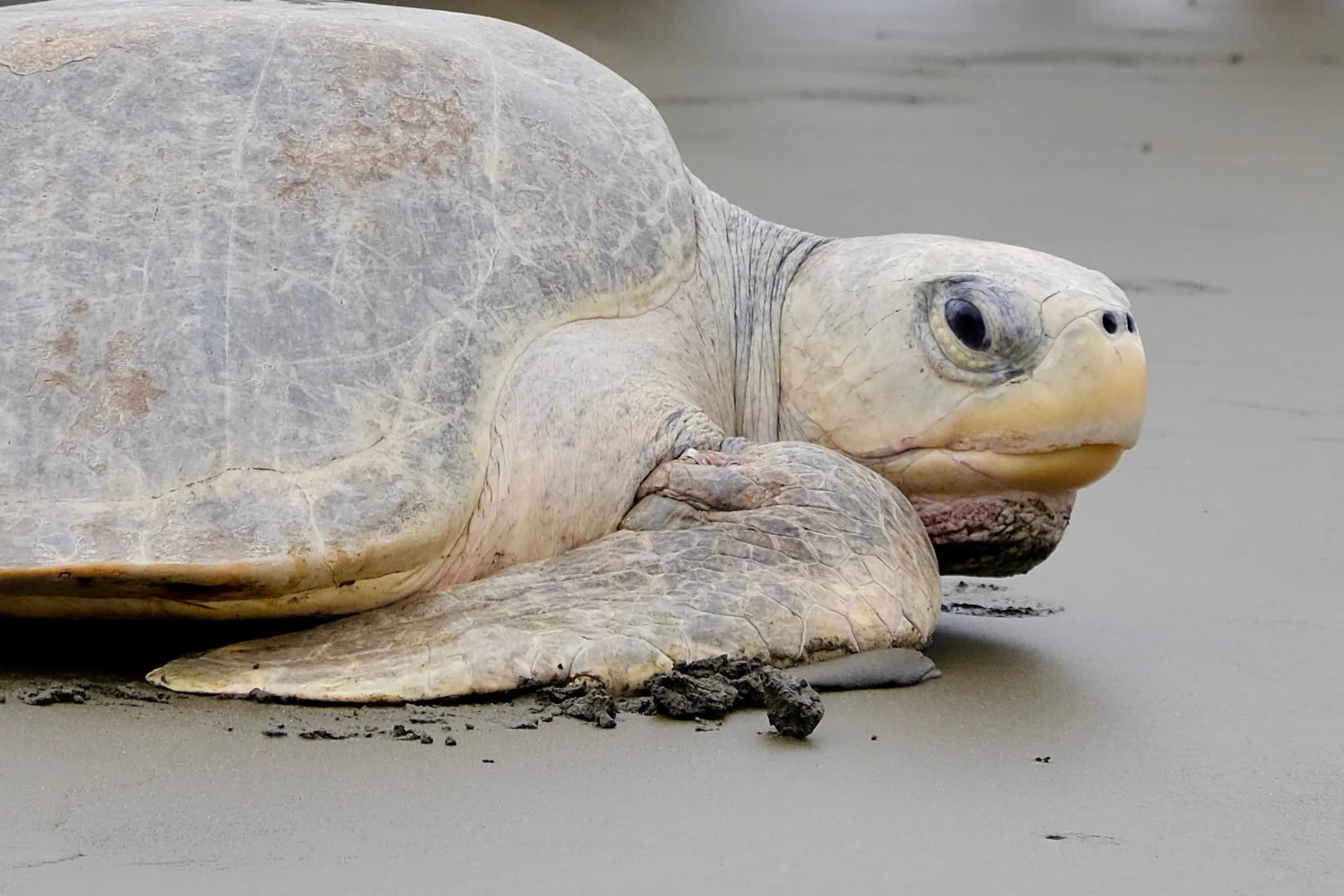
The Olive Ridley turtle (Lepidochelys olivacea) is the smallest and most abundant of the world's sea turtle species, named for the pale olive-green color of its heart-shaped carapace, which typically reaches around 60 to 70 centimeters in length. It inhabits warm tropical and subtropical waters across the Pacific, Atlantic, and Indian Oceans, spending most of its life in the open sea and coming ashore almost exclusively to nest. As a generalist predator, it feeds on jellyfish, crabs, shrimp, and algae, and plays a role in regulating invertebrate populations in the open-ocean and nearshore environments where it forages.
Despite being listed as Vulnerable on the IUCN Red List, the Olive Ridley faces serious and ongoing pressure. Its most striking behavior, the mass synchronized nesting event known as an arribada, concentrates tens of thousands of females on a small number of beaches in Mexico, India, and Costa Rica, making those sites acutely sensitive to disturbance and exploitation. Egg harvesting, incidental capture in fishing gear (particularly shrimp trawls and gillnets), coastal development, light pollution disorienting hatchlings, and the accumulation of marine plastic waste all contribute to population pressure. Several regional subpopulations, including those formerly nesting along the coasts of West Africa and parts of Asia, have declined sharply or disappeared entirely.
Olive ridleys drown in coastal fisheries in very large numbers, particularly off India and Central America.
Arribada nesting concentrates millions of eggs in a few nights on a few beaches, which makes them easy to harvest.
The species depends on a handful of mass nesting beaches, so losing one is a species-level loss.
Olive ridleys feed at the surface in open water, where floating debris accumulates.
Not in the strict sense. The Olive Ridley Turtle is listed as Vulnerable on the IUCN Red List, the first of the three threatened categories and the one below Endangered. It qualifies on a decline of 30% or more, or on a population under 10,000 mature individuals.
Olive Ridley sea turtles are opportunistic omnivores that eat jellyfish, shrimp, crabs, sea urchins, and algae. They forage primarily in shallow coastal waters and open ocean, using their strong, hooked jaws to crush hard-shelled prey like mollusks and crustaceans.
Olive Ridleys are found in the warm tropical and subtropical waters of the Pacific, Atlantic, and Indian Oceans, with major nesting populations along the coasts of Mexico, India, and Costa Rica. They favor open ocean for foraging but return to shallow coastal waters and specific beaches, such as Odisha's Gahirmatha, to nest.
An arribada is a mass synchronized nesting event unique to Olive Ridleys and Kemp's Ridleys, during which tens of thousands of females come ashore on the same beach within days of each other. Ostional Beach in Costa Rica hosts one of the largest, with an estimated half a million females arriving in a single event.
The primary threats are incidental capture in fishing gear, particularly gillnets and trawls, along with egg harvesting and coastal development that destroys nesting beaches, according to the IUCN Red List. Legal egg collection still occurs at Ostional, Costa Rica, under a managed program that remains scientifically debated.
Olive Ridleys are the smallest of the sea turtles, typically reaching about 60 to 70 centimeters in shell length and weighing between 35 and 50 kilograms at adulthood. Their carapace is distinctively heart-shaped and olive-gray in color, which gives the species its common name.
Adults have few natural predators due to their hard shell, but sharks, particularly tiger sharks, will take them in open water. Hatchlings face far heavier predation from ghost crabs and shorebirds on the beach, then from large fish and sharks once they enter the surf, with survival rates estimated at well under one percent.