
Mangrove and riverine forest cleared
The species lives in a narrow band of coastal and riverside forest being converted for oil palm, shrimp ponds, and settlement.
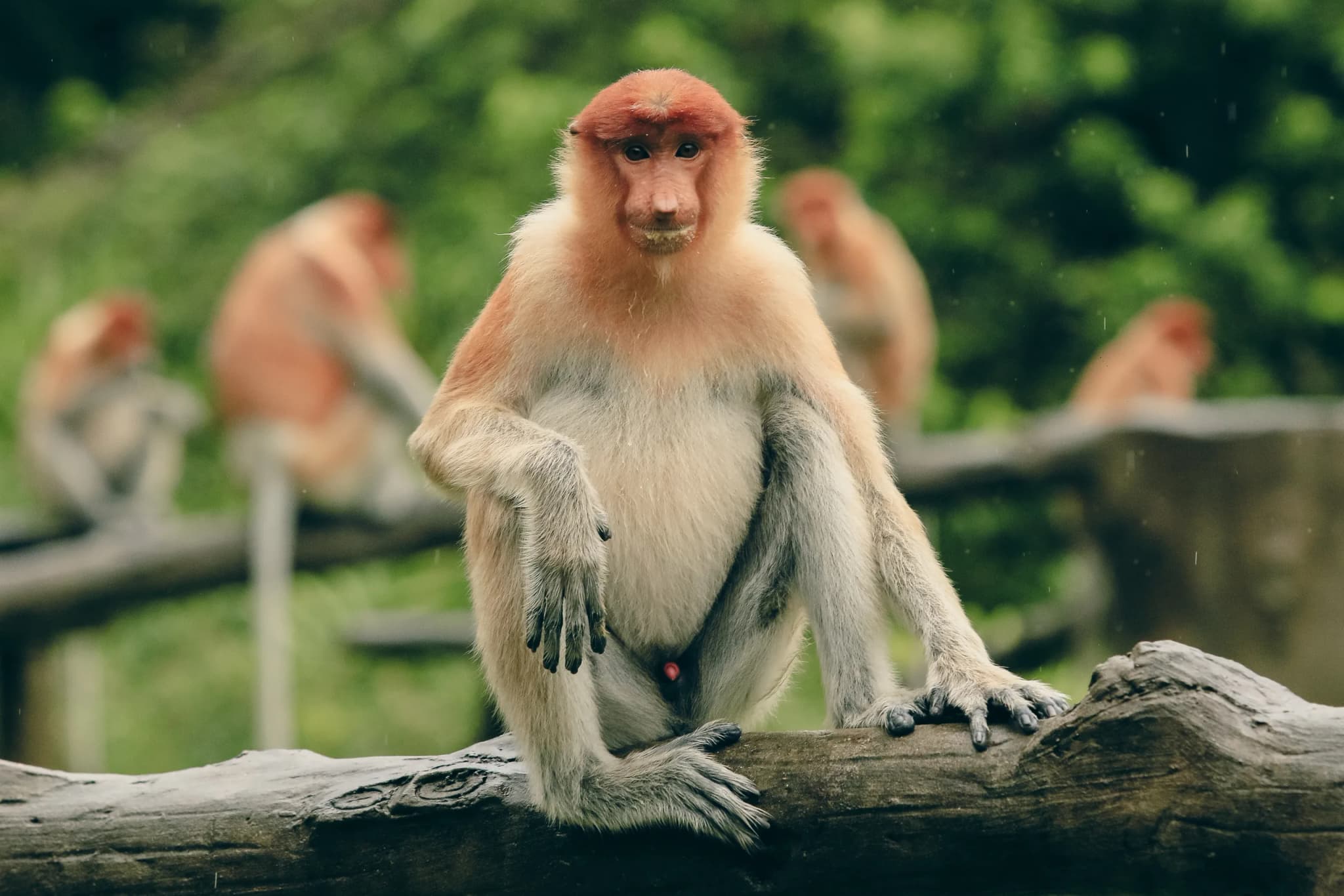
The proboscis monkey (Nasalis larvatus) is a large, reddish-brown colobine primate found exclusively on the island of Borneo, living in riverine and coastal forests including mangroves, swamp forests, and lowland dipterocarp forest. Males are notably larger than females and carry a pendulous, fleshy nose that can exceed 10 centimeters in length, which amplifies their vocalizations and plays a role in mate attraction. They are highly social, typically moving through the forest canopy in harem groups led by a single adult male, and they are strong swimmers, capable of crossing rivers with a distinctive upright stroke.
Proboscis monkeys are specialized folivores, relying heavily on leaves, seeds, and unripe fruit, and their complex, multi-chambered stomachs support fermentation of plant material in a way that mirrors ruminant digestion. This dietary specialization ties them closely to intact, structurally diverse forest, making them highly sensitive to habitat degradation. The IUCN Red List classifies the species as Endangered, with the primary drivers of decline being deforestation for oil palm agriculture, logging, and coastal development, compounded by hunting pressure in some parts of their range.
The species lives in a narrow band of coastal and riverside forest being converted for oil palm, shrimp ponds, and settlement.
Clearing between river stretches leaves groups stranded in fragments they cannot leave.
Proboscis monkeys are shot for meat and for stones from their gut sold in traditional medicine.
Borneo's fires reach the riverine forest the species depends on and kill the trees it feeds in.
Yes. The Proboscis Monkey is listed as Endangered on the IUCN Red List, which means it faces a very high risk of extinction in the wild. A species qualifies on a decline of 50% or more over ten years or three generations, or on fewer than 2,500 mature individuals remaining.
The proboscis monkey is a large, reddish-brown Old World monkey native to Borneo, best recognized by the long, fleshy nose of adult males. It is the only member of the genus Nasalis, and adults are strong swimmers that regularly cross rivers, using partially webbed feet to navigate mangrove channels.
Proboscis monkeys live exclusively on the island of Borneo, in the coastal mangrove forests, riparian forest, and peat swamp forest of Brunei, Malaysia, and Indonesia. They depend heavily on riverine habitat and are rarely found far from water.
The enlarged nose of male proboscis monkeys amplifies their vocalizations, making calls louder and more resonant to attract females and warn rival males. Females consistently prefer males with larger noses, so sexual selection has driven the trait to an extreme over generations.
Proboscis monkeys live only on Borneo, occupying mangrove forests, swamp forest, and forest along rivers in Brunei, the Malaysian states of Sabah and Sarawak, and the Indonesian provinces of Kalimantan. They sleep in trees overhanging water, which offers a quick escape route from predators such as clouded leopards.
The oversized nose functions as a resonating chamber that makes the male's honking calls carry farther through dense forest, and females favor larger-nosed males when choosing a mate. This combination of acoustic advantage and female preference has produced one of the most distinctive faces in the primate world.
No projects have listed this species yet.