Spiny forest and gallery forest cleared
Madagascar's south is being cut for charcoal and cleared for maize, and ring-tails depend on the gallery forest along rivers.
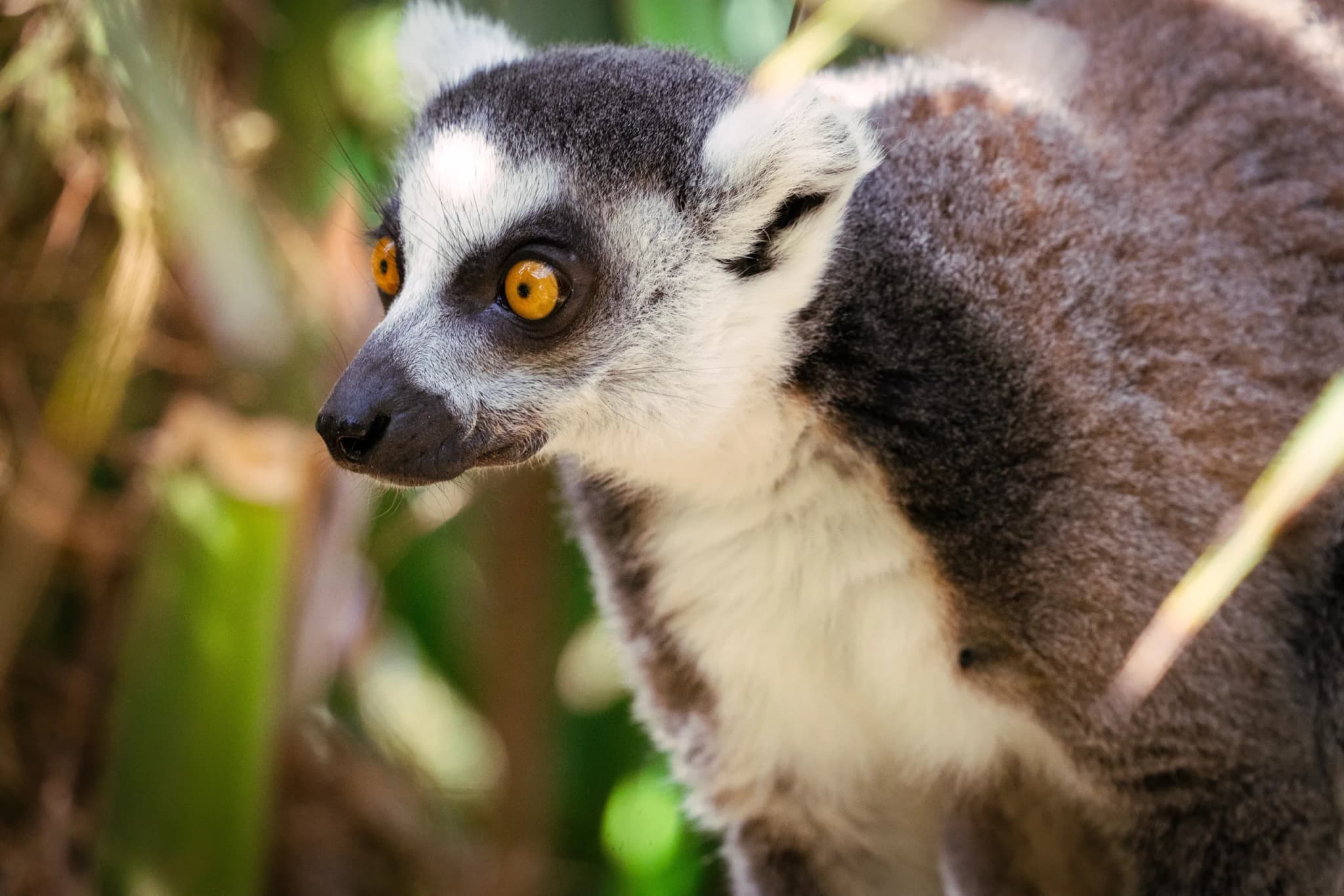
The ring-tailed lemur (Lemur catta) is a strepsirrhine primate endemic to Madagascar, recognized by its distinctively banded black-and-white tail, which it holds upright while moving through open terrain. It is one of the most terrestrial of all lemur species, spending significant time foraging on the ground across dry deciduous forests, spiny thickets, and rocky scrubland in the island's southern and southwestern regions. As a frugivore and folivore, it disperses seeds across its range and plays a documented role in the regeneration of Madagascar's highly endemic plant communities.
The IUCN Red List classifies the ring-tailed lemur as Endangered, with population estimates suggesting a steep decline over recent decades driven by habitat loss, illegal capture for the exotic pet trade, and hunting for bushmeat. Madagascar has lost more than 90 percent of its original forest cover according to WWF, and the fragmented patches that remain are under continued pressure from slash-and-burn agriculture and charcoal production. Ring-tailed lemurs are also vulnerable to cyclone events and prolonged drought, both of which are increasing in frequency and severity across southern Madagascar.
Madagascar's south is being cut for charcoal and cleared for maize, and ring-tails depend on the gallery forest along rivers.
Hunting has risen with poverty and drought in southern Madagascar, reaching species that were not previously taken.
Ring-tails are the lemur most often caught for the domestic pet trade and for tourist photographs.
Repeated failed rains in southern Madagascar reduce the fruit and leaves the species depends on.
Yes. The Ring-tailed Lemur is listed as Endangered on the IUCN Red List, which means it faces a very high risk of extinction in the wild. A species qualifies on a decline of 50% or more over ten years or three generations, or on fewer than 2,500 mature individuals remaining.
Fewer than 2,500 ring-tailed lemurs are estimated to remain in the wild, according to the IUCN Red List, which lists the species as Endangered. Habitat loss through slash-and-burn agriculture, charcoal production, and illegal capture for the pet trade have driven a steep population decline across their range in southern Madagascar.
Ring-tailed lemurs live exclusively in Madagascar, concentrated in the arid spiny forests and dry deciduous forests of the island's southern and southwestern regions. They tolerate surprisingly harsh conditions, including the drought-prone Didierea scrubland around Toliara, where water comes mostly from the plants they eat.
Ring-tailed lemurs are omnivores that favor fruit, leaves, flowers, and bark, with tamarind pods forming a dietary staple across much of their range. They also eat insects, spider webs, and small vertebrates opportunistically, and will lick morning dew from leaves during Madagascar's dry season when water is scarce.
Ring-tailed lemurs sun-bask each morning in a distinctive 'sun-worship' posture, sitting upright with their dark-skinned abdomens exposed to warm their bodies after cold desert nights. This thermoregulation behavior is especially common in the semiarid south, where overnight temperatures can drop sharply, and groups often bask communally facing east at dawn.
Ring-tailed lemurs are not monkeys but prosimians, a more ancient primate lineage that diverged before monkeys and apes evolved. They lack the fully forward-facing eyes and enlarged brains typical of simians, and they rely heavily on scent communication in ways that most monkeys do not, using specialized scent glands on their wrists and chest.
Males engage in 'stink fights' by rubbing their tails across wrist and shoulder scent glands, then waving them toward rivals to assert dominance without physical contact. The boldly striped tail, with its 13 alternating black-and-white bands, also acts as a visual flag during group travel through dense scrub, helping individuals keep the troop in sight.