
Oil spills
Otters rely on fur rather than blubber, so oiling destroys their insulation and a single spill can remove a local population in days.
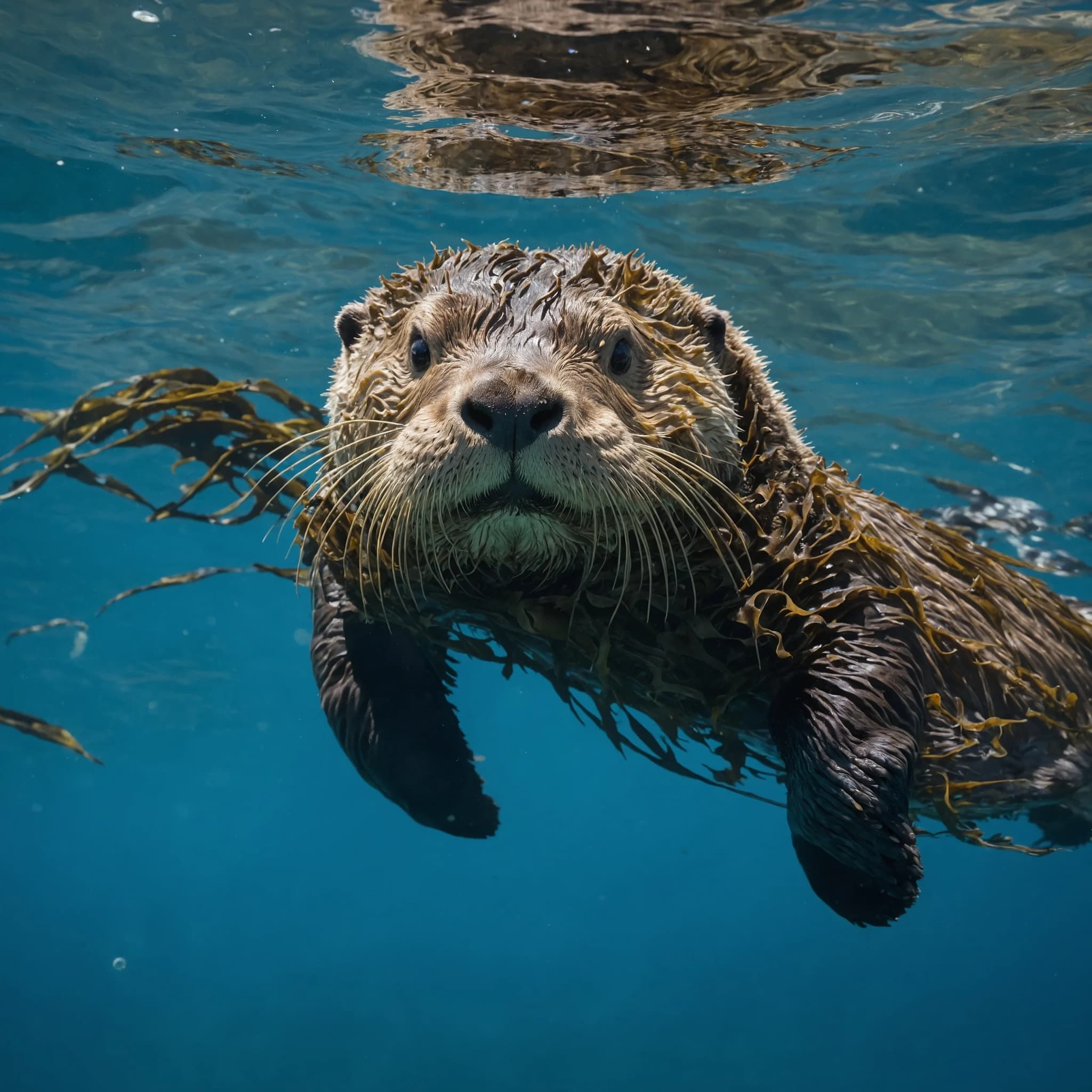
The sea otter (Enhydra lutris) is the heaviest member of the weasel family and the only marine mammal that spends the majority of its life at the ocean surface, rarely coming ashore. Native to the coastal waters of the North Pacific, it inhabits kelp forests and nearshore rocky reefs from the Kuril Islands and Kamchatka Peninsula through the Aleutian archipelago and along the Pacific coast of North America as far south as central California. Unlike other marine mammals, it has no blubber and depends entirely on its exceptionally dense fur, the thickest of any mammal on Earth, to retain body heat in cold water.
Sea otters are a textbook keystone species: by preying on sea urchins, they prevent overgrazing of kelp forests, which in turn shelter hundreds of other species and sequester significant amounts of carbon. The global population was reduced to near extinction by the commercial fur trade in the 18th and 19th centuries, and while protections under the U.S. Marine Mammal Protection Act and international agreements have allowed partial recovery, the species remains listed as Endangered on the IUCN Red List. The main threats today include oil spills, entanglement in fishing gear, shark predation along the California coast, and the vulnerability of small, geographically isolated populations to disease and environmental disruption.
Otters rely on fur rather than blubber, so oiling destroys their insulation and a single spill can remove a local population in days.
In parts of Alaska, orcas switching to otters after other prey declined has driven very steep local losses.
Toxoplasma and other parasites wash from land into the nearshore and kill otters in California.
The fur trade reduced the species to about a thousand animals, and the survivors carry low genetic diversity.
Yes. The Sea Otter is listed as Endangered on the IUCN Red List, which means it faces a very high risk of extinction in the wild. A species qualifies on a decline of 50% or more over ten years or three generations, or on fewer than 2,500 mature individuals remaining.
Great white sharks and orcas are the primary predators of sea otters, with bald eagles taking pups along the California and Alaska coasts. In some Alaskan populations, predation by orcas has driven sharp local declines, likely because the collapse of other prey species pushed orcas to hunt smaller marine mammals.
Sea otters are stocky, round-faced marine mammals covered in the densest fur of any animal, roughly one million hairs per square inch, ranging from dark brown to silver-gray. Their hind feet are large and flipper-like, and they float habitually on their backs, often with forepaws tucked against their chest.
No, keeping a sea otter as a pet is illegal in the United States and most other countries. Sea otters are protected under the U.S. Marine Mammal Protection Act and are listed as Endangered on the IUCN Red List, making private ownership a federal offense regardless of how the animal was obtained.
Sea otters eat hard-shelled marine invertebrates, primarily sea urchins, clams, mussels, and crabs, consuming roughly 25 percent of their body weight daily to fuel their metabolism. They use flat rocks as tools to crack shells while floating on their backs, a behavior well documented along the California coast near Monterey Bay.
No, owning a sea otter is illegal under the U.S. Marine Mammal Protection Act, and international trade is prohibited under CITES Appendix II. The species is listed as Endangered on the IUCN Red List, and licensed wildlife rehabilitators who care for stranded otters are not permitted to keep them permanently.
Yes, sea otters are carnivores that feed exclusively on marine invertebrates such as sea urchins, abalone, clams, and snails. Their predation on sea urchins is ecologically significant: along the Pacific coast, otter populations directly limit urchin numbers and protect kelp forests from overgrazing.