
Poaching for skin and bone
Tiger parts still sell, and a single animal is worth enough to justify a long walk into a reserve.
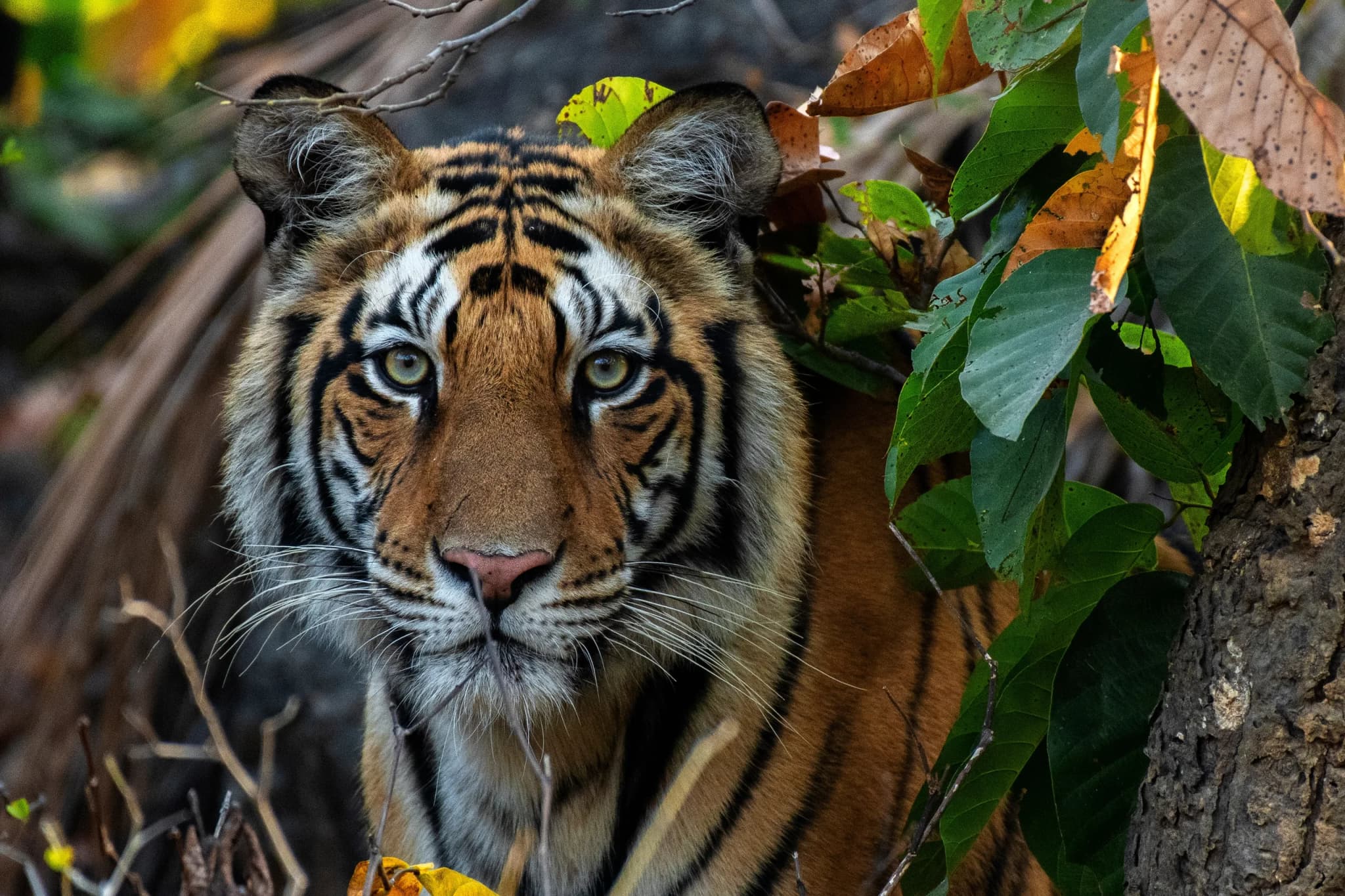
The tiger is the largest cat on Earth, a solitary predator that ranges from the snowbound forests of the Russian Far East to the mangroves of the Sundarbans. The subspecies that survive today are each shaped by their habitat. A Siberian tiger can weigh over 600 pounds; a Sumatran tiger, the smallest, rarely passes 300.
Wild tigers have lost roughly 95% of their historic range, and the IUCN Red List classifies the species as Endangered. The threats are specific: poaching for skins and bones, the clearing of forest for agriculture, and the loss of the deer and wild pig they hunt. Fewer than 5,000 remain in the wild, though coordinated protection in India and Nepal has begun to reverse the decline inside some reserves.
Tiger parts still sell, and a single animal is worth enough to justify a long walk into a reserve.
Roads and farmland separate populations, so a young tiger looking for territory has to cross dangerous open ground.
When deer and wild pig are snared from a forest, it stops being tiger habitat whether or not a tiger is shot.
Tigers taking livestock are killed in retaliation, and the risk rises as settlement presses against reserves.
Yes. The Tiger is listed as Endangered on the IUCN Red List, which means it faces a very high risk of extinction in the wild. A species qualifies on a decline of 50% or more over ten years or three generations, or on fewer than 2,500 mature individuals remaining.
Adult tigers typically weigh between 143 and 675 pounds (65 to 306 kg), with Siberian tigers being the largest subspecies and Sumatran tigers the smallest. Both wild and captive weights vary significantly by sex, with males averaging roughly twice the mass of females.
Fewer than 4,000 tigers remain in the wild, according to the IUCN Red List, with the largest populations concentrated in India's tiger reserves such as Corbett and Bandhavgarh. Habitat loss, poaching for the illegal parts trade, and depletion of prey species like sambar deer and wild boar are the primary drivers of decline.
Tigers are ambush predators that rely on dense cover to stalk prey, typically large ungulates such as chital, sambar, gaur, and wild pigs, before delivering a suffocating throat bite. A single adult requires roughly 40 to 70 large prey animals per year, and hunts are solitary, patient, and low-success, with most attempts failing.
Tigers now occupy fragmented pockets of Asia stretching from the Russian Far East's Sikhote-Alin mountains through South and Southeast Asia to Sumatra, having lost roughly 95 percent of their historical range. India holds well over half the global wild population, while the Siberian subspecies survives in temperate conifer forest along the Amur River basin.
Tigers communicate primarily through scent marking, spraying urine mixed with anal gland secretions onto trees and rocks to advertise territory and reproductive status to other tigers across ranges that can exceed 100 square kilometers. They also use a distinctive prusten, a soft chuffing exhalation made through the nostrils, as a close-range greeting between familiar individuals.
A tigress raises her cubs, typically a litter of two or three, entirely alone, denning them in thick vegetation or rocky outcrops for the first eight weeks while she hunts and returns to nurse them. Cubs begin accompanying her on hunts around six months and generally disperse to establish their own territories between the ages of two and three years.





Know an organization protecting the Tiger? Add it, or claim your own page. Listing is free.
Add one