
Gillnets set for totoaba
Vaquitas drown in nets set illegally for a fish whose swim bladder sells into the Chinese traditional medicine trade.
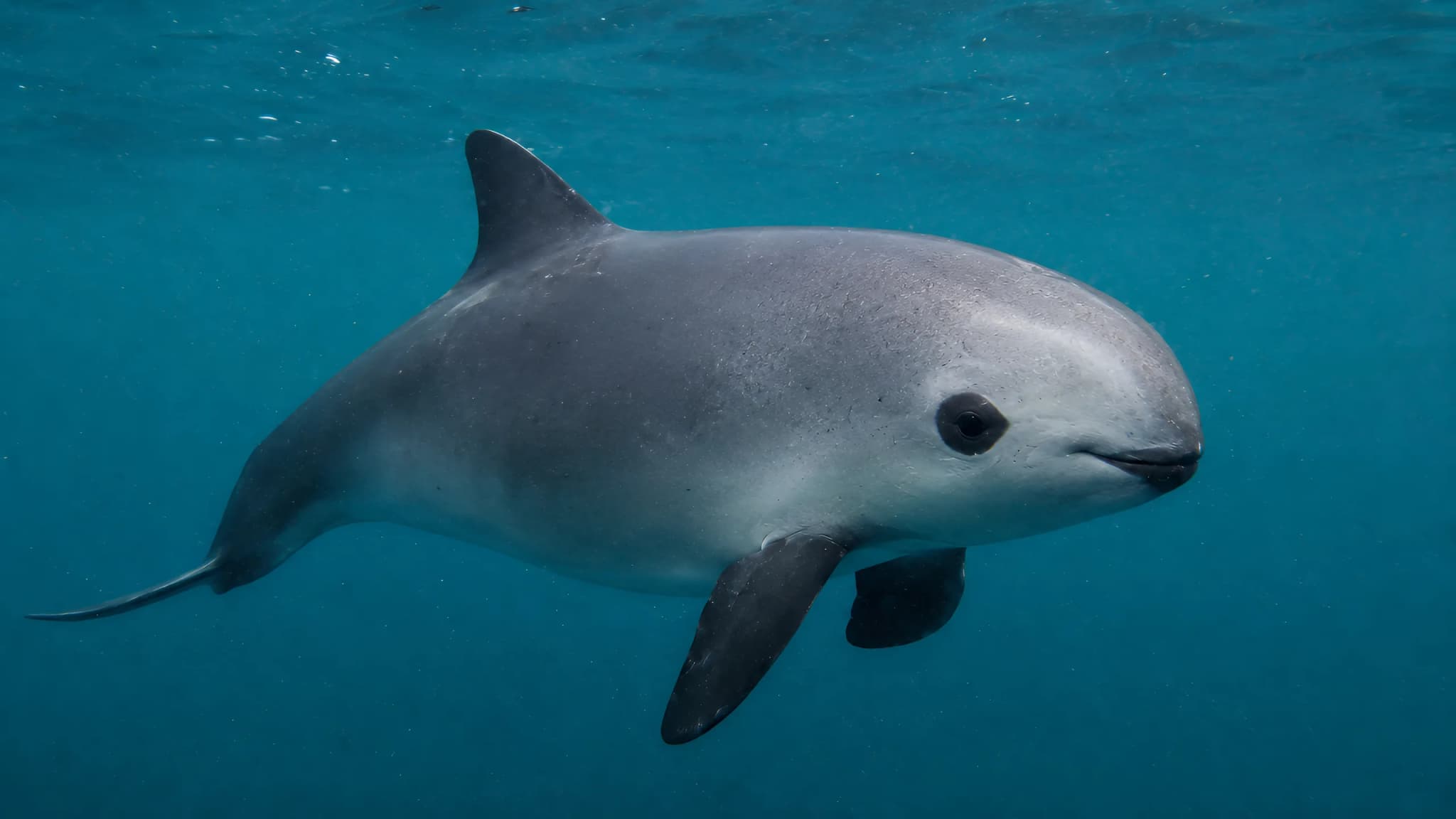
The vaquita is the smallest porpoise in the world and the most endangered marine mammal. It lives in one place only: the shallow, murky waters at the northern end of Mexico's Gulf of California. Shy and surfacing only briefly, a vaquita is marked by dark rings around its eyes and lips, as if drawn on.
Fewer than a dozen vaquitas are thought to remain, and the IUCN lists the species as Critically Endangered. They are not hunted. They drown in gillnets set illegally for the totoaba, another endangered animal whose swim bladder sells for high prices on the black market. The vaquita's survival now turns on whether those nets can be kept out of the small patch of sea it has left.
Vaquitas drown in nets set illegally for a fish whose swim bladder sells into the Chinese traditional medicine trade.
The entire species lives in the northern Gulf of California, in an area smaller than many cities.
Surveys put the population in the single figures, though the remaining animals appear healthy and are still calving.
The totoaba trade is run by criminal networks, which makes net removal and patrols dangerous work.
Yes. The Vaquita is listed as Critically Endangered on the IUCN Red List, the last category before a species is considered Extinct in the Wild. A species qualifies on a population decline of 80% or more, or on fewer than 250 mature individuals remaining.
Fewer than 10 vaquitas are estimated to survive as of the most recent surveys, according to the IUCN Red List. The entire population is confined to a small area of the northern Gulf of California, Mexico, making the vaquita the world's most endangered marine mammal.
The vaquita is a small porpoise native to the northern Gulf of California, Mexico, and the world's rarest marine mammal. Adults reach roughly 1.5 meters in length and are identified by distinctive dark rings around the eyes and dark patches on the lips.
Vaquitas drown as bycatch in gillnets set illegally to catch totoaba fish, whose swim bladders are smuggled to black markets in China for enormous sums. Despite a gillnet ban in the upper Gulf of California, illegal fishing has continued to drive the population to near extinction.
Fewer than 10 vaquitas are thought to survive, according to IUCN Red List assessments based on acoustic monitoring surveys in the northern Gulf of California. The population has collapsed from roughly 600 individuals in 1997, a decline driven almost entirely by gillnet bycatch.
The vaquita lives exclusively in the northern Gulf of California, Mexico, in a range of roughly 2,235 square kilometers around the Colorado River delta. It prefers shallow, murky coastal waters and has the smallest geographic range of any cetacean species.
No projects have listed this species yet.