
Ebola
Outbreaks have killed very large numbers of western lowland gorillas, in some areas most of the local population.
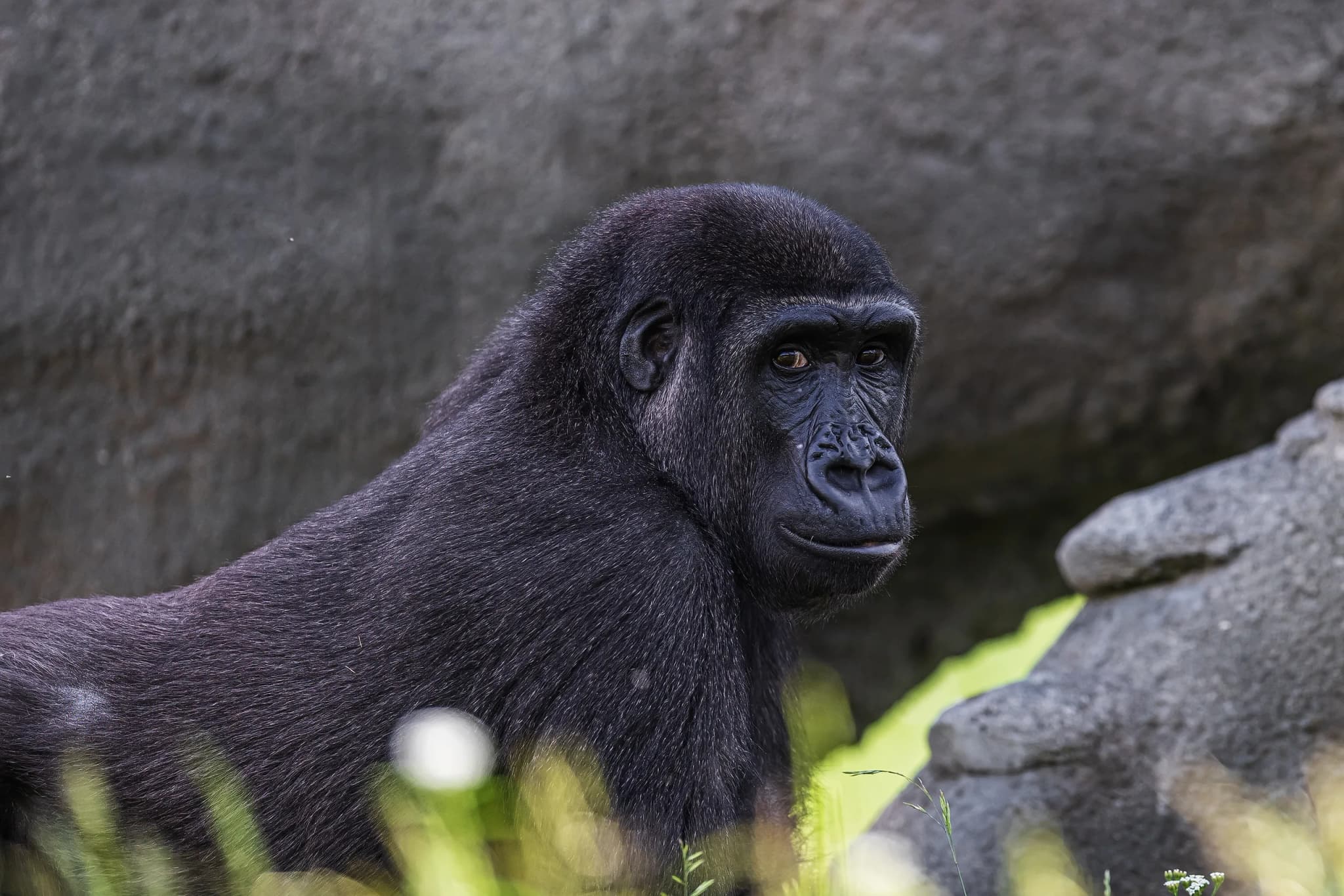
Gorilla gorilla gorilla
The Western Lowland Gorilla (Gorilla gorilla gorilla) is the most numerous and widespread of the four gorilla subspecies, living in the tropical and subtropical moist broadleaf forests, swamp forests, and forest edges of west-central Africa. Adult males, known as silverbacks, can weigh over 400 pounds and lead cohesive social groups that typically range from five to thirty individuals. As prolific consumers of fruit, they disperse seeds across large territories, making them a keystone species for forest regeneration across their range.
The subspecies is listed as Critically Endangered on the IUCN Red List, with population estimates complicated by the remoteness of much of its habitat. The primary drivers of decline are habitat loss from logging and agricultural expansion, commercial bushmeat hunting, and disease, particularly Ebola hemorrhagic fever, which has killed an estimated one-third of the wild population in affected areas according to the Wildlife Conservation Society. Infant gorillas are also captured for illegal trade, a pressure that removes not just individuals but future breeding adults from already fragmented populations.
Outbreaks have killed very large numbers of western lowland gorillas, in some areas most of the local population.
Gorillas are shot for meat, and logging roads carry the trade deep into previously inaccessible forest.
Central African forest is being opened for timber and cleared for agriculture across the species' range.
Extraction brings settlement and hunting into intact forest, which is how the pressure arrives.
Yes. The Western Lowland Gorilla is listed as Critically Endangered on the IUCN Red List, the last category before a species is considered Extinct in the Wild. A species qualifies on a population decline of 80% or more, or on fewer than 250 mature individuals remaining.
The western lowland gorilla lives in the tropical and subtropical forests of central and west Africa, including Cameroon, the Central African Republic, the Democratic Republic of Congo, Gabon, and the Republic of Congo. Gabon holds the largest remaining population, sheltering gorillas in dense lowland rainforest and swampy forest clearings called bais.
Western lowland gorillas are primarily frugivores, spending much of each day traveling to find ripe fruit across the Congo Basin forests. They supplement fruit with leaves, bark, and aquatic herbs, and are notably drawn to the sodium-rich vegetation in swampy bais, open clearings in Gabon and the Republic of Congo where dozens of gorillas may gather at once.
The total wild population is estimated at around 100,000 individuals, according to the IUCN Red List, but numbers have fallen by more than 60 percent over three generations. Illegal bushmeat hunting, habitat loss to logging and agriculture, and Ebola virus outbreaks in Central Africa remain the primary drivers of that decline.
Western lowland gorillas are the smallest of the four gorilla subspecies, with adult males typically weighing between 140 and 200 kilograms. They are distinguished from eastern gorillas by their shorter, finer brown-grey fur, a more pronounced brow ridge, and wider skulls relative to their body size.
Mothers carry infants against their chest for the first several months, then on their backs for up to three years, nursing them for roughly the same period. Juveniles remain within the troop's silverback-led family group for several years after weaning, learning social behavior through play with other young gorillas.
Wild western lowland gorillas have been observed using sticks to test water depth before wading into swampy bais in the Republic of Congo, one of the few documented cases of tool use in wild gorillas. They also use detached tree stumps as stabilizing platforms while foraging in deeper water, a behavior first recorded at Mbeli Bai in 2005.