
Targeted and finned
Whale sharks are still taken in some fisheries for fins, meat, and oil despite widespread legal protection.
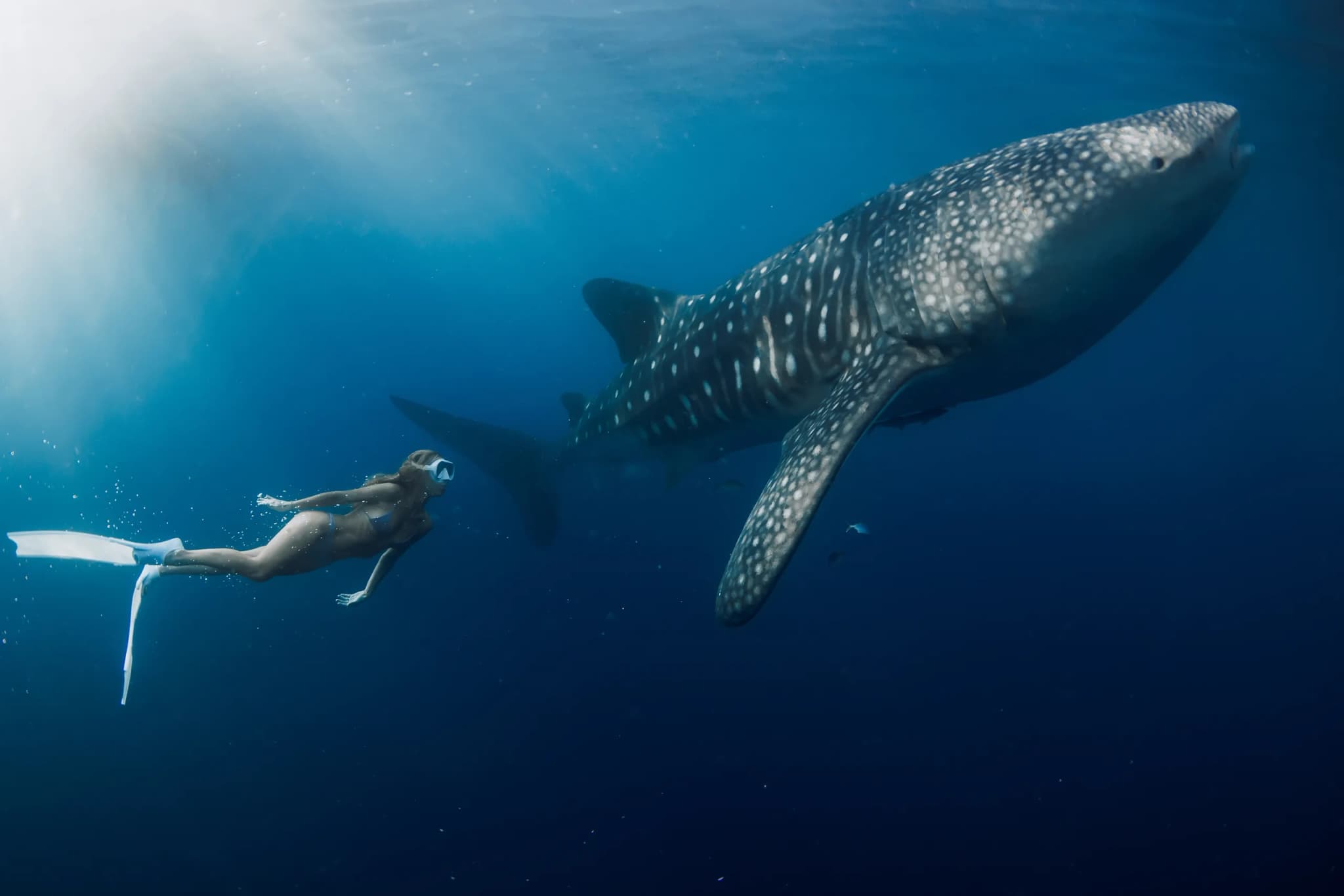
The whale shark (Rhincodon typus) is the largest fish on Earth, a slow-moving filter feeder capable of reaching lengths of around 12 meters, though some individuals may grow considerably larger. It inhabits warm, tropical, and subtropical oceans worldwide, typically in surface waters, and feeds primarily on zooplankton, fish eggs, krill, and small squid by drawing water through its gill rakers. As a large predator that occupies the upper levels of marine food webs while consuming organisms at the base, it connects different trophic layers and its movements track the seasonal pulses of productivity across ocean basins.
The whale shark is listed as Endangered on the IUCN Red List, with the global population estimated to have declined by more than 50 percent over the past 75 years according to that assessment. The principal threats are boat strikes, targeted fishing in parts of South and Southeast Asia, bycatch in large-scale fisheries, and the ingestion of marine plastic debris. Aggregation sites, where whale sharks gather predictably to feed, concentrate risk, making those locations both critical for research and particularly vulnerable to disturbance from unregulated tourism and vessel traffic.
Whale sharks are still taken in some fisheries for fins, meat, and oil despite widespread legal protection.
The species feeds at the surface and spends much of its time in shipping lanes, and strikes are badly underrecorded.
Whale sharks are set on deliberately by some tuna fleets because tuna gather beneath them.
Feeding sharks to hold them at tourism sites changes their behavior and keeps them from migrating.
Yes. The Whale Shark is listed as Endangered on the IUCN Red List, which means it faces a very high risk of extinction in the wild. A species qualifies on a decline of 50% or more over ten years or three generations, or on fewer than 2,500 mature individuals remaining.
A whale shark is a shark, not a whale. It is the world's largest fish, a slow-moving filter feeder related to rays and other sharks, and takes its name from its whale-like size rather than any kinship with marine mammals.
Whale sharks commonly reach 18 to 32 feet in length and can weigh more than 20 tons, according to NOAA. The largest reliably measured individual stretched approximately 41 feet, making the species the largest fish on Earth by a considerable margin.
A whale shark is the world's largest fish, a filter-feeding shark listed as Endangered on the IUCN Red List. It feeds primarily on fish spawn, krill, and small squid, and faces serious threats from vessel strikes, fishing bycatch, and targeted harvesting in parts of South and Southeast Asia.
Yes, a whale shark is a true shark, belonging to the order Orectolobiformes and the family Rhincodontidae. Unlike most sharks it feeds by filtering plankton and small fish through its gills rather than biting prey, but it shares the cartilaginous skeleton and biology of all sharks.
Adult whale sharks typically measure between 18 and 32 feet, according to NOAA, though the largest confirmed specimen reached around 41 feet. Females tend to grow larger than males, and scientists believe the species may live 80 to 130 years.
A whale shark is not a mammal. It is a fish that breathes through gills, lays eggs or bears live young without nursing them, and is cold-blooded, none of which are mammalian traits. Its misleading name refers only to its size, comparable to that of many whale species.
