Poaching for horn
White rhinos carry the largest horns and are the most heavily poached rhino, particularly in South Africa.
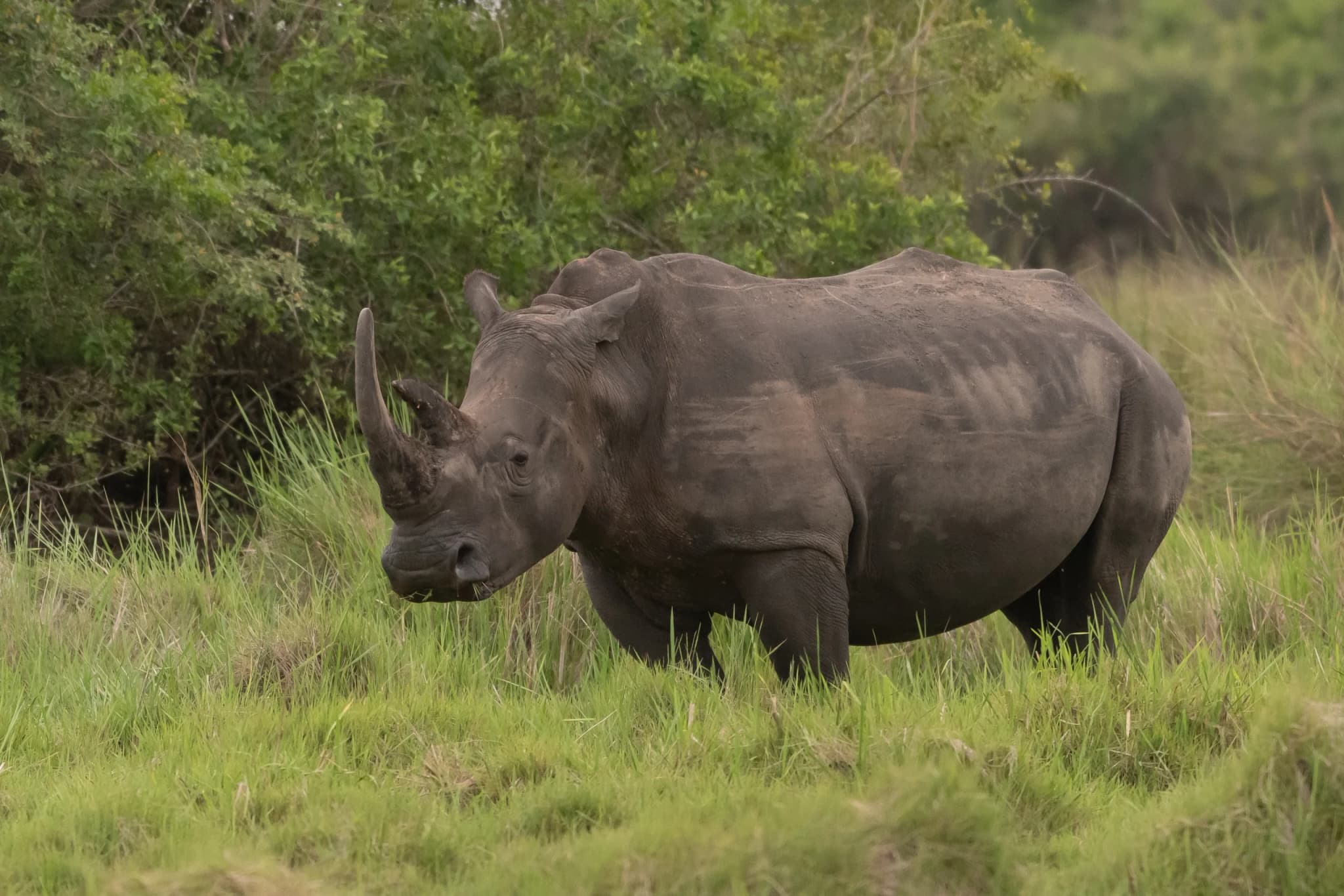
The white rhinoceros (Ceratotherium simum) is the largest of the five living rhinoceros species and the largest land mammal after the two elephant species, with adult males weighing up to 2,300 kilograms. Two subspecies exist: the southern white rhinoceros (C. s. simum), which recovered from fewer than 50 individuals in the early 20th century to a population now estimated at roughly 16,000 by the IUCN, and the northern white rhinoceros (C. s. cottoni), which is functionally extinct in the wild, with only two females remaining in captivity at Ol Pejeta Conservancy in Kenya.
Southern white rhinoceroses inhabit the savannas and grasslands of southern and eastern Africa, where they function as bulk grazers, keeping grass short and structurally diverse in ways that benefit a wide range of smaller herbivores. Despite the broader subspecies recovery, the IUCN Red List classifies the white rhinoceros as Near Threatened, a status driven by persistent and accelerating poaching for the illegal trade in rhino horn, along with habitat loss and political instability across parts of their range. South Africa, which holds the majority of the remaining southern population, recorded hundreds of poaching incidents annually in the 2010s and into the 2020s, making law enforcement and anti-poaching investment central to the species' continued survival.
White rhinos carry the largest horns and are the most heavily poached rhino, particularly in South Africa.
Two females remain and no males, so the northern white rhino survives only as cells in a laboratory.
Southern white rhinos live almost entirely in protected areas, which makes them manageable and also findable.
Numbers track enforcement spending closely, and a reserve that cannot pay rangers loses its rhinos.
No. The White Rhinoceros is listed as Near Threatened on the IUCN Red List, which means it does not currently meet the criteria for any threatened category, but comes close to qualifying or is likely to qualify soon if current pressures continue.
Only two northern white rhinoceros (Ceratotherium simum cottoni) survive, both females named Najin and Fatu, according to the Ol Pejeta Conservancy. The subspecies is functionally extinct, as no living males remain, and reproduction now depends entirely on assisted reproductive technology.
The last two northern white rhinoceros live at Ol Pejeta Conservancy in Kenya, under 24-hour armed guard. Najin and Fatu were transferred there from Dvůr Králové Zoo in the Czech Republic in 2009, in hopes that the African environment might stimulate natural breeding behavior.
White rhinoceros are strict grazers, feeding almost exclusively on short grasses such as Themeda triandra and Panicum coloratum across southern African savannas. Their wide, square lips, which give them the alternative name "square-lipped rhinoceros," are adapted precisely for cropping grass close to the ground rather than browsing leaves or shrubs.
White rhinoceros are not white; their skin is grey, and the name most likely derives from the Afrikaans word "wyd," meaning wide, describing their broad square muzzle. Early English speakers misheard or mistranslated the term, and the color-based name has persisted ever since despite describing nothing accurate about the animal's appearance.
Adult male white rhinoceros typically weigh between 2,000 and 2,300 kilograms, making them the largest of the five rhinoceros species and the second-largest land animal after elephants. Their front horn can grow to over 1.5 meters in length, which is the primary reason poaching remains a severe pressure on wild populations.
White rhinoceros are the most sociable of all rhinoceros species, with females and subadults regularly forming loose groups called crashes of up to 14 individuals in Hluhluwe-iMfolozi Park and Kruger National Park in South Africa. Adult males are largely solitary and territorial, marking boundaries with dung middens and urine to signal dominance to rivals.