
Wetlands drained
Whooping cranes need specific marsh for breeding and wintering, and most of North America's wetland has been converted.
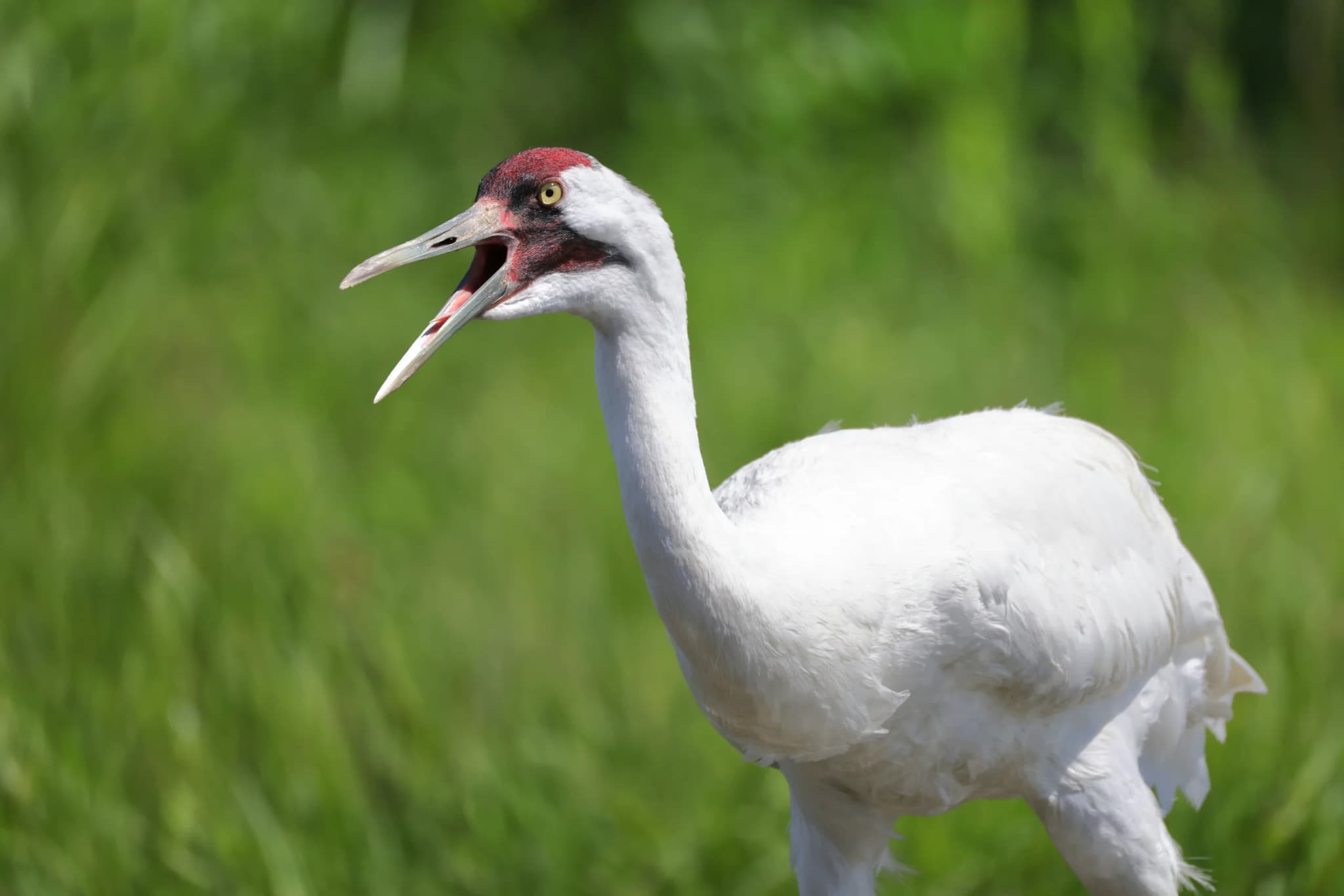
The Whooping Crane (Grus americana) is the tallest bird in North America, standing around 1.5 meters tall with a wingspan that can reach 2.3 meters. It breeds in the boreal wetlands of Wood Buffalo National Park in northern Canada and winters along the Gulf Coast of Texas, particularly in and around Aransas National Wildlife Refuge. As an apex wader, it plays a role in wetland food webs by foraging on blue crabs, clams, frogs, and aquatic plants, and its presence is considered an indicator of healthy coastal marsh habitats.
The species came within a handful of individuals of extinction in the mid-twentieth century, falling to a wild population of just 15 birds in 1941, according to the International Crane Foundation. Recovery has been slow but measurable: the wild migratory population now numbers in the low hundreds, with additional non-migratory populations established in Louisiana and Florida through reintroduction efforts. The primary threats facing Whooping Cranes today are habitat loss along their migration corridor, collisions with power lines, illegal shooting, and the long-term vulnerability that comes with a population still small enough that a single severe storm event at Aransas could be catastrophic.
Whooping cranes need specific marsh for breeding and wintering, and most of North America's wetland has been converted.
The species passed through a bottleneck of about fifteen individuals, leaving very little diversity.
Collisions on migration are a leading cause of death for a bird this large with this little margin.
Cranes are still shot on migration, and each bird lost is a measurable share of the population.
Yes. The Whooping Crane is listed as Endangered on the IUCN Red List, which means it faces a very high risk of extinction in the wild. A species qualifies on a decline of 50% or more over ten years or three generations, or on fewer than 2,500 mature individuals remaining.
The whooping crane is North America's tallest bird and one of its rarest, a large wading bird native to wetlands and coastal marshes from Canada's Wood Buffalo National Park, where it breeds, to the Texas Gulf Coast, where most wild birds winter at Aransas National Wildlife Refuge.
Adult whooping cranes stand about five feet tall with bright white plumage, a bare red crown, black wingtips visible in flight, and a long, pointed bill suited for probing shallow water for blue crabs, clams, and aquatic invertebrates. Juveniles are rusty brown and gradually whiten through their first year.
Whooping cranes produce a loud, resonant bugling call that carries more than a mile across open marsh, generated by a coiled windpipe nearly five feet long coiled within the sternum. Mated pairs perform coordinated unison calls to reinforce their bond and defend territory.
Approximately 800 whooping cranes exist today across wild and captive populations combined, according to the International Crane Foundation, up from a historic low of 15 wild birds in 1941. The species remains Endangered on the IUCN Red List, with habitat loss, collisions with power lines, and drought among the primary ongoing threats.
Whooping cranes are omnivores that forage in shallow wetlands for blue crabs, clams, crayfish, and frogs, supplementing their diet with berries, acorns, and waste grain during migration. At their Texas wintering grounds in Aransas National Wildlife Refuge, blue crabs are a dietary staple that directly supports breeding condition heading into spring.
Whooping crane pairs raise one chick at a time, with both parents incubating the eggs and guarding the rust-colored hatchling, called a colt, for roughly nine months until it can survive independently. Colts learn their 2,500-mile migration route between Wood Buffalo National Park in Canada and Aransas, Texas by following their parents, which is why the ultralight aircraft-led reintroduction program was necessary to teach route-naive captive-raised birds.
No projects have listed this species yet.