
Spring snowpack disappearing
Females den in deep snow that persists into spring, and warming is removing it across the southern range.
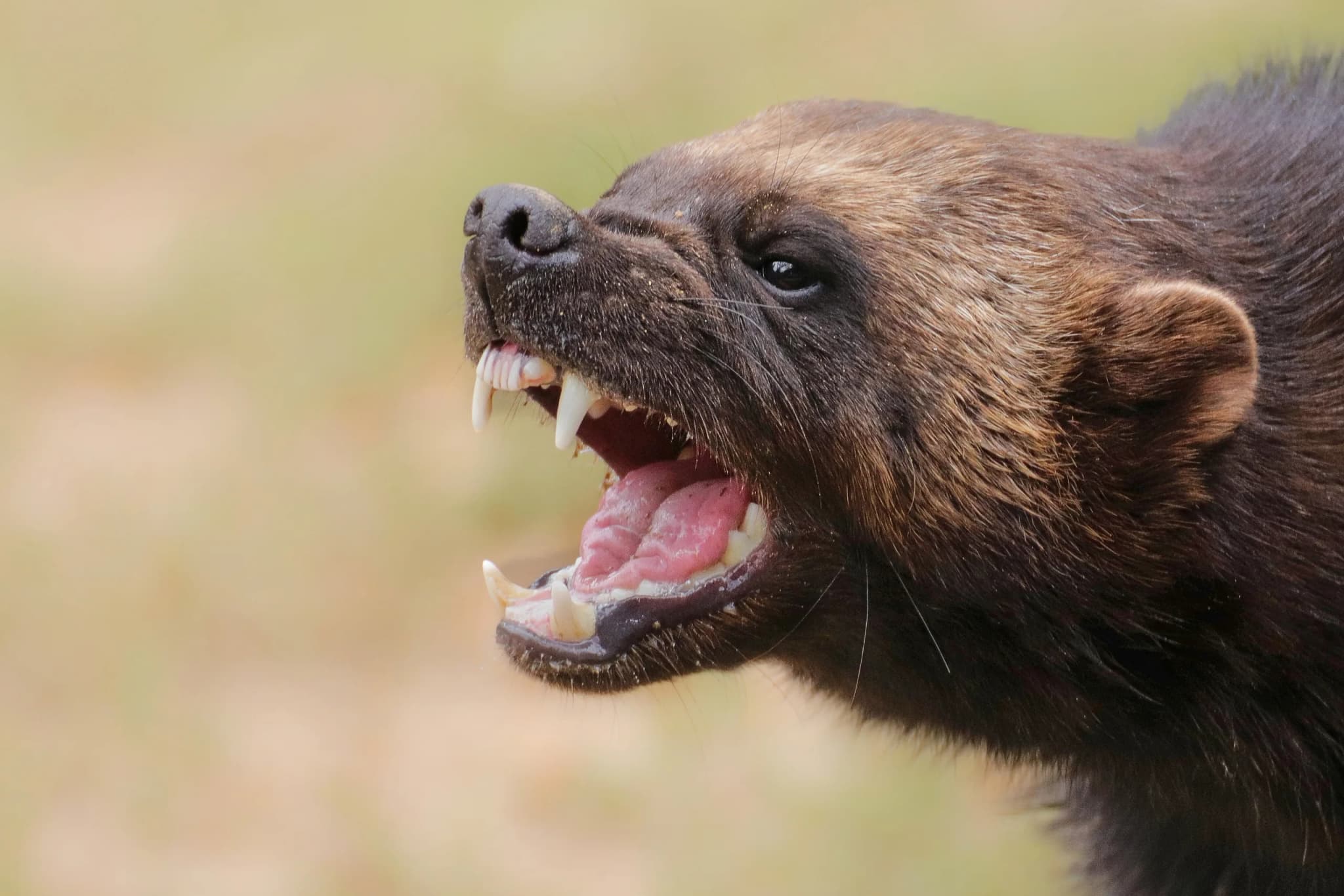
The wolverine (Gulo gulo) is the largest terrestrial member of the family Mustelidae, built low and heavy with dense, frost-resistant fur and broad, snowshoe-like paws that allow it to travel efficiently across deep snow. Distributed across the boreal forests, alpine tundra, and arctic regions of North America, Europe, and Asia, it is a solitary, wide-ranging carnivore and scavenger whose individual home ranges can span thousands of square kilometers. Its jaw musculature and specially adapted molars allow it to crack through frozen carcasses that other predators cannot access in winter, making it a functionally important scavenger across subarctic landscapes.
Although the IUCN Red List currently classifies the wolverine as Least Concern, its global population is considered sparse and its distribution is fragmented. The primary threats are habitat loss driven by human encroachment into remote northern areas, trapping for fur, and climate change, which is reducing the persistent spring snowpack wolverines depend on for denning and cub survival. Research published in connection with IUCN assessments notes that wolverine populations are sensitive to human disturbance and slow to recover from local declines due to low reproductive rates, with females typically raising only one to three kits per year.
Females den in deep snow that persists into spring, and warming is removing it across the southern range.
Wolverines need enormous territories, and roads, resorts, and logging break up the remote country they require.
Wolverines are trapped for fur and killed over livestock in parts of Scandinavia and North America.
Groups in the contiguous United States number in the low hundreds with little connection to Canadian animals.
No. The Wolverine is assessed as Least Concern on the IUCN Red List, meaning it is currently widespread and abundant enough not to be at risk. That is a global assessment, and a global assessment can sit on top of steep decline in one country or region.
A wolverine stands roughly 12 to 18 inches at the shoulder and measures about 26 to 42 inches in body length. Despite that compact frame, it can drive wolves and black bears off carcasses in the boreal forests and tundra of Canada, Alaska, and Scandinavia, relying on powerful jaws and a famously aggressive temperament.
A wolverine (Gulo gulo) is the largest land-dwelling member of the weasel family, built for cold, remote terrain across the circumpolar north. It is a solitary, wide-ranging omnivore that feeds on carrion, small mammals, birds, and berries, and is listed as Least Concern on the IUCN Red List, though populations face pressure from trapping and climate-driven snowpack loss.
Wolverines typically live 5 to 7 years in the wild and can reach 12 to 13 years in managed care. Key threats to wild longevity include trapping, starvation during harsh winters, and shrinking spring snowpack in the Rocky Mountains and Scandinavian highlands, which reduces denning success for females.
Wolverines are opportunistic carnivores that rely heavily on carrion, particularly large ungulates like caribou and moose that have died from starvation or been killed by wolves. They can crush frozen bones with their exceptionally strong jaws and a specialized back molar rotated 90 degrees inward, allowing them to access marrow other predators leave behind.
Wolverines inhabit boreal forests, alpine tundra, and Arctic regions across Canada, Scandinavia, Russia, and parts of the northern United States, including Montana's Glacier National Park. They require deep, persistent spring snowpack to den in, which is why climate-driven snowpack loss is among their most pressing long-term threats.
A female wolverine gives birth to two or three kits, typically in February or March, inside a den tunneled into deep snow. The kits stay with their mother for up to two years, during which they learn to cache food across vast home ranges that can exceed 500 square kilometers, according to field research in Scandinavia and North America.
No projects have listed this species yet.