
Sardines gone from the diet
Galapagos breeding has repeatedly failed since the late 1990s, and the pattern tracks the disappearance of sardines from the birds' diet. Boobies switching to other fish raise far fewer chicks.
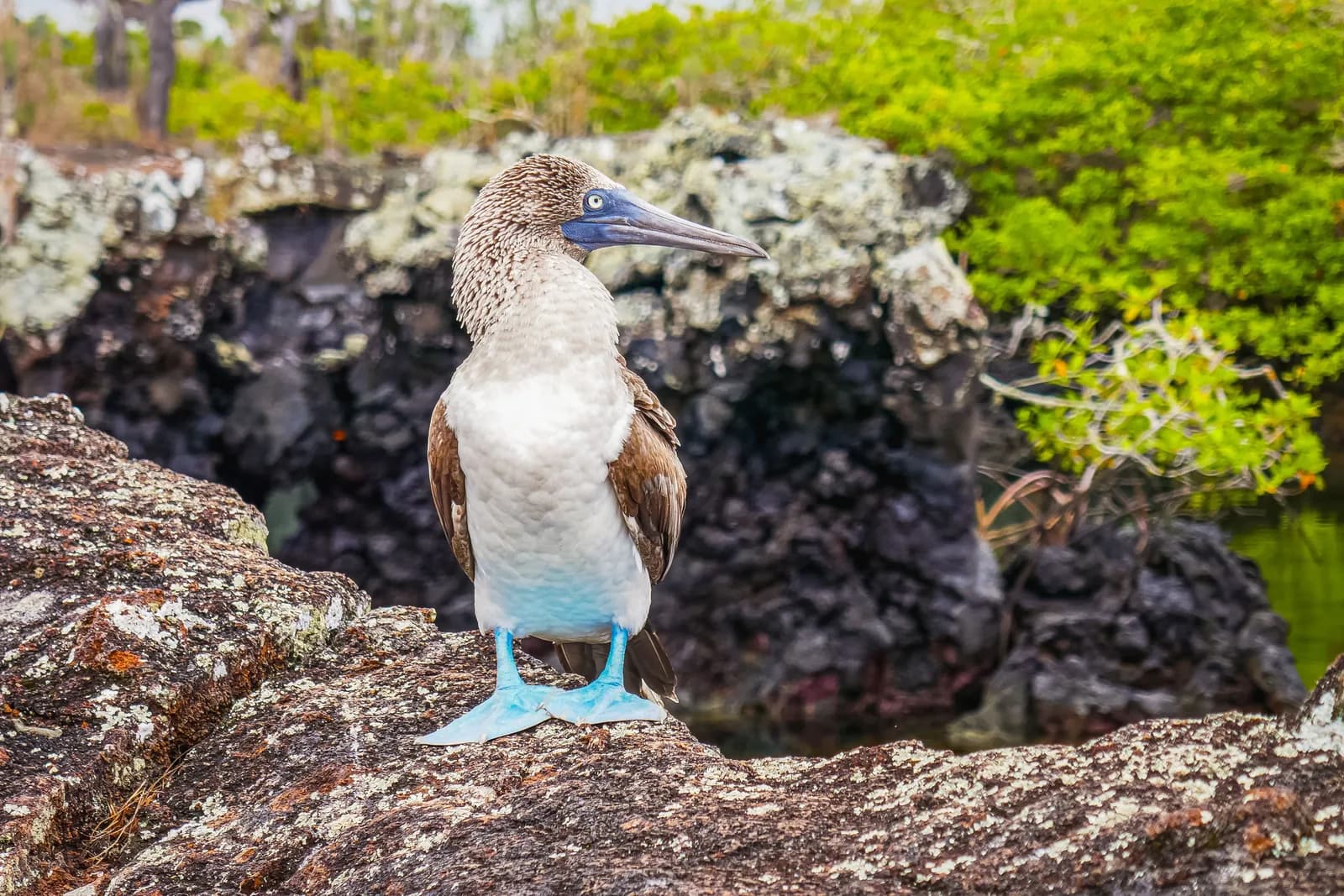
The blue-footed booby (Sula nebouxii) breeds on islands and arid coasts along the eastern Pacific, from the Gulf of California down to Peru, with roughly half the world's population in the Galapagos. It is a plunge-diver: it spots fish from twenty or thirty metres up, folds its wings into an arrowhead and hits the water hard enough that air sacs under the skin of its face and chest are needed to absorb the shock.
The feet are the part everyone remembers, and they are not decoration. Their colour comes from carotenoid pigments the bird gets only from fresh fish, and those pigments fade within days if it stops eating well. A male performing his courtship display, lifting each foot in a slow, exaggerated step and tipping his bill to the sky, is making a claim about his hunting that a female can check. Experiments in which males' feet were dulled found that their mates reduced investment in the eggs that followed.
The IUCN lists the species as Least Concern, which is true globally and hides a local problem. The Galapagos population has fallen sharply since the 1960s, and breeding there has repeatedly failed in recent decades, closely tracking the collapse of the sardine stocks the birds depend on. A species can be abundant and still be in trouble in the place it is most famous.
Galapagos breeding has repeatedly failed since the late 1990s, and the pattern tracks the disappearance of sardines from the birds' diet. Boobies switching to other fish raise far fewer chicks.
Warm-water events push prey deep or away entirely. In strong El Nino years colonies may skip breeding altogether, and repeated failures compound.
Industrial fishing targets the same small schooling fish the boobies need, and birds are drowned in nets and on longlines.
Boobies nest on open ground with no defence against rats, cats and dogs, which take eggs and chicks on islands where they have been introduced.
The colour comes from carotenoid pigments in the fresh fish they eat. Because the pigments fade quickly when a bird is not feeding well, foot colour is a live signal of health rather than a fixed trait.
The IUCN lists the species as Least Concern globally. The Galapagos population is a different story: Charles Darwin Foundation surveys recorded a fall from roughly 20,000 adults in the 1960s to about 6,400 in 2012, with repeated breeding failures since.
They plunge-dive, spotting fish from up to 30 metres and entering the water at around 95 kilometres per hour. Air sacs under the skin of the face and chest absorb the impact.
On islands and arid coasts along the eastern Pacific from the Gulf of California to Peru. The Galapagos holds about half the breeding population.
The male lifts each foot in turn in a slow, deliberate step, then points his bill and wings skyward. The display shows off foot colour, which honestly advertises how well he has been feeding.
From the Spanish bobo, meaning fool or clown. The birds are ungainly on land and historically showed little fear of sailors, which made them easy to catch.
No projects have listed this species yet.