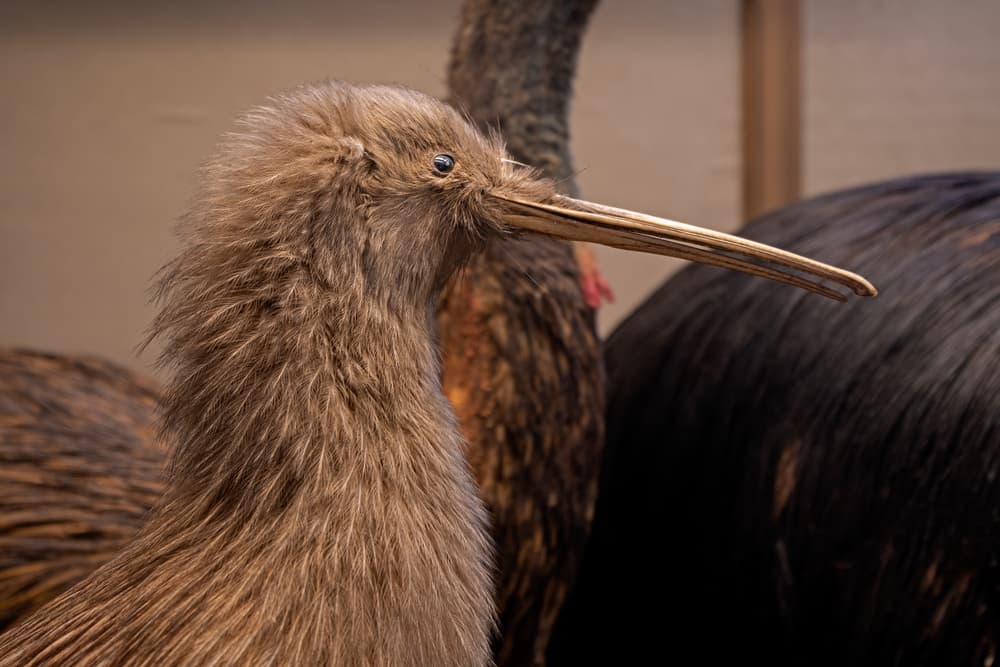
The North Island brown kiwi (Apteryx mantelli) is the most numerous of New Zealand's five kiwi species and the one most people picture when they think of the bird. It is flightless, roughly the size of a chicken, and active almost entirely at night, probing leaf litter for worms and insects with a long bill that carries its nostrils at the tip. No other bird in the world smells its way to food this way.
The IUCN Red List classifies the species as Vulnerable, with somewhere between 10,000 and 20,000 mature birds remaining. The threat is not habitat loss in the usual sense but introduced predators: stoats, cats, ferrets and dogs arrived with people and found a bird that had evolved for millions of years without any mammal that hunts it. Roughly 94% of chicks die before they are old enough to breed, and almost all of those deaths are predation.
That single number is also what makes the species recoverable. Intensive trapping, predator-free offshore islands, and programs that lift eggs from wild burrows, hatch them in safety, and return the young birds once they are large enough to fight off a stoat have stabilised and in places reversed the decline. Where predator control is sustained, kiwi numbers go up.
No projects have listed this species yet.
