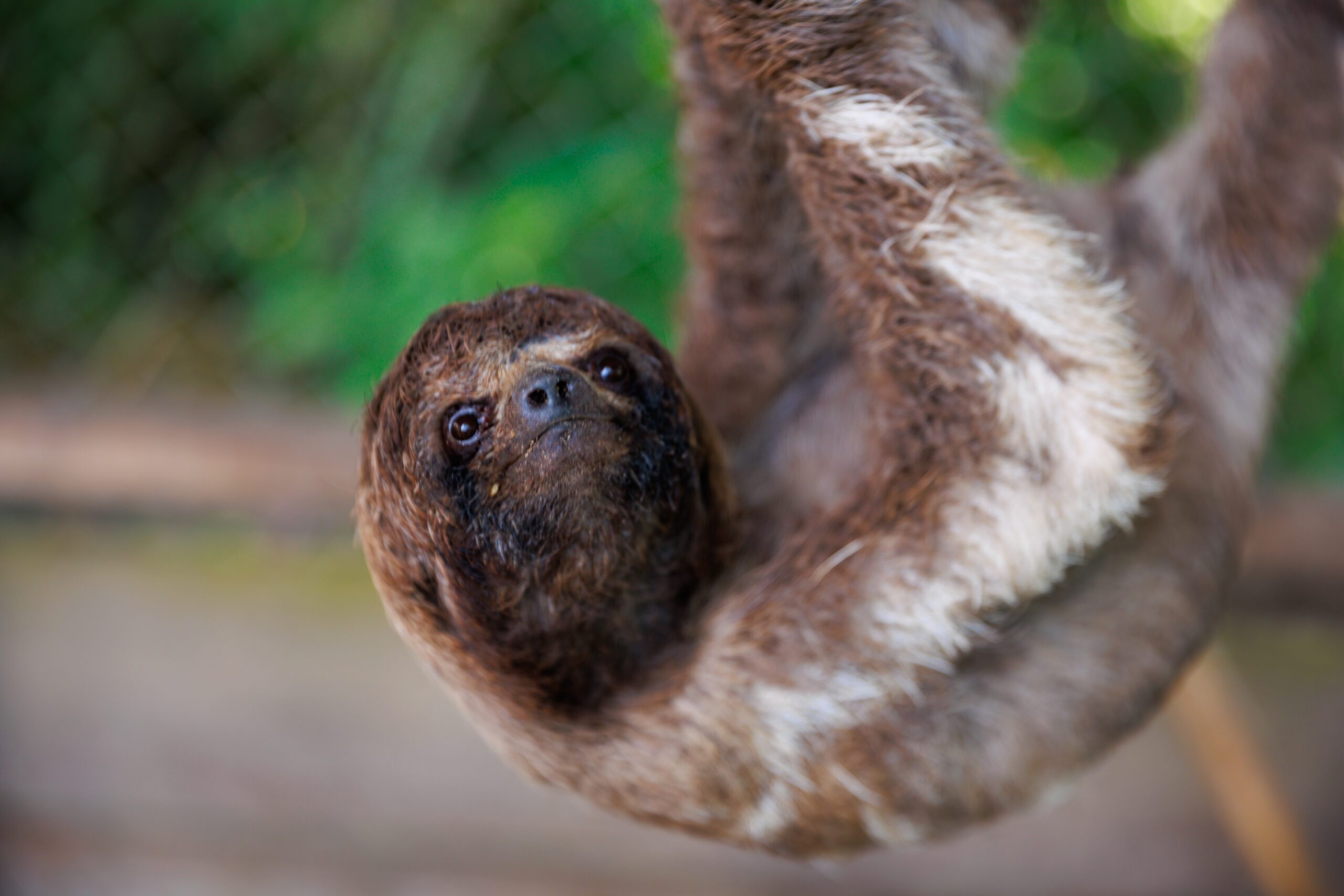
Four programs let you adopt a sloth, and they are not equal
Most sloth species are not endangered. Two are. The pygmy three-toed sloth, found on a single small island off Panama called Isla Escudo de Veraguas, is Critically Endangered, with fewer than 100 individuals left, according to the IUCN Red List. The maned three-toed sloth of Brazil’s Atlantic Forest is listed as Vulnerable. The rest are holding on, but the forests they live in are shrinking around them.
When you adopt a sloth symbolically, you are not bringing one home. You are funding the people who rescue injured and orphaned sloths, rebuild the tree corridors they need to move safely, and keep wild populations wild. Here is what that support buys, and the organizations doing the work best.
What symbolic sloth adoption actually does
A symbolic adoption is a donation made in the name of an animal or a species. You don’t own the sloth, and you don’t receive one. Your money goes to a sanctuary or conservation group, and in return you usually get an adoption certificate, a photo, and updates on the animal or the program your gift supports.
That distinction matters, because the work behind a sloth adoption is unglamorous and expensive. It pays for veterinary care for sloths hit by cars or burned on power lines, for the months of rehabilitation an orphaned baby needs before release, and for the canopy bridges and reforestation that prevent those injuries in the first place. The certificate and photo you receive are a thank-you for funding that work, not the reason it matters.
Why sloths end up needing rescue
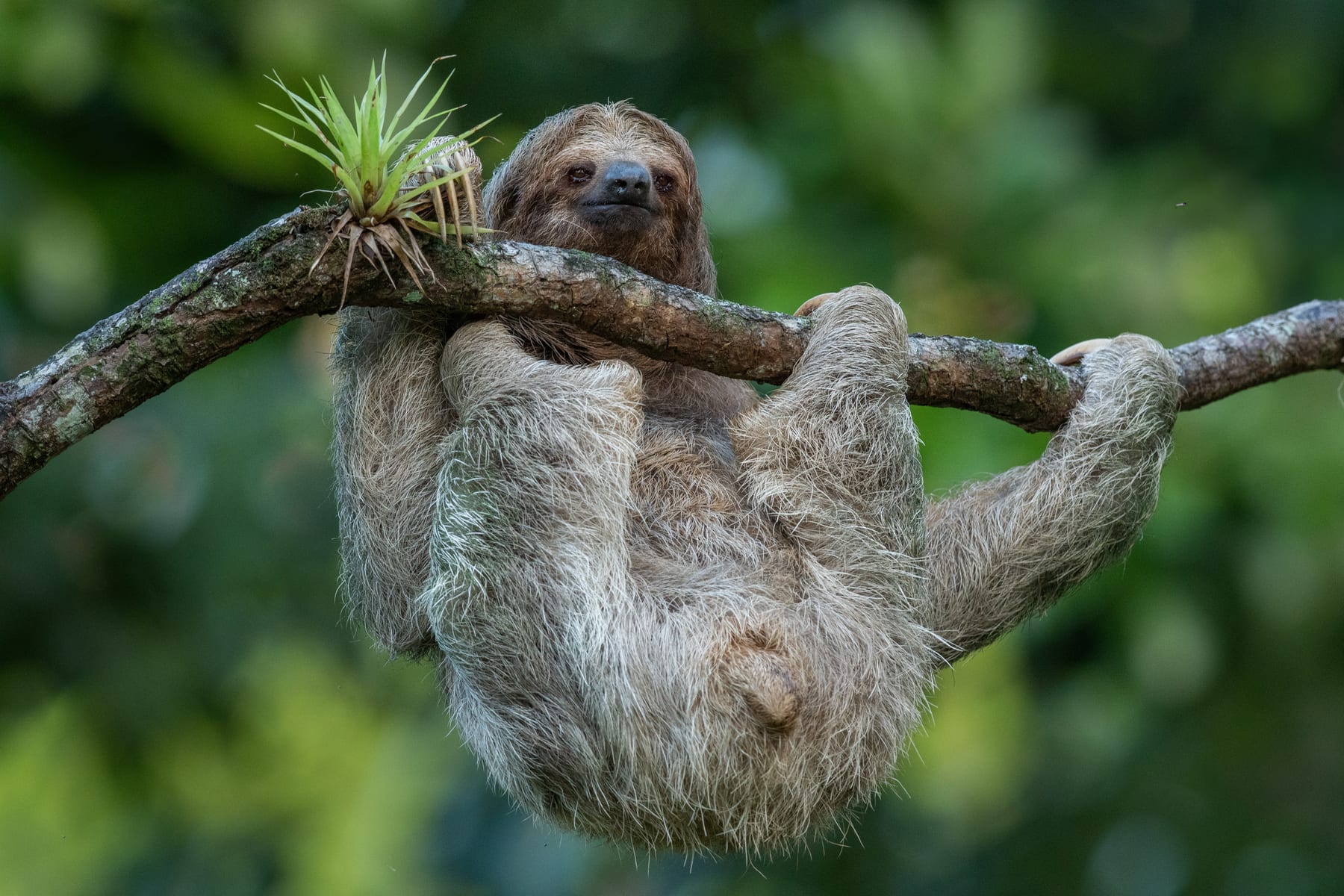
Understanding what puts a sloth in a rescue center explains what your money is actually preventing.
Sloths evolved to move through a continuous canopy and almost never touch the ground. A sloth descends roughly once a week, to defecate, and it is at its most vulnerable when it does. Everything that goes wrong for a modern sloth follows from a canopy that has been cut into pieces.
Power lines. When a road or a development breaks the canopy, a sloth reaching for the next branch finds a cable instead. Electrocution is one of the most common causes of injury and death reported by Costa Rican rescue centers, and survivors frequently lose limbs, which for an animal that hangs for a living usually means permanent captivity.
Roads. A sloth crossing at its normal pace, which is around 4 meters a minute on the ground, is exposed for a long time.
Dogs. Domestic dogs in areas where forest meets housing account for a significant share of admissions, again because a sloth on the ground has no defense worth the name.
Orphaning. A mother hit by a car or shocked on a line often leaves an infant. A hand-raised sloth needs one to two years of care and specific training in what to eat before it has any chance of release.
The brown-throated sloth is Least Concern globally, which is why sloth conservation is mostly not about extinction risk. It is about a common animal being injured constantly by infrastructure, and about keeping populations connected as their forest fragments.
That is why canopy bridges matter so much relative to their cost. A rope strung across a gap prevents the injury instead of treating it.
The best programs to adopt a sloth
We have focused on organizations with a clear, verifiable record of sloth rescue, rehabilitation, or habitat work. Most are in Costa Rica, where sloth conservation is most active.
The Sloth Conservation Foundation (SloCo)
Based in Costa Rica, the Sloth Conservation Foundation runs science-led programs to keep wild sloths wild. Their work includes the Sloth Crossing project, which installs canopy bridges so sloths can cross gaps in the forest without touching the ground or power lines, and community programs that reduce human-sloth conflict. Adopting a sloth through SloCo funds that research and prevention work directly.
The Sloth Institute
Located near Manuel Antonio, Costa Rica, the Sloth Institute (theslothinstitute.org) specializes in the rehabilitation and release of orphaned and injured sloths, then tracks them after release to confirm they survive in the wild. Their adoption program supports that care and the post-release monitoring that tells researchers whether rehabilitation is actually working.
Toucan Rescue Ranch
Toucan Rescue Ranch, near San Josecito, Costa Rica, rescues and rehabilitates sloths and other wildlife, and partners with The Sloth Institute on the Saving Sloths Together program for hand-raised orphans. A symbolic adoption helps cover food, medical treatment, and the long rewilding process before an animal goes back to the forest.
Jaguar Rescue Center
Despite the name, the Jaguar Rescue Center in Puerto Viejo, Costa Rica, treats a wide range of wildlife, and sloths are among the animals it most often receives. Adoptions fund veterinary care, food, and the rehabilitation facilities where injured and orphaned sloths recover before release.
Sloth Sanctuary of Costa Rica
The Sloth Sanctuary of Costa Rica, near Limón on the Caribbean coast, is among the longest-running sloth rescue operations in the country and has taken in hundreds of injured and orphaned animals since the 1990s. Its adoption program funds veterinary care and the long rehabilitation period that precedes any release.
What rehabilitation actually involves
The word "rescue" compresses a process that takes years, and knowing its shape makes it obvious why these programs need recurring funding rather than one-off gifts.
An orphaned sloth arrives needing a formula it can tolerate, since cow's milk causes digestive failure in young sloths. It then needs to learn which leaves to eat, and that is genuinely learned rather than instinctive: a sloth acquires its gut microbiome and its dietary preferences from its mother, and a hand-raised animal released without that knowledge will not feed correctly. Rehabilitation centers solve this by pairing orphans with surrogate sloths and by sourcing leaves from the exact forest an animal will be released into.
Release is followed by tracking. The Sloth Institute's post-release monitoring exists to answer a question most rescue work never checks: whether the animals survive. That data is what separates rehabilitation from a well-meaning holding operation, and it is the least fundable part of the work because nothing about it photographs well.
Some sloths never leave. An animal that lost a limb to a power line cannot be released, and the sanctuary caring for it has committed to 20 or more years of food and veterinary attention with no end point.
How to choose a sloth adoption program
Pick the organization whose work matches what you care about, then check three things before you give.
First, look for transparency about where the money goes. A program that explains what your gift pays for, at the operational level, is more trustworthy than one that talks only about its mission. Second, favor groups that rehabilitate and release rather than keep animals on display. Sloths do not belong in permanent captivity unless they cannot survive in the wild. Third, check that the organization is a registered nonprofit or has a clear fiscal sponsor, so your donation is accountable.
If seeing sloths in the wild is what drew you here, it is worth knowing where sloths actually live across Central and South America before you plan a trip, and how to do it without harming them through ethical wildlife tourism. If the adoption is meant as a present, our gift guide for animal lovers covers what else is worth giving and what to avoid, and our guide to the cutest animals covers why the sloth's permanent smile is an accident of anatomy rather than an expression, and what that misreading costs the animal.
To compare verified sanctuaries and conservation projects in one place, search our directory of projects by species and location. If you are ready now, adopt a sloth through one of the four Costa Rican organizations above and pick the one whose updates you would actually want to read a year from now.