The cutest animals, and what cuteness buys them
Lists of the cutest animals look like a matter of taste and are not. Cuteness is a specific set of features, described in the 1940s by Konrad Lorenz and consistent across cultures: a large head relative to the body, eyes set low and wide, a rounded face, a small nose, soft outlines, and clumsy movement.
Those are the proportions of a human infant. The response they trigger evolved to make us care for babies, and it fires indiscriminately at anything that shares the proportions. Which is why the cutest animals get disproportionate attention, disproportionate funding, and, in several cases, a future. Funding, rather than awareness, is what actually decides these outcomes.
The sea otter
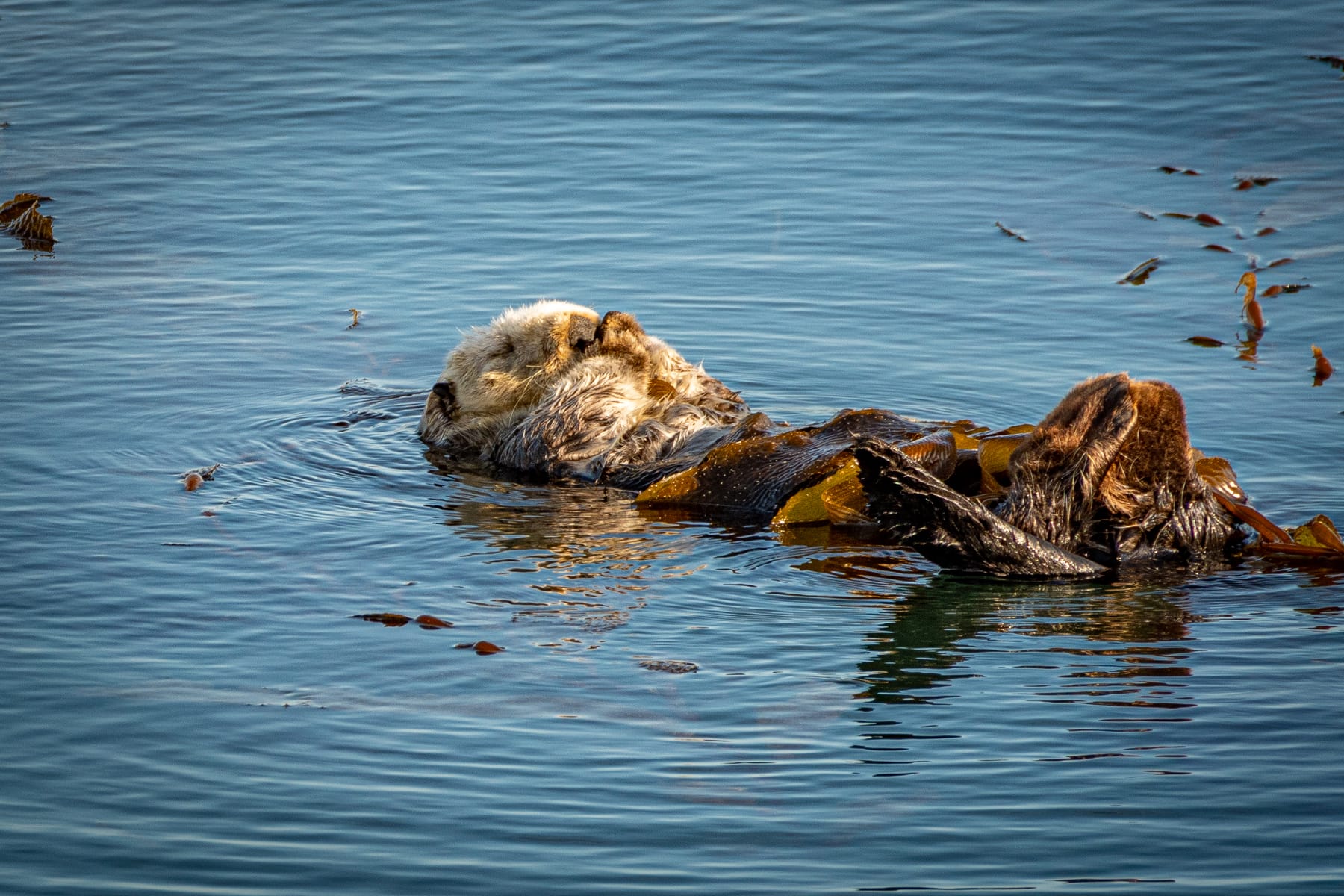
The sea otter hits nearly every marker at once. It floats on its back, holds objects in its forepaws, keeps a favorite rock in a loose pouch of skin under its arm for cracking shellfish, and holds hands with other otters while sleeping so the raft does not drift apart.
It is also Endangered and one of the most important animals in its ecosystem. Sea otters eat sea urchins. Urchins eat kelp. Remove the otters and urchin numbers explode, the kelp forest is grazed to bare rock, and every species that depended on the kelp goes with it. A kelp forest stores carbon and buffers coastlines, so the otter is doing more work than its reputation suggests.
The fur trade took the global population to around 2,000 animals by the early 1900s. Legal protection brought it back to something over 100,000, which is one of the older proofs that a hunting ban with enforcement behind it works. The Monterey Bay Aquarium runs the surrogacy program that raises stranded pups using adult females rather than people, because a pup raised by humans cannot be released.
The axolotl
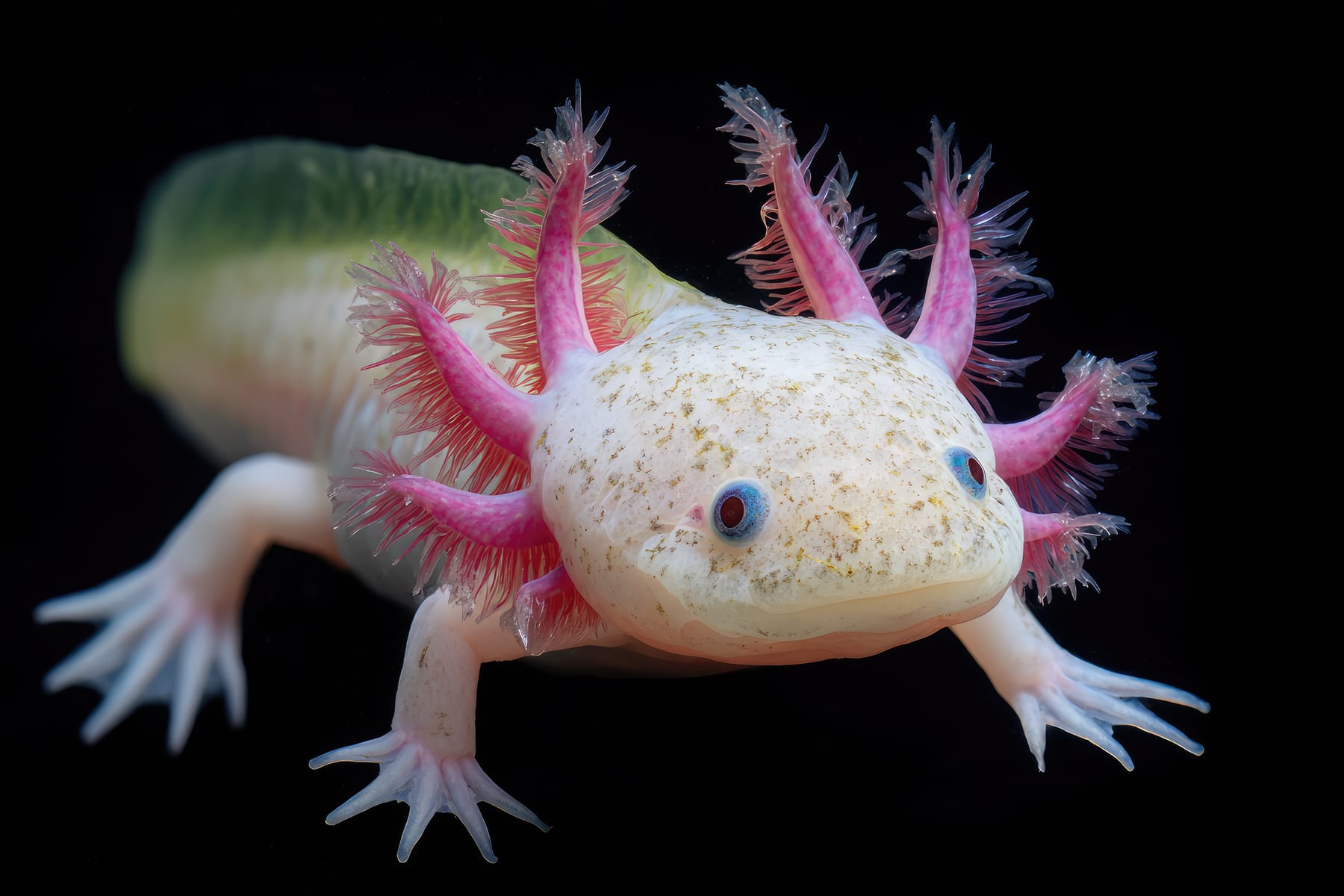
The axolotl has the permanent smile, the feathery external gills, and a face that reads as friendly by accident of anatomy. It is also Critically Endangered and functionally gone from the wild.
It is a salamander that never grows up, keeping its larval form for life and breeding in it. It regrows limbs, spinal cord tissue, and portions of its brain with no scarring, which is why it is one of the most studied animals in regenerative medicine.
The strange part is the split between its two populations. There are hundreds of thousands in laboratories and aquariums worldwide, and possibly fewer than 100 in Lake Xochimilco near Mexico City, the only place it has ever lived. Being popular did not save the wild animal, because what the wild animal needed was clean water in a specific canal system, and that is not something a pet market pays for.
The sloth
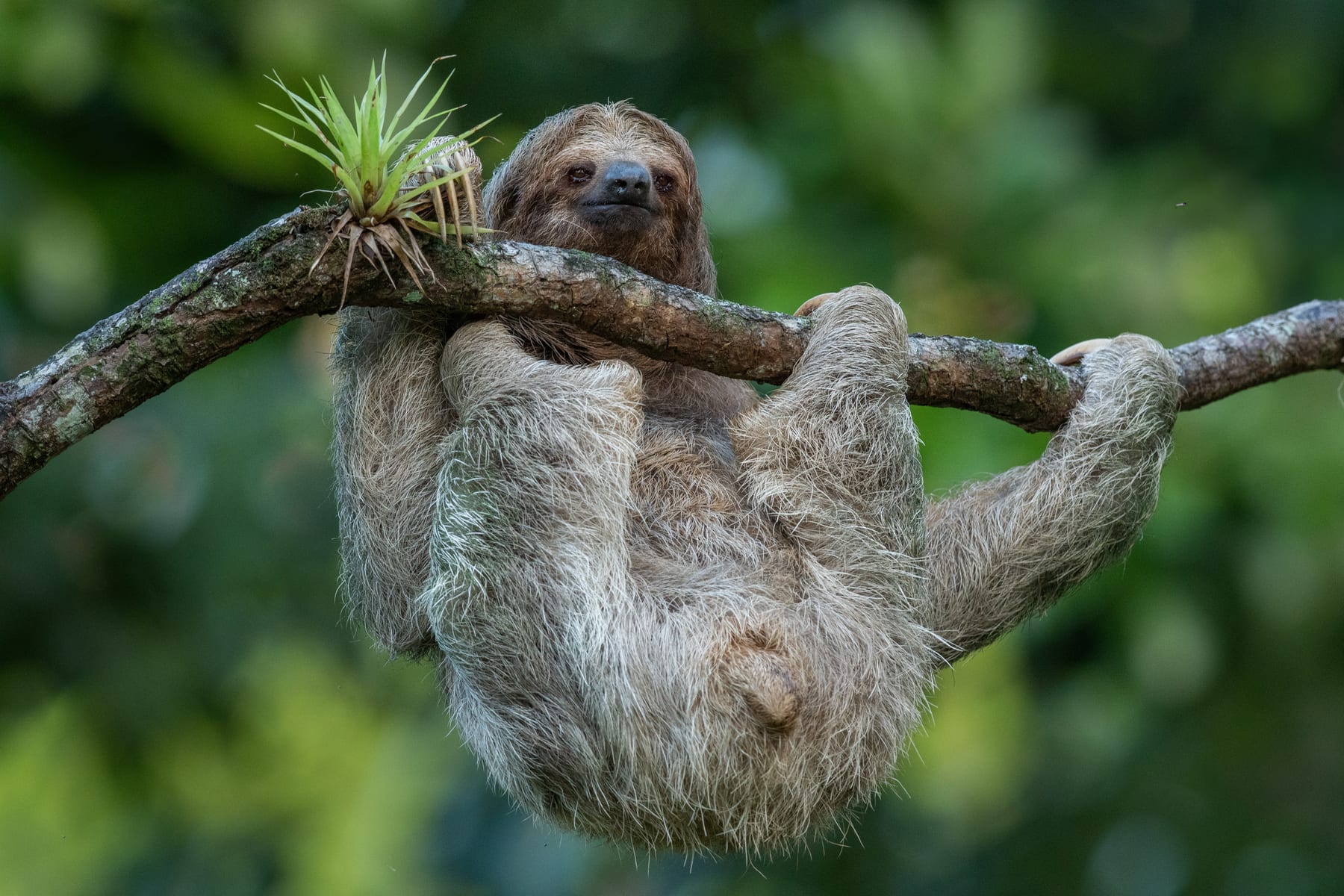
The brown-throated sloth has a permanently upturned mouth line, which is why every photograph of one looks pleased. The animal is not expressing anything.
Its slowness is a defense rather than laziness. Moving at two meters a minute makes it nearly invisible to predators hunting by movement, and its fur grows algae that tints it green. It descends to the ground about once a week to defecate, which is the most dangerous thing it does and remains an unresolved question in biology.
Sloth popularity has produced a genuine problem: roadside operators charging for photographs, which involves handling an animal whose stress signals look exactly like its normal expression. Our guide to where to see sloths covers how to tell a rescue center from a photo booth, and The Sloth Institute rehabilitates and releases rather than displays.
The arctic fox
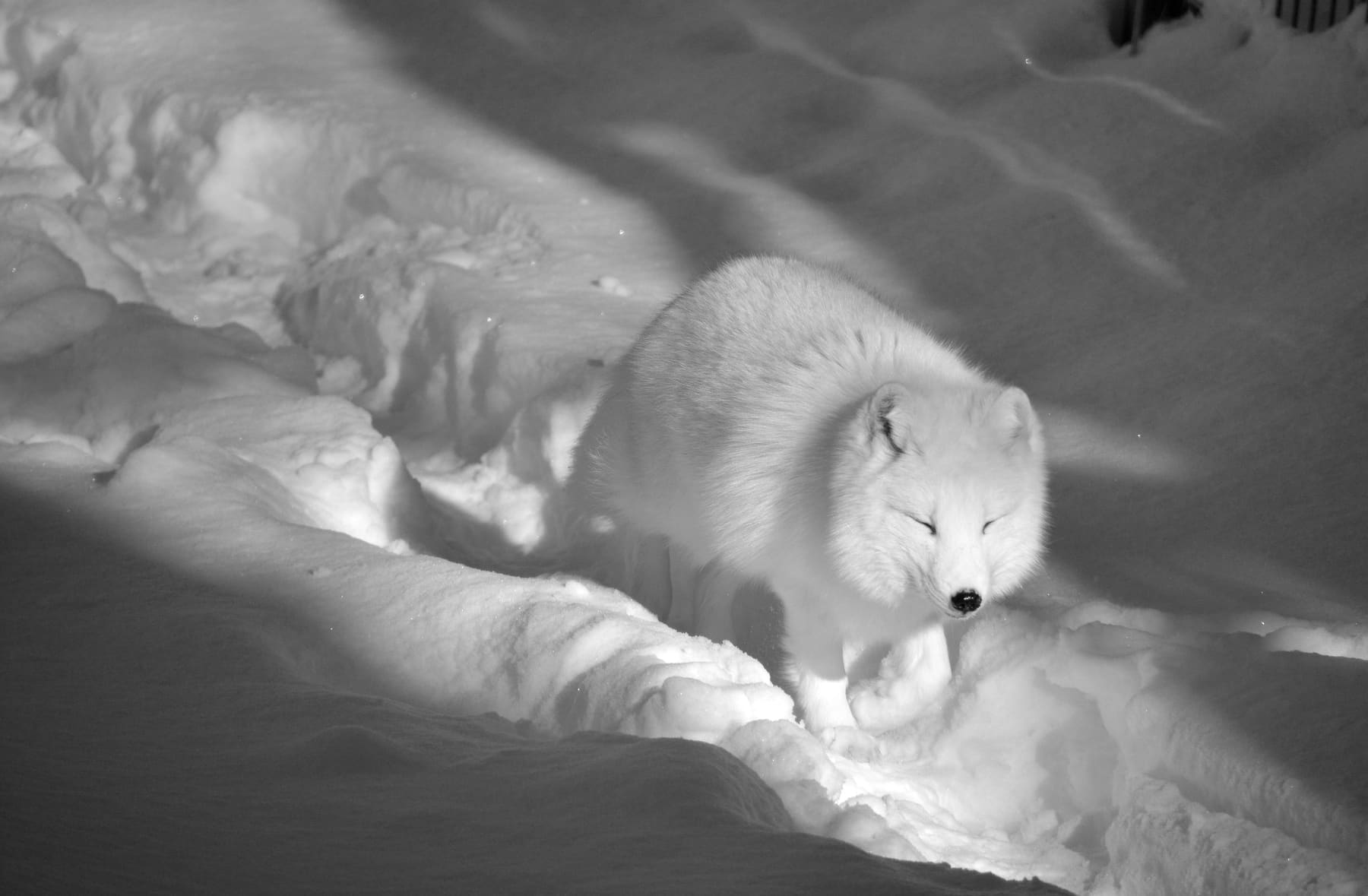
The arctic fox is round for thermodynamic reasons. Short ears, short muzzle, short legs, and thick fur minimize the surface area losing heat, and the same proportions read to us as babyish. It has the warmest fur of any mammal and does not begin to shiver until around minus 50 Celsius.
It is Least Concern globally, which makes it one of the few animals on this list that is genuinely fine, though the Scandinavian population is small and the red fox is moving north into its range as the tundra warms.
The other cutest animals worth naming
The red panda is Endangered, unrelated to the giant panda, and eats bamboo with a false thumb that evolved separately from the giant panda's. Fewer than 10,000 remain.
The quokka has the same accidental smile as the sloth and is confined mostly to Rottnest Island off Western Australia, where it survives because the island has no foxes or cats.
The pygmy marmoset is the smallest monkey in the world, about 100 grams, and gouges holes in bark to feed on sap, then returns hours later to drink what has seeped out.
The koala is Vulnerable and sleeps up to 20 hours a day because eucalyptus leaves are too low in nutrition to fund anything more active. Our guide to marsupials covers what else that diet costs it.
The harvest mouse weighs about as much as a two-pence coin, builds a spherical nest woven into standing grass stems, and uses its tail as a fifth limb to climb.
The fennec fox has ears a third the length of its body, which are radiators rather than a design choice.
The giant panda is the case that proves the whole argument. It is Vulnerable, upgraded from Endangered in 2016, and the reason is roughly four decades of Chinese habitat protection driven by an animal that happens to look like a soft toy.
What cuteness costs the animals that miss out
Here is the part worth sitting with.
Conservation funding follows public sympathy, and public sympathy follows facial proportions. Studies of donation behavior consistently find that large-eyed, round-faced mammals attract more money than reptiles, amphibians, fish, and invertebrates, regardless of how threatened each is or how much ecological work it does.
The consequences are concrete. The vaquita is down to around ten animals. The Chinese pangolin is the most trafficked mammal on Earth. Amphibians are the most threatened vertebrate class in the world, with roughly 40% of species at risk, and receive a fraction of the attention mammals do. Insects underpin pollination and are declining fast enough to alarm people who study them.
None of those are cute, and the correlation is not a coincidence.
There is a workaround, and it has a name. Conservationists call these animals flagship species, and using one deliberately to raise money for a whole landscape is standard practice rather than a cynical trick. Buy the panda's bamboo forest and you have bought habitat for the takin, the golden snub-nosed monkey, and several thousand plant species nobody will ever put on a poster. The flagship is the fundraising instrument; the habitat is the product.
It only fails when there is no charismatic animal in the landscape at all, which describes most freshwater systems, most soil ecosystems, and nearly every invertebrate community on Earth.
The honest defense of the animals above is that several of them are keystone species, and funding the otter genuinely does fund the kelp forest. The honest criticism is that this works by accident, and the species doing comparable work without the face gets nothing. The IUCN Red List is the corrective, because it ranks by risk rather than by appeal, and the EDGE of Existence program goes further, prioritizing species that are both threatened and evolutionarily unique, which turns up a lot of animals nobody has heard of.