Why flightless birds gave up flying, and what it cost them
Flightless birds exist because flight is expensive. A bird that flies carries an enormous breastbone, powerful flight muscles that can make up a quarter of its body weight, and hollow bones that trade strength for lightness. It also burns calories at a rate few animals match.
If nothing on the ground is trying to eat you, all of that is a cost with no return. Around 60 living bird species have given it up, and almost every one of them evolved somewhere without ground predators.
That is the whole story of flightless birds, including the part where it goes wrong.
The ratites: birds that got big instead
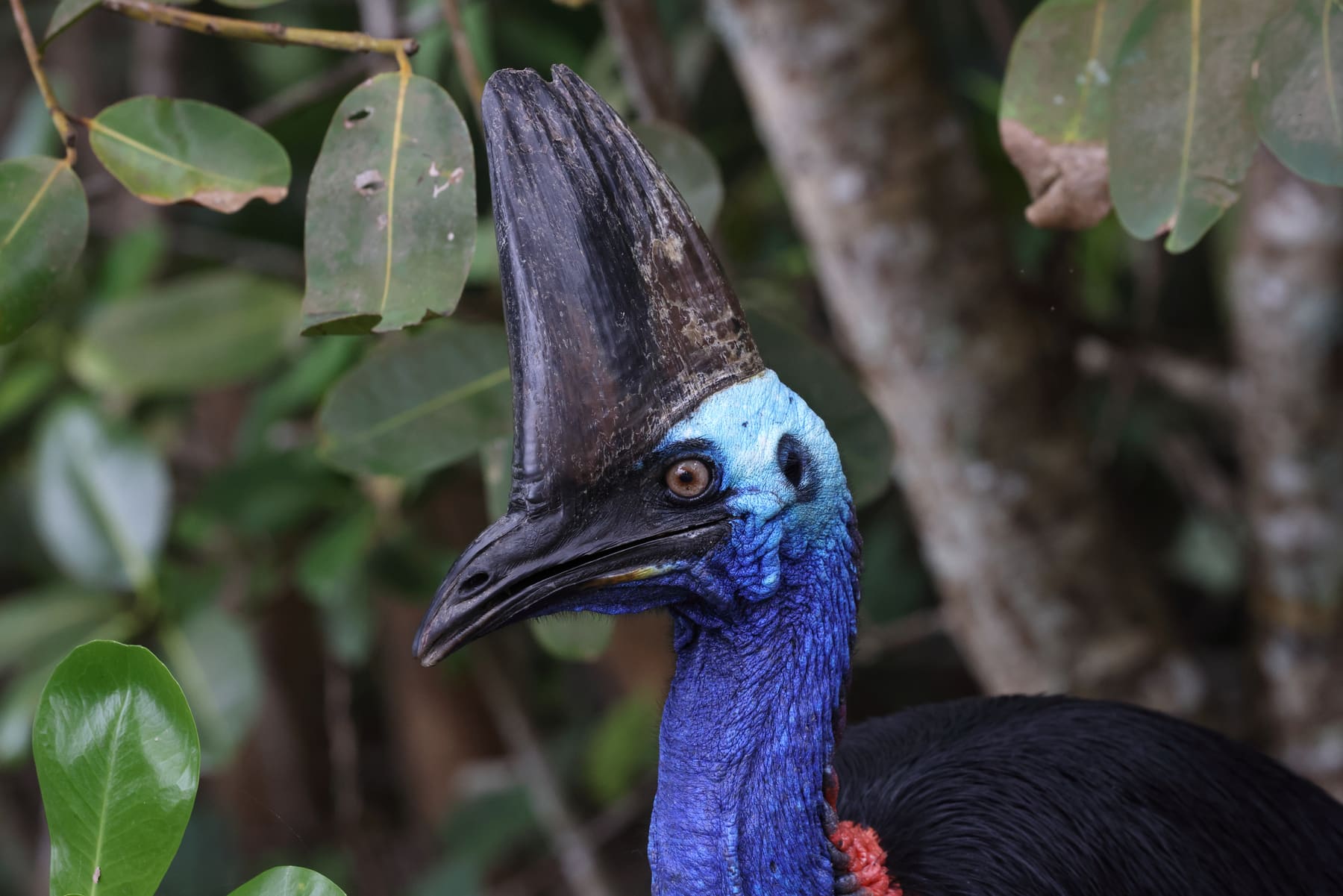
Ostriches, emus, rheas, kiwis, and cassowaries form a group called ratites, named for a flat breastbone with no keel for flight muscles to attach to.
The southern cassowary is the most formidable of them: up to 1.8 meters tall, with a bony helmet called a casque and a dagger-shaped inner claw. It is Least Concern globally but declining in Australia, where roads and dogs are the main causes of death.
Its ecological role is larger than its reputation. More than 100 rainforest tree species depend on the cassowary for seed dispersal, some almost exclusively, because the seeds are too large for any other animal to swallow and pass. A forest without cassowaries slowly loses those trees.
Ratites illustrate the usual trade. Freed from the weight limits flight imposes, they got large. The ostrich reaches 150 kilograms and runs at 70 kilometers per hour, which is a perfectly good defense in open country.
Penguins: flight moved underwater
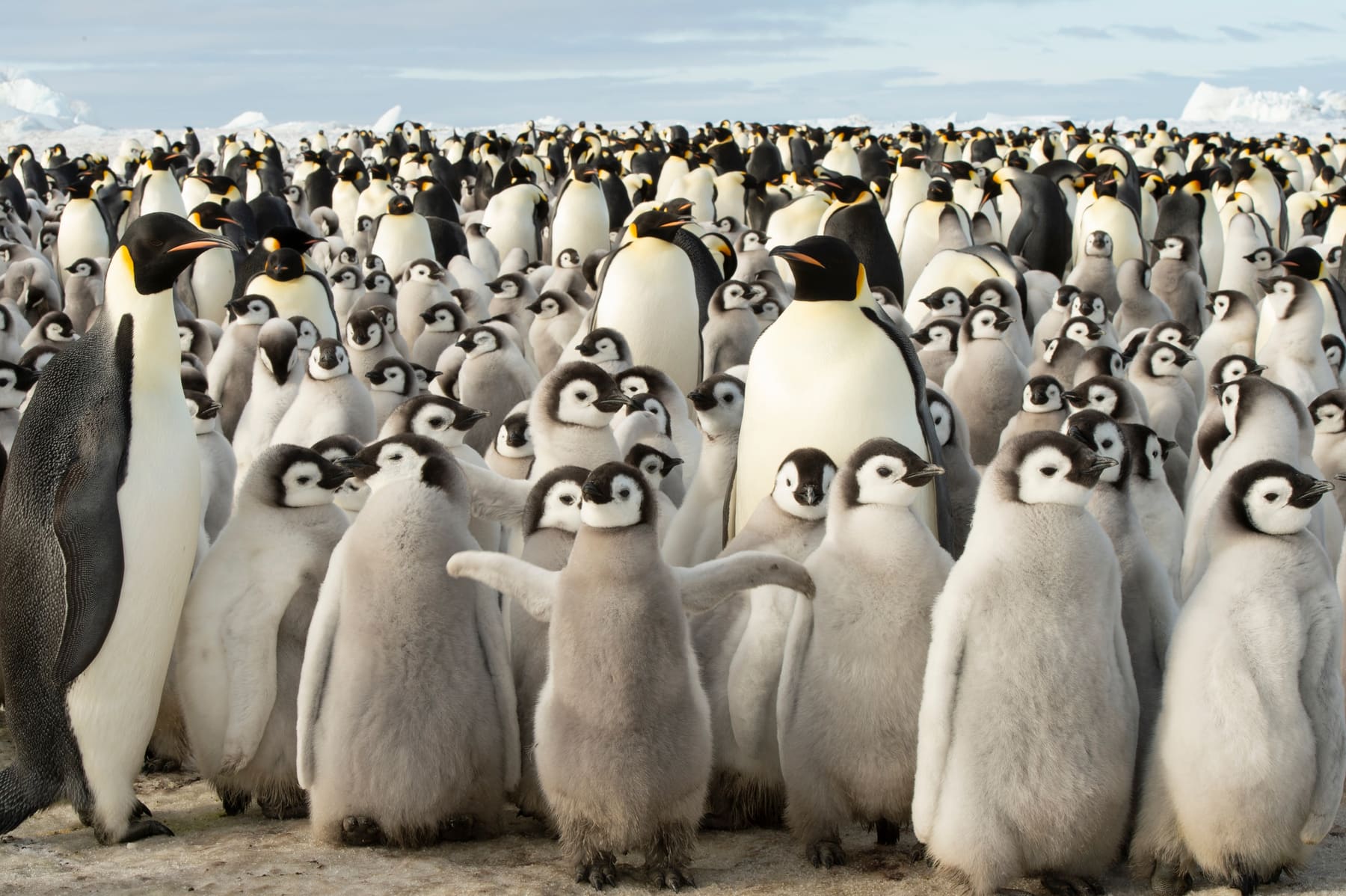
Penguins are the exception that clarifies the rule. They did not simply lose flight. They repurposed it.
A penguin wing is a stiff flipper, and a penguin swimming is doing something mechanically close to flying, generating lift on both the upstroke and the downstroke. The reason they cannot fly in air is that the wing shape that works in water is useless in a medium 800 times less dense.
The emperor penguin is Near Threatened and breeds through the Antarctic winter on sea ice, with males incubating a single egg on their feet through months of darkness. The African penguin is Endangered, and its problem is food: commercial fishing has taken the sardines and anchovies it depends on, so the birds are starving rather than being hunted.
The island birds, and what happened to them
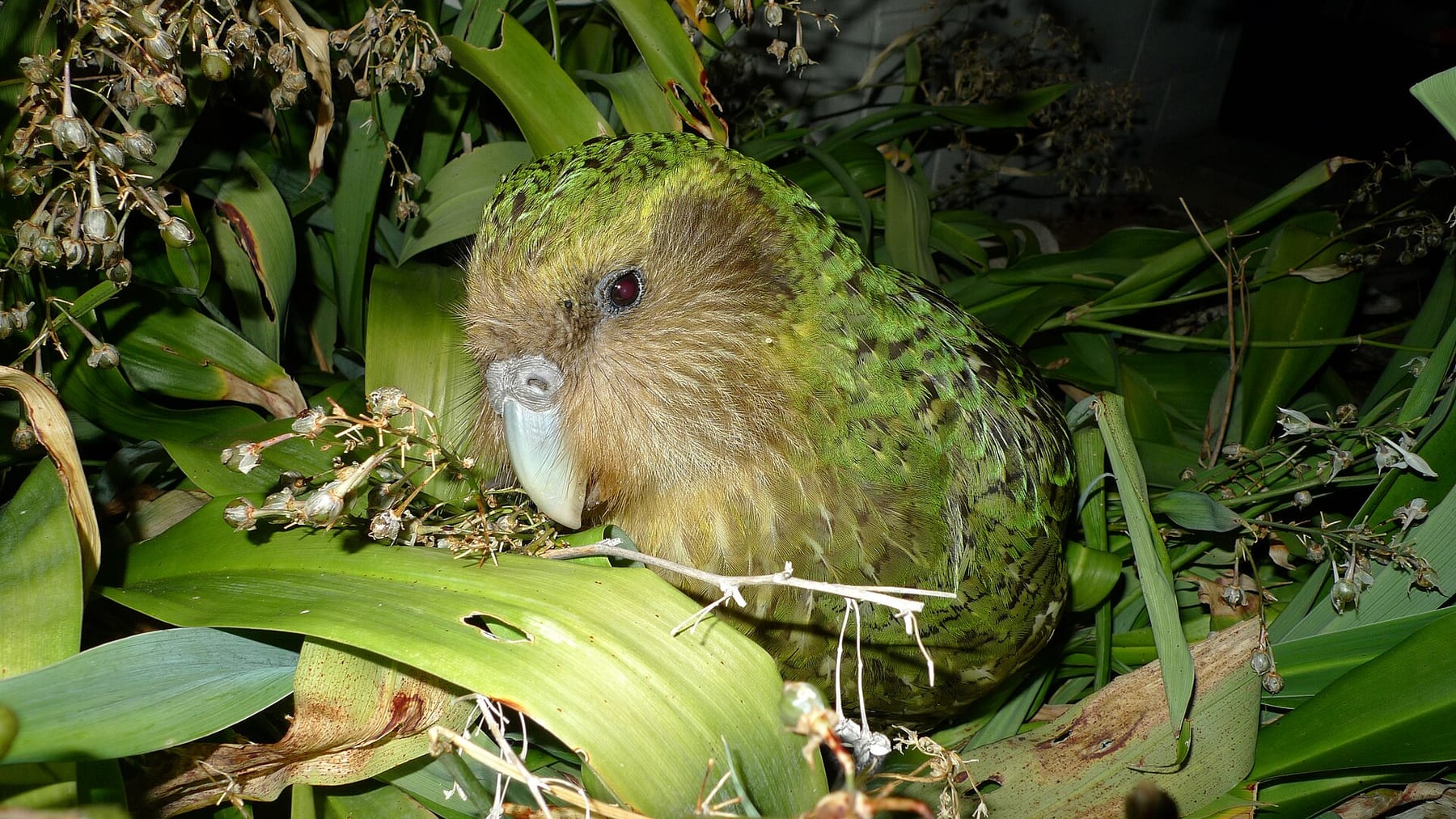
Sirocco, the best known of the surviving kakapo. Photo: New Zealand Department of Conservation, CC BY 2.0.
This is where flightlessness becomes a conservation story rather than a curiosity.
The kakapo is a flightless, nocturnal, ground-nesting parrot from New Zealand, the heaviest parrot in the world, and it can live past 60 years. Males inflate a throat sac and boom a low note that carries for kilometers.
It is Critically Endangered. Its defense against threat is to freeze and rely on camouflage, which worked perfectly for millions of years against hunting birds that located prey by movement, and works not at all against stoats and cats that hunt by smell. The population fell to 51 birds in 1995. Every survivor is now named, microchipped, and living on predator-free islands, managed by New Zealand's Kakapo Recovery program.
New Zealand is the clearest case because it had almost no land mammals at all before people arrived. Birds filled the roles mammals occupy elsewhere: grazing, browsing, and predation were all done by birds, and many of them stopped flying because there was no reason not to.
The flightless birds we already lost
Flightless island birds have the worst extinction record of any group of birds, and the mechanism is always the same.
The dodo is the emblem. It lived on Mauritius, an island with no ground predators, and had no fear of people because nothing on Mauritius had ever hunted it. It was gone within about a century of European arrival, and hunting was not the main cause. Rats, pigs, and macaques that came off the ships ate the eggs.
The moa of New Zealand, nine species up to 3.6 meters tall, were hunted out within a few hundred years of Polynesian settlement. The great auk, the flightless seabird of the North Atlantic, was killed for feathers and meat until the last confirmed pair died in 1844, and because great auks paired for life, each bird killed took a second out of the breeding population with it.
That pattern did not stop in the eighteenth century. It is still producing extinctions now.
The pattern repeats across the Pacific, and the count is startling: estimates suggest that a large share of all bird extinctions in recorded history were island species, and flightless ones are heavily overrepresented among them. The IUCN Red List records the survivors, and BirdLife International tracks island eradication programs that are now reversing some of it.
How a bird stops flying
The mechanism is well understood and takes surprisingly few generations.
Flight muscles and the keeled breastbone that anchors them are metabolically expensive to build and maintain. In a population where flight confers no survival advantage, individuals that invest less in wings and more in body size, fat reserves, or eggs leave more offspring. The wings shrink and the keel flattens over generations, without anything being lost that was being used.
It happens fast enough to observe. Several island rail species have become flightless within a few thousand years of colonizing an island, and rails have done it independently dozens of times across the Pacific. The same island, the same absence of predators, and the same outcome, over and over.
It is also close to irreversible. No lineage has regained flight after losing it, which is why an island bird meeting a cat has no evolutionary route out. The adaptation that made sense for millennia becomes fatal in a single generation, and the species cannot undo it.
What conservation does about it
The remedy is unusually specific, which is rare in conservation and worth appreciating.
For most threatened species the answer is habitat, and habitat is expensive and slow. For flightless island birds the answer is usually predator removal, and that is a defined engineering problem with an end point. New Zealand has cleared rats, stoats, and cats from dozens of offshore islands, and once an island is clear it stays clear if reinvasion is prevented.
That is why the kakapo went from 51 birds to over 250 rather than to zero, and why species written off decades ago are being moved back onto islands they were cleared from.
It is also why these birds are among the few cases where an ambitious target is credible. New Zealand has a national goal of eliminating introduced predators entirely, which for a country whose native fauna is overwhelmingly birds would change the outlook for every flightless species it has left.
Which flightless birds are left
There are roughly 60 flightless species alive, and they cluster in three groups that tell the whole story between them.
Ratites, the large ground birds of southern continents, are mostly secure because size is a real defense and their landmasses are large enough to absorb pressure. Ostrich, emu, and rhea are not threatened.
Penguins, 18 species, are threatened almost entirely by what happens in the ocean rather than on land: fisheries taking their prey, and warming water moving that prey out of range. Our guide to types of penguins covers all 18, only two of which live on ice at all.
Island endemics are the ones in trouble. Kakapo, takahe, several rails, and the Galapagos cormorant, the only cormorant on Earth that cannot fly. Almost every flightless bird that has gone extinct came from this group, and almost every one still at risk belongs to it.
Read the three together and the lesson is that flightlessness itself is not the problem. Flightlessness plus an island plus introduced mammals is the problem, and only the third of those can be undone.