Which extinct animals de-extinction can actually bring back
In October 2024, three wolf pups were born on a preserve in the western United States. In April 2025 the company that made them, Colossal Biosciences, introduced them to the world as dire wolves, a species that had been gone for more than 10,000 years. Time put them on its cover.
The pups are real. Whether they are dire wolves is a different question, and the answer tells you most of what you need to know about where de-extinction actually stands.
What was actually done to the wolves
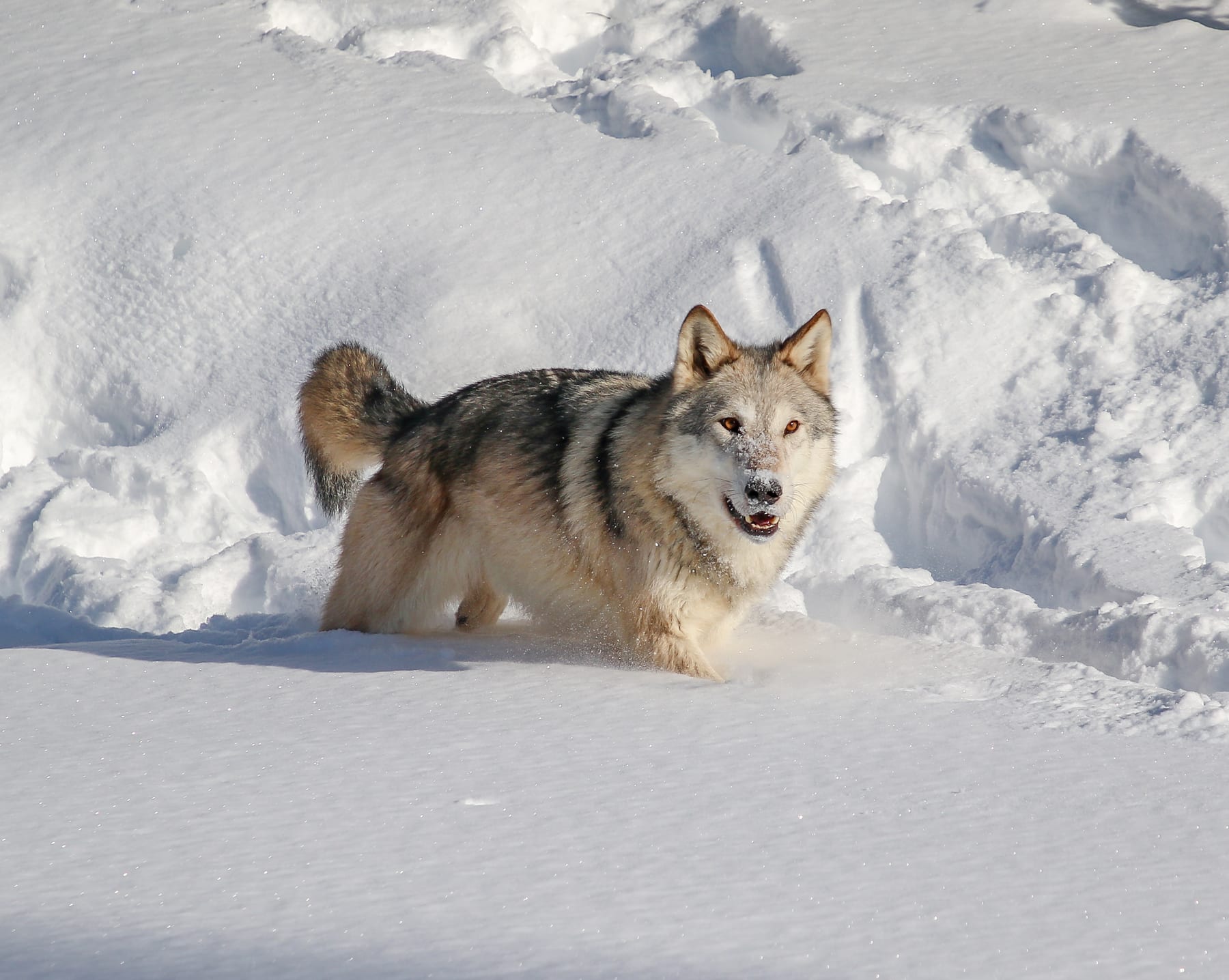
Romulus, Remus, and Khaleesi are gray wolves carrying 20 genetic edits across 14 genes. A gray wolf has roughly 19,000 genes. The edits changed one copy of each targeted gene, so the animals still carry a standard gray wolf version on the other chromosome.
The genetic distance involved is larger than the edit count suggests. Dire wolves split from other canids around 5.7 million years ago and are more closely related to jackals than to gray wolves. Editing 14 genes does not close that gap. As one researcher put it to Science, this is a gray wolf with a small fraction of its genes modified to resemble what we think a dire wolf looked like.
Chemists and geneticists made the same point in Chemical & Engineering News, where the debate widened into an argument about scientific overhype.
That is a genuine technical achievement. It is not a resurrection, and the difference is not pedantic: a species is its whole genome, its behavior, its learned culture, and the ecosystem that shaped it. None of those came back.
The three ways to attempt de-extinction
"De-extinction" covers three different techniques, and they are not equally plausible.
Back-breeding selects for ancestral traits in living descendants. The Heck cattle bred in 1920s Germany to resemble the extinct aurochs are the standard example, and they demonstrate the limit: you can recover an appearance without recovering the animal.
Cloning transfers a nucleus from a preserved cell into an egg. It requires intact cells, so it only works for species that died recently enough to have been frozen, which rules out anything from the Pleistocene. It has genuinely worked: the Pyrenean ibex was briefly cloned in 2003, though the calf died within minutes of birth.
Genome editing, the approach Colossal uses, takes a living relative's genome and edits it toward the extinct species. This is the only option for animals with no usable cells, and it is why the output is always a modified version of something living rather than the original animal. The dire wolf project is a gray wolf edited toward dire wolf traits. The mammoth project is an Asian elephant edited toward mammoth traits. That is a structural property of the method, not a shortcut anyone is taking.
The four other de-extinction projects
Colossal has five active programs: the mammoth, the thylacine, the dodo, the dire wolf, and the moa. Here is where each one actually is.
The woolly mammoth is the flagship, and the work so far has been done in mice. In early 2025 the company produced 38 "woolly mice," laboratory mice edited with mammoth-derived genes to grow thick coats. That is a proof of concept for the edits, not a mammoth. The stated plan is mammoth-variant embryos in an Asian elephant by 2026 and calves by 2028. Asian elephants are themselves Endangered, which is the part worth pausing on: the surrogate for the de-extinct animal is a species that needs help staying extant.
The thylacine, or Tasmanian tiger, was the largest carnivorous marsupial of modern times, and is reportedly ahead of schedule. In October 2024 the team made 300 edits in a single fat-tailed dunnart cell line, at the time the most heavily edited animal cell on record.
The dodo team has completed high-coverage genomes and demonstrated gene editing in bird germ cells, which is the harder problem in birds because you cannot simply transfer an embryo into a surrogate the way you can in mammals.
The moa, a group of large flightless birds from New Zealand, is the newest addition and the least far along.
What this technology is actually good at
Strip away the extinct-species branding and the underlying capability is real and useful. The company has gone from a handful of edits at roughly 40% efficiency to hundreds of simultaneous edits at around 90% accuracy. That toolkit applies directly to animals that are still here.
Species that have passed through a population bottleneck carry very little genetic diversity, which leaves them vulnerable to disease and infertility. The black-footed ferret and the California condor are standard examples, and cloning from cryopreserved cell lines has already been used to add lost genetic variation back into both. The American bison recovered from roughly a thousand animals, and the genetic consequences of that bottleneck are still being managed.
The black-footed ferret is the clearest case. The entire modern population descends from seven animals, which left it with almost no genetic variation and acute vulnerability to disease. In 2020, a ferret named Elizabeth Ann was cloned from cells frozen in 1988 belonging to an animal that had left no descendants, introducing genetic material the living population had lost. Later clones have since produced kits of their own. That is the same toolkit as the dire wolf work, pointed at an animal that still exists.
Editing tools that can make 300 precise changes could restore diversity to a living population that has lost it. That is a less exciting headline than a mammoth. It would help considerably more animals.
Where would a revived species live
Assume the technology works perfectly. A mammoth calf is born in 2028 and survives. Then what.
Mammoths lived in a habitat that no longer exists, the mammoth steppe, a cold dry grassland that covered much of the northern hemisphere and disappeared as the climate warmed. Colossal's answer is that mammoths would help restore it by trampling shrubs and compacting snow. It is a real hypothesis with a real research program behind it, and it is also unproven at any scale.
The thylacine has a better case, because Tasmania still has the habitat and the thylacine was hunted out only in the 1930s. It is also the animal people reach for when they want an example of something strange enough to be worth missing. The dodo has a worse one: Mauritius now has rats, cats, macaques, and pigs, all of which ate dodo eggs, and none of which have been removed from the island.
A species is not just its genome. It is a genome in a place, with the other species it evolved alongside, and usually with behavior learned from parents that no longer exist to teach it.
The argument this raises, honestly stated
The objection you hear most from conservationists is the moral hazard one: if extinction looks reversible, the urgency to prevent it drops. It is a reasonable worry and it is hard to measure.
The clearer problem is arithmetic. The Sumatran rhinoceros has fewer than 50 individuals left on the IUCN Red List and needs funded protection now. The vaquita is down to around ten animals and needs gillnets out of one stretch of water. Neither requires new technology. Both require money and sustained attention, which are exactly the things a de-extinction announcement competes for.
Colossal has raised hundreds of millions of dollars. The International Rhino Foundation and Save the Rhino International work on Sumatran rhinos at a fraction of that.
So what is actually coming back
As of now: nothing, in the sense most people mean. What exists are gene-edited proxies of extinct animals, which is a real scientific milestone and a straightforwardly different thing from restoring a species.