17 weird animals you would swear were invented
Some weird animals are stranger than anything fiction would attempt. The coelacanth was known only from fossils and assumed to have died out 66 million years ago, until a museum curator in South Africa found one in a fishing catch in 1938. It is still here, still Critically Endangered, and still the reason biologists hesitate before declaring a deep-water species extinct.
Weird animals tend to be weird for a reason. Extreme specialization, isolation on an island, or an evolutionary path nothing else took. Those same three things also make a species fragile, which is why this list of oddities is also, unavoidably, a list of animals in trouble.
Several below are also among the most brightly colored animals alive, and a few are regularly voted among the cutest, which matters more for their funding than anything about their biology does.
The axolotl never grows up
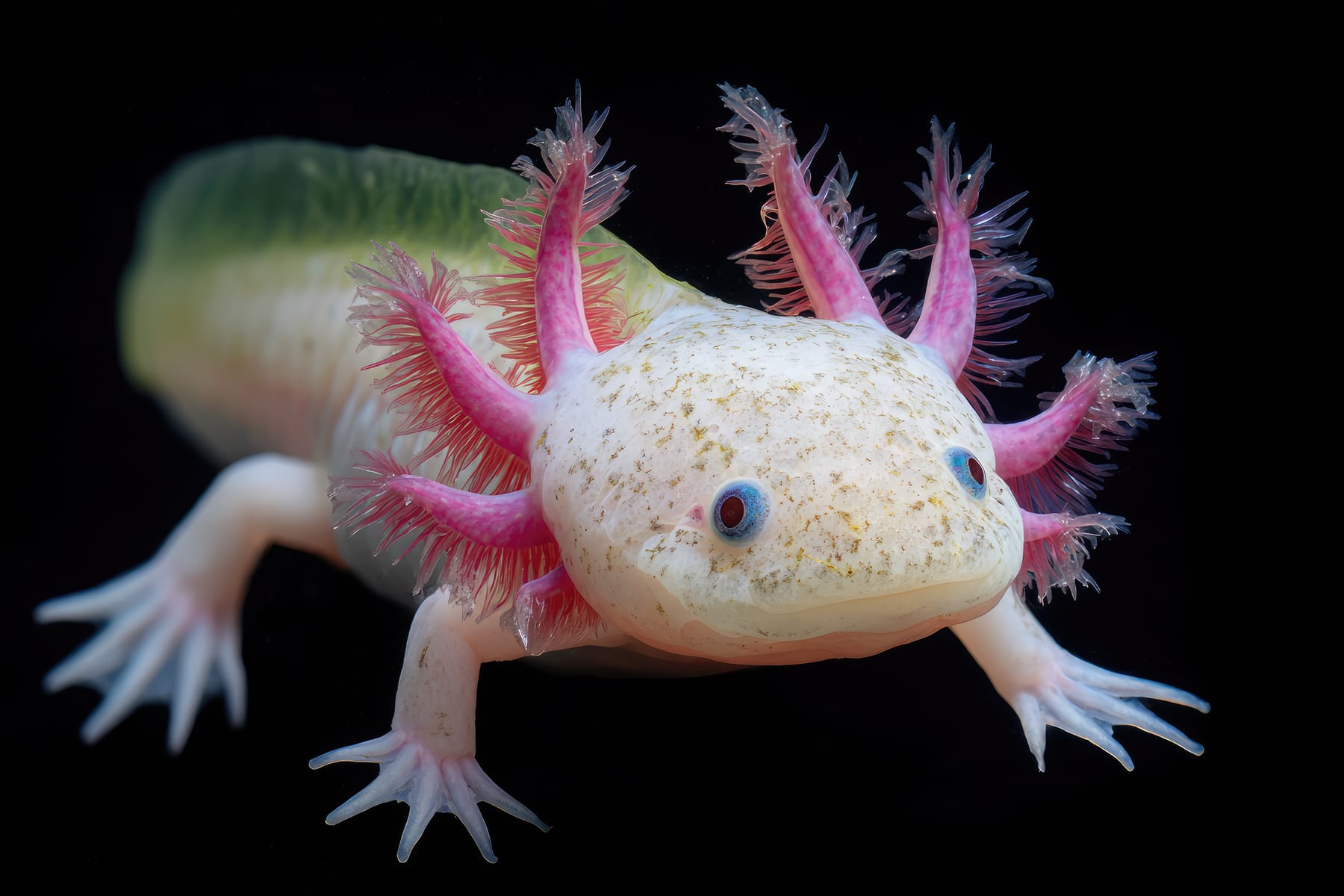
The axolotl is a salamander that stays in its larval form for life. Most salamanders metamorphose, lose their gills, and move onto land. The axolotl keeps the feathery external gills, stays in the water, and breeds anyway, a condition called neoteny.
It can also regrow amputated limbs, parts of its heart, and sections of its brain without scarring, which is why it is one of the most studied animals in regenerative medicine.
Here is the part that surprises people. Millions live in tanks worldwide, and the species is Critically Endangered in the wild, confined to the remnants of Lake Xochimilco in Mexico City. A species can be simultaneously everywhere and almost gone.
The narwhal's tusk is a tooth
The narwhal is an Arctic whale whose males grow a spiral tusk up to three meters long. It is not a horn. It is the left canine tooth, pushed through the upper lip, and it is packed with ten million nerve endings, making it a sensory organ that reads the water around it.
Narwhals dive to 1,500 meters under sea ice in winter, deeper than almost anything else that breathes air. Medieval Europeans sold narwhal tusks as unicorn horns, at prices that outstripped gold.
The okapi is a forest giraffe
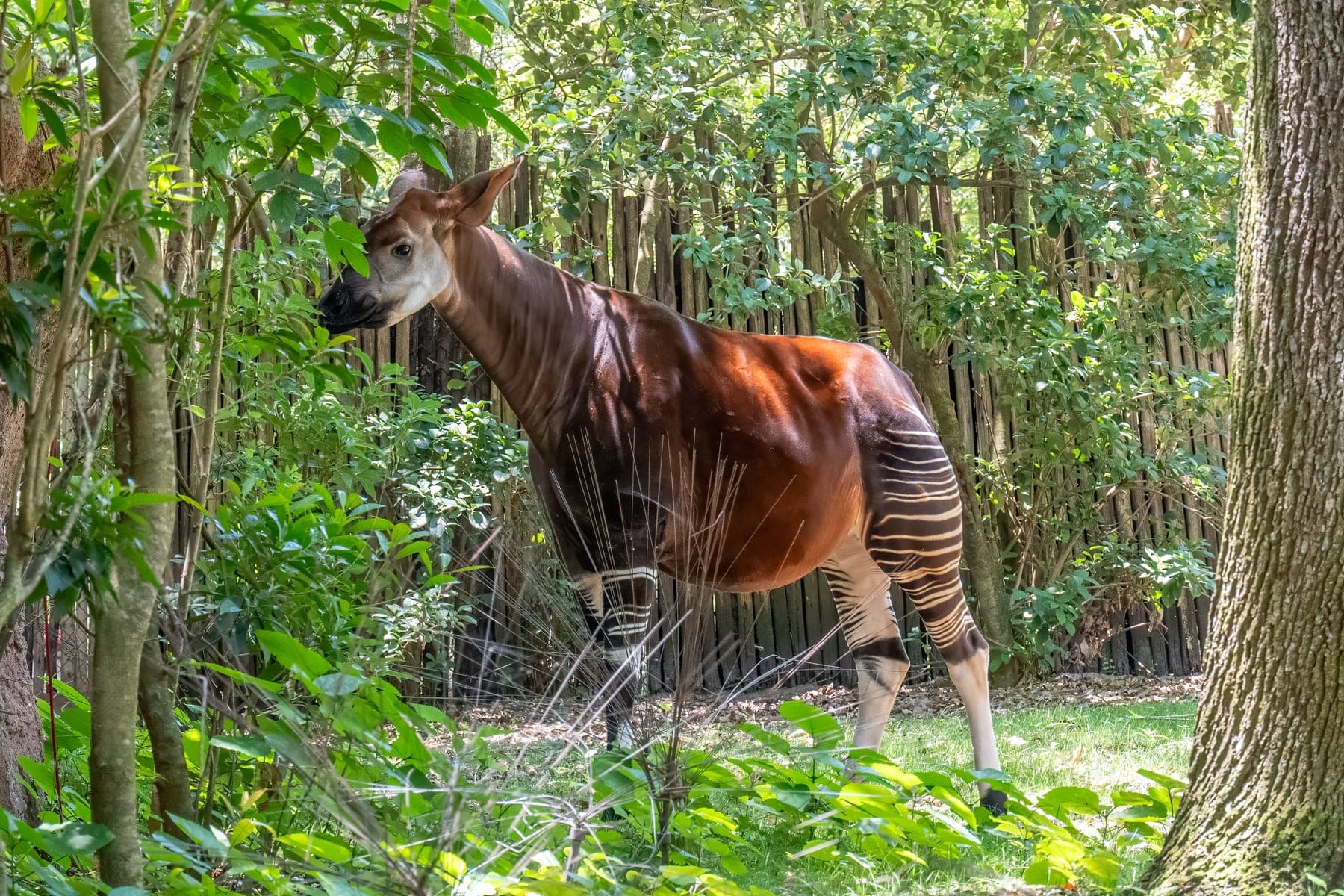
The okapi has zebra-striped legs, a body like a horse, and a prehensile blue tongue long enough to clean its own eyes. It is the only living relative of the giraffe.
Science outside central Africa did not confirm it existed until 1901, which is extraordinarily late for a large mammal. It lives alone in dense Congo Basin forest and is Endangered.
The platypus does almost everything wrong
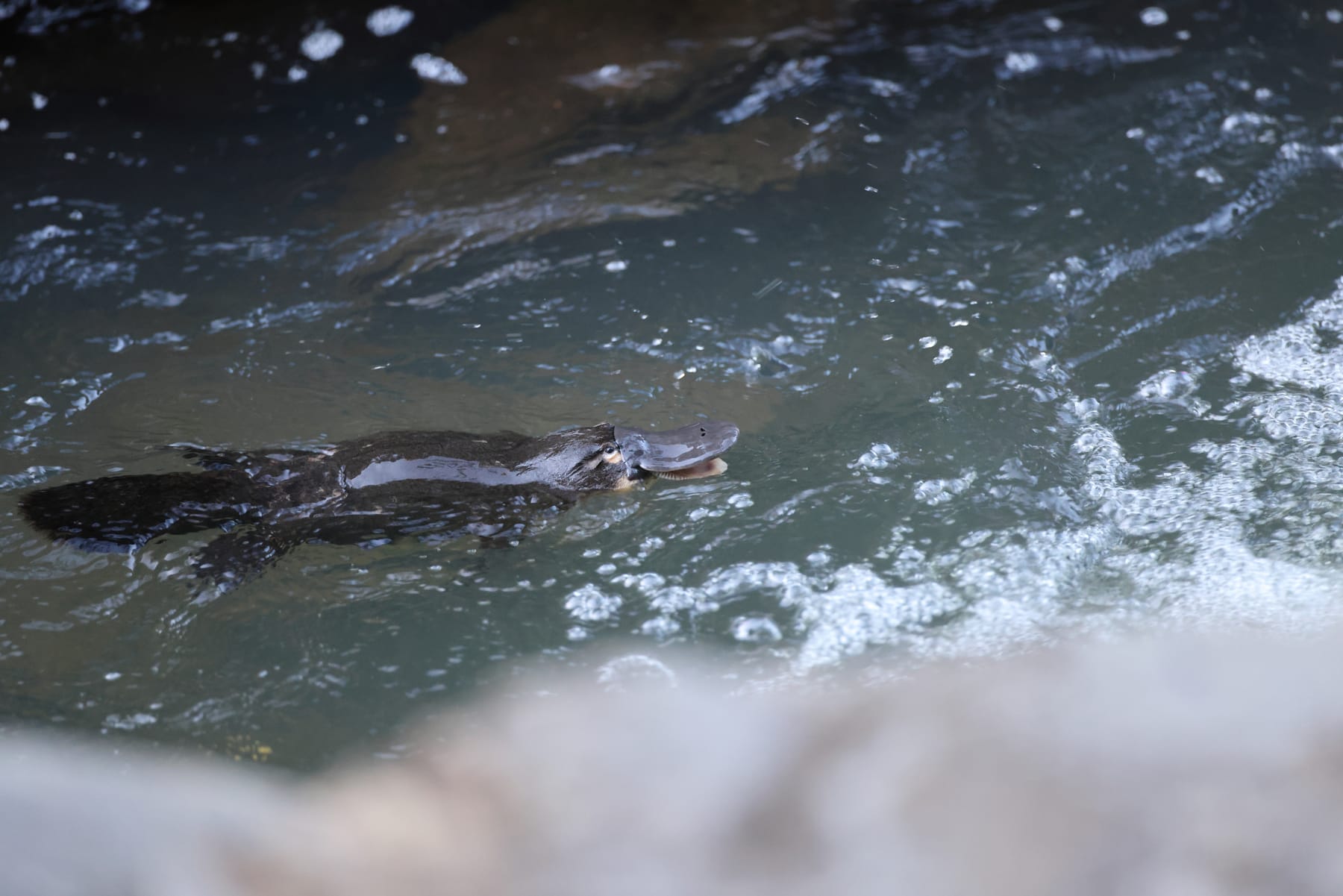
The platypus is a mammal that lays eggs, has a duck-like bill, and produces venom from a spur on the male's hind leg. The bill is an electroreceptor: the animal hunts with its eyes, ears, and nostrils closed, detecting the electrical fields of prey buried in river mud.
It also has no stomach. The oesophagus connects directly to the intestine. When the first specimen reached British scientists in 1799 they suspected a hoax.
The proboscis monkey and its nose
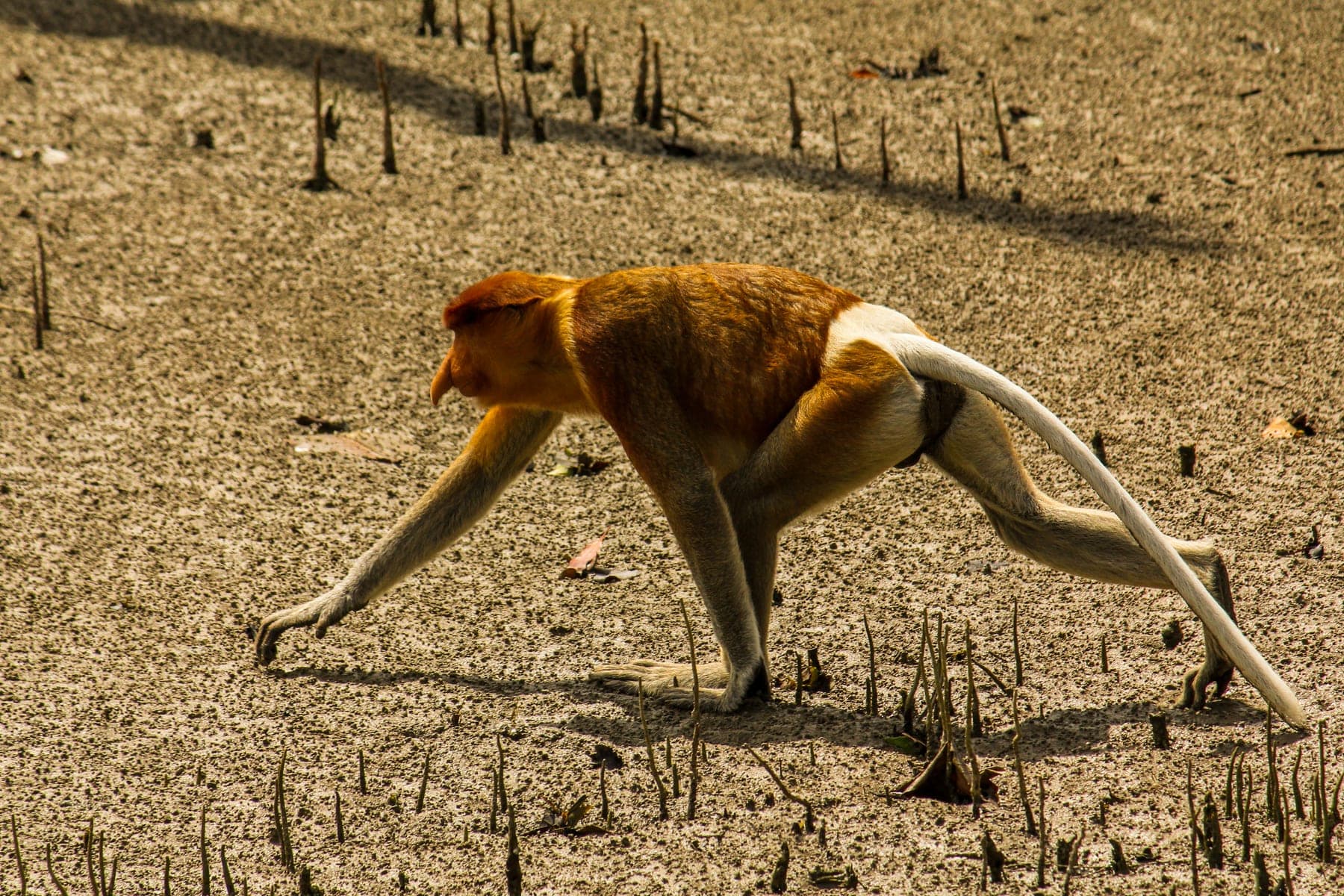
The proboscis monkey lives only on Borneo. Males grow a pendulous nose that can exceed 10 centimeters and acts as a resonating chamber, amplifying calls to attract females and warn rivals. It is Endangered.
The kakapo forgot how to fly
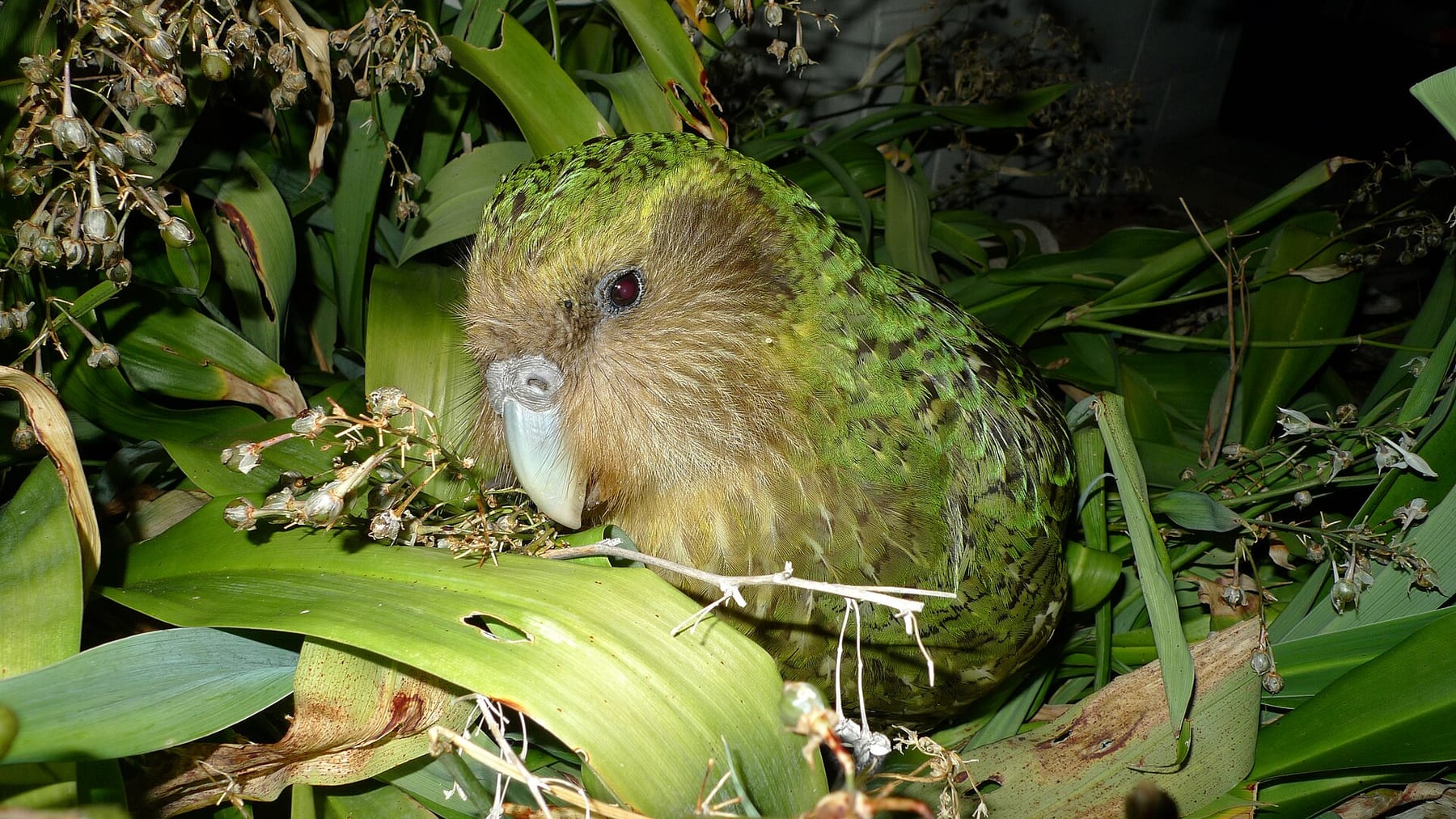
Sirocco, the best known of the surviving kakapo. Photo: New Zealand Department of Conservation, CC BY 2.0.
The kakapo is a flightless, nocturnal, ground-nesting parrot from New Zealand that can live past 60 years. It is the heaviest parrot in the world. Males inflate a throat sac and boom a low note that carries for kilometers.
Its defense against predators is to freeze, which worked perfectly against hunting birds and not at all against introduced stoats and cats. It fell to 51 birds in 1995 and every survivor is now named and microchipped.
More oddities worth knowing
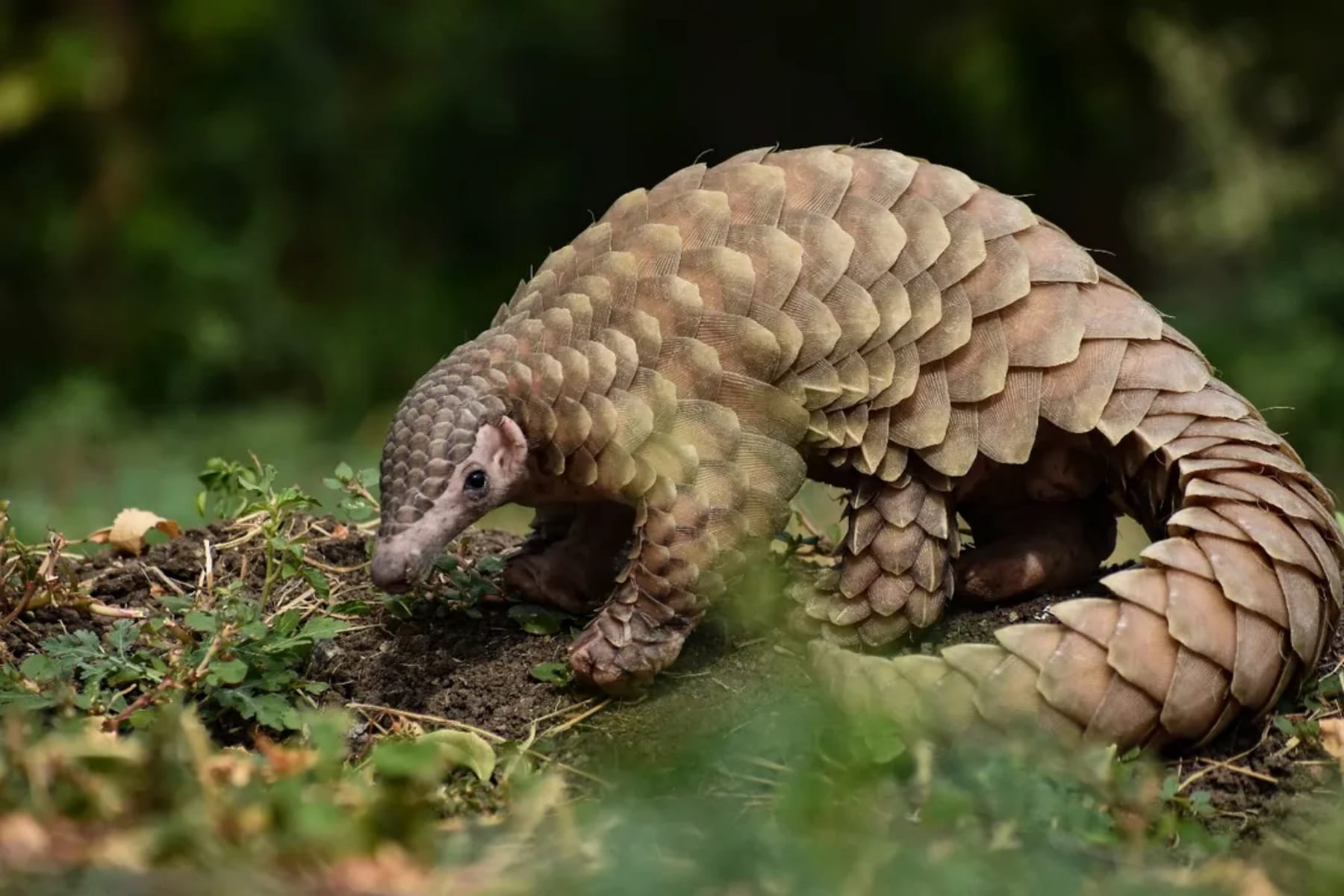
The Chinese pangolin is the only mammal covered in keratin scales, rolls into a ball nothing can open, and eats up to 70 million insects a year. It is Critically Endangered and the most trafficked wild mammal on Earth. Save Vietnam's Wildlife runs the rescue operations that receive confiscated animals.
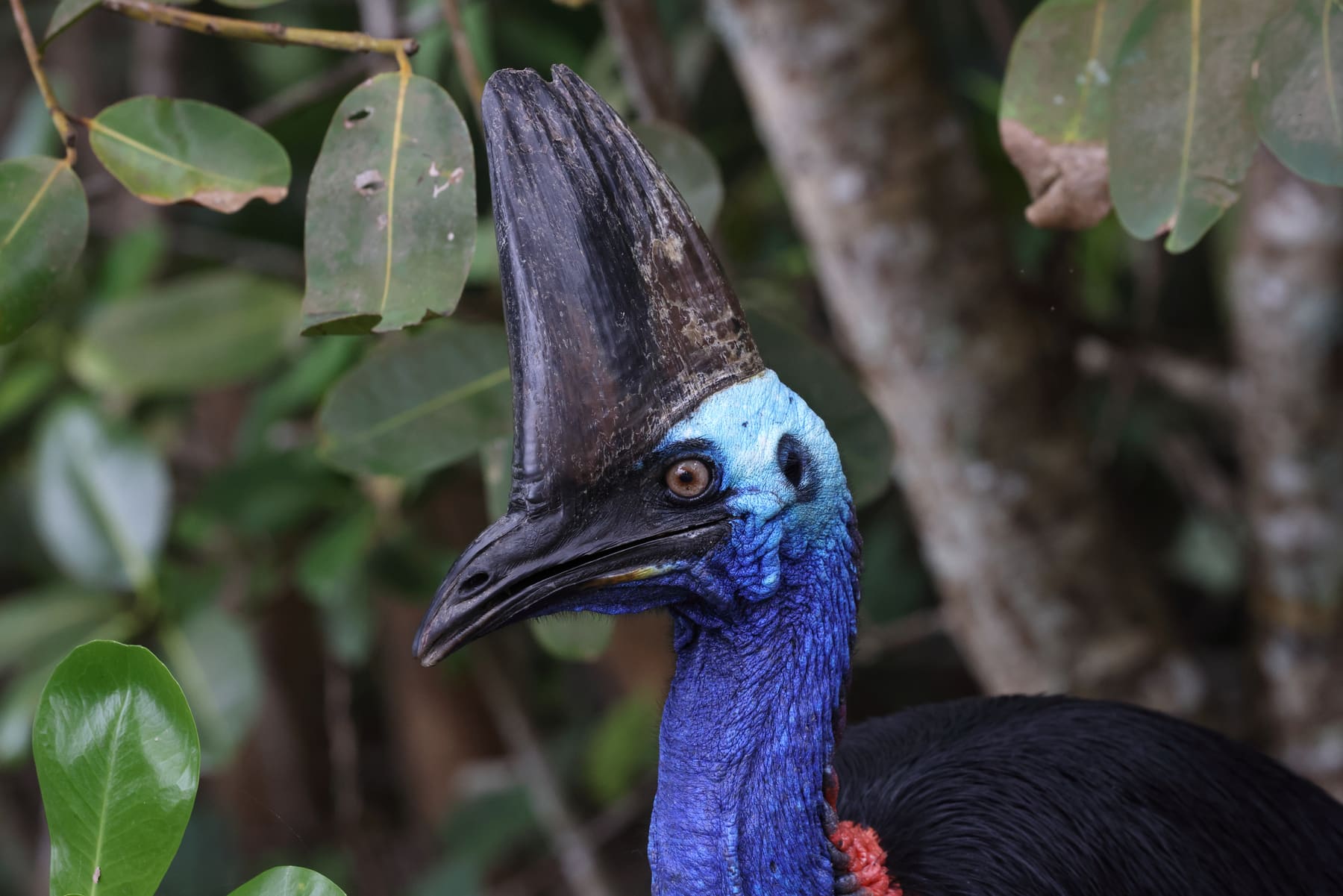
The southern cassowary is a flightless bird up to 1.8 meters tall with a bony helmet on its head and a dagger-like inner claw. More than 100 rainforest tree species depend on it for seed dispersal.
The fossa is Madagascar's largest carnivore, related to the mongoose but shaped like a cat, with semi-retractable claws and ankles that rotate to let it run down tree trunks head-first. It is Vulnerable.
The mountain tapir is the only tapir with a woolly coat, living in Andean cloud forest, and is Endangered. Its closest relatives are horses and rhinos, not pigs.
The brown-throated sloth moves so slowly that algae grows in its fur, providing camouflage and a home for moths that live nowhere else. The Sloth Institute rehabilitates orphans in Costa Rica.
The giant anteater has no teeth and a 60 centimeter tongue that flicks 150 times a minute. The dugong is a marine mammal that grazes seagrass and is the probable origin of mermaid legends. The sloth bear has a gap in its front teeth for vacuuming termites and carries its cubs on its back, which no other bear does. The sun bear is the smallest bear alive with a 25 centimeter tongue for extracting honey.
The weird animals that break their own category
A few of these animals are odd specifically because they refuse to sit where taxonomy puts them.
The red panda is not a panda and is not closely related to the giant panda. It is the only living member of its entire family, with no close relatives anywhere, and it has a false thumb, an extended wrist bone, for gripping bamboo. It is Endangered.
The coelacanth has lobed fins containing bones arranged like the limbs of a land vertebrate, which makes it a closer relative of you than of most fish in the same water.
The platypus is not merely an odd mammal. It sits with the echidnas in a group that split from every other mammal roughly 166 million years ago, which is why it has features that look borrowed from reptiles and birds. They are not borrowed. They are original, and the rest of us are the ones who changed.
The weird animals nobody photographs
Every species above is a vertebrate with a name and a photograph. The genuinely strange majority of life is invertebrate, mostly undescribed, and almost entirely unassessed.
Scientists have named roughly 1.2 million species and estimate several million more remain, concentrated in tropical forest and deep ocean invertebrates. The IUCN Red List has assessed a large share of the world's vertebrates and a tiny fraction of its insects, which means the extinction figures everyone quotes are drawn almost entirely from the group we happen to watch.
Deep-sea species make the point best. Animals that glow, that live around hydrothermal vents at temperatures that would cook anything else, and that have no close relatives at all are being described faster than they can be assessed, and NOAA Ocean Exploration finds new ones on most major expeditions.
Why the strange ones are the fragile ones
Count the statuses above and the pattern is hard to miss. Of the 17 species here, most are Vulnerable, Endangered, or Critically Endangered on the IUCN Red List.
That is not coincidence. The three things that make an animal strange are the three things that make it vulnerable.
Extreme specialization. An animal built around one food source, one habitat, or one behavior has nowhere to go when that thing changes. A generalist adapts.
Island isolation. The kakapo, the fossa, and the cassowary all evolved without the predators that later arrived on ships. Isolation produces oddity and removes defenses at the same time. Two of those three cannot fly, which is not a coincidence, and our guide to flightless birds covers why losing flight is close to irreversible once an island stops being safe.
Small ranges. The axolotl lives in one lake system. The okapi lives in one forest. Losing habitat inside a small range removes a much larger share of the species than the same loss elsewhere.
Which means the animals that make the best trivia are usually the ones with the least margin. Every species named here has a page on Wildlife Connect with its status and the organizations working on it, and our ten most endangered animals covers the ones closest to running out.