The pouch is the least strange thing about marsupials
Marsupials are usually introduced by the pouch, which is the wrong place to start. The pouch is a consequence. The actual difference is when the animal is born.
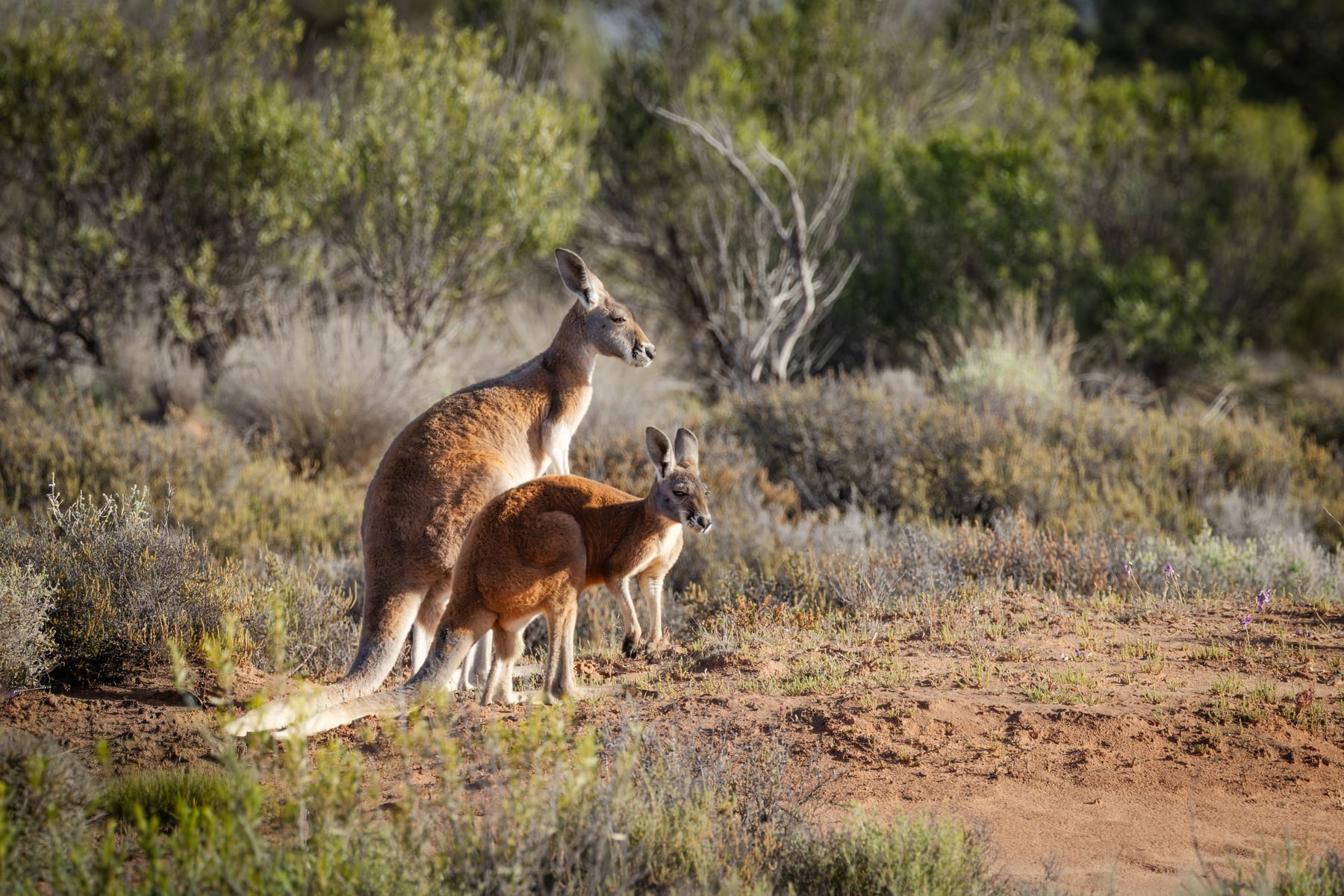
A red kangaroo weighing 90 kilograms gives birth after 33 days to something around two centimeters long, blind, earless, hairless, with functional forelimbs and nothing else finished. That newborn then climbs unaided through its mother's fur to the pouch, attaches to a teat, and completes its development there. The pouch exists because the pregnancy does not.
Why being born early is a strategy rather than a flaw
Placental mammals invest heavily in a long pregnancy and are committed once it starts. Marsupials invest almost nothing up front and can abandon the attempt cheaply.
In a climate where rain is unpredictable, that is an advantage rather than a compromise. A red kangaroo female can carry a joey at foot, a joey in the pouch, and a dormant embryo held in suspended development, all at once, and she can produce milk of two different compositions from two different teats simultaneously for the two offspring at different stages. When drought breaks, the paused embryo resumes and she is weeks rather than months from another young.
That is not a primitive system. It is a system tuned for a continent where the good years cannot be predicted.
Most of them live in one country, and seeing them in the wild means going there: Australia holds roughly 70% of all marsupial species.
The Australians
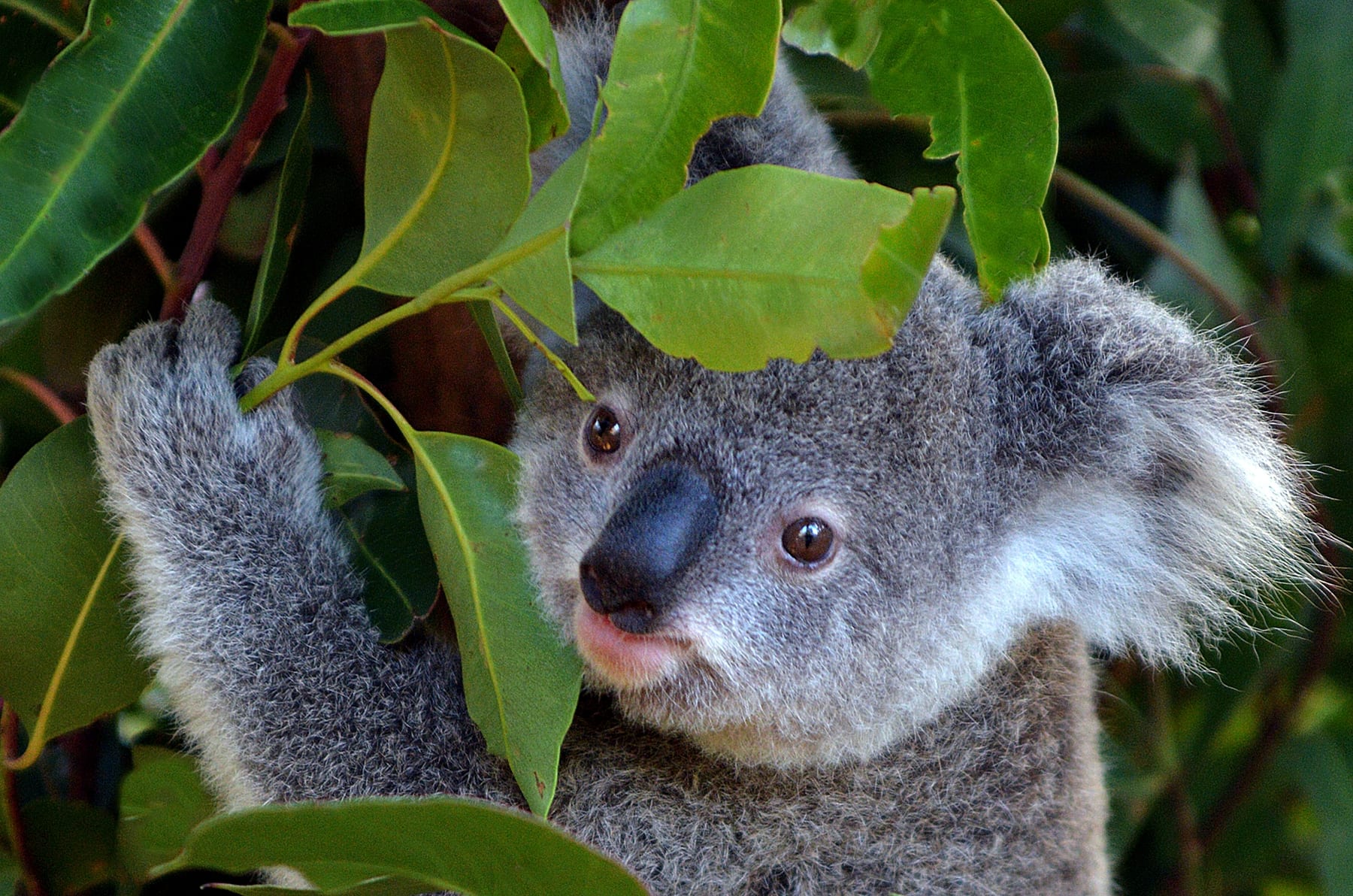
The koala is Vulnerable and solves a problem no other mammal bothers with. Eucalyptus leaves are low in nutrition and actively toxic, so the koala runs a two-meter appendix full of bacteria that break the toxins down, and sleeps up to 20 hours a day because the diet cannot fund much else. Joeys eat their mother's droppings to acquire the gut bacteria they cannot make themselves.
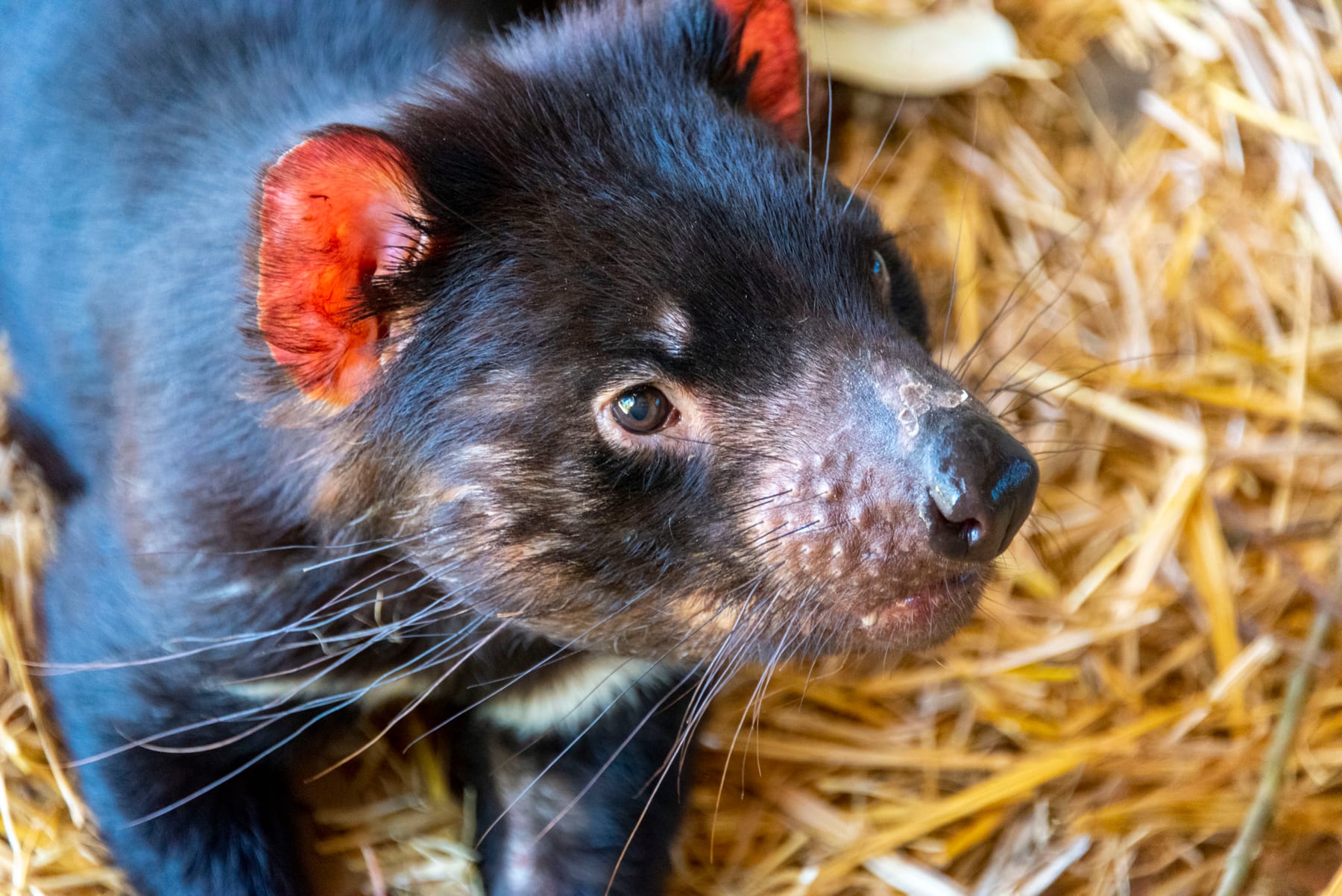
The Tasmanian devil is Endangered and has the strongest bite for its size of any living mammal, which it uses on carcasses rather than on live prey. Its problem is one of the strangest in conservation: a transmissible facial cancer, passed animal to animal through biting during feeding and mating, which has killed a large share of the wild population since the 1990s. Trowunna Wildlife Sanctuary in Tasmania runs a breeding program for disease-free animals.
Wombats dig burrow systems up to 30 meters long, have a backwards-facing pouch so digging does not fill it with soil, and produce cube-shaped droppings, which they stack to mark territory on rocks and logs where a round dropping would roll off.
Quolls, numbats, bilbies, and bandicoots are the small carnivorous and insectivorous marsupials, and they are the group in the worst trouble. The numbat eats up to 20,000 termites a day and is down to a few isolated populations. The greater bilby, with rabbit-like ears that shed heat, once ranged across most of the continent and now holds perhaps 20% of it.
Then there is the antechinus, a mouse-sized marsupial with the most extreme breeding strategy of any mammal. Males mate continuously for a period of about two weeks, during which stress hormones suppress the immune system so severely that every male in the population dies before the young are born. It happens on schedule, every year, and the females raise a generation that contains no adult males at all.
The ones that are not in Australia
Around 100 marsupial species live in the Americas, which surprises most people.
The Virginia opossum is the only marsupial in North America, and its defense is involuntary: threatened badly enough, it collapses into a catatonic state that can last hours, with the mouth open and a foul secretion released from its anal glands. It is not a decision, which is why it works.
The yapok, or water opossum, of Central and South America is the only semi-aquatic marsupial, and the female's pouch seals watertight while she swims. The male has a pouch too, for his testes, which is unique among mammals.
The copies of animals you already know
Isolate a continent for 50 million years and the same jobs get filled by whatever is available, in shapes that end up looking familiar.
The sugar glider looks and behaves like a flying squirrel and is not related to one. The marsupial mole has no functional eyes and swims through sand exactly as the placental golden mole of Africa does. The thylacine, the Tasmanian tiger, had a skull so close to a wolf's that students are still set the exercise of telling the two apart, and it had been separated from wolves by more than 100 million years of evolution.
None of these are relatives. They are the same problem solved twice, which is the clearest demonstration of convergent evolution anywhere in mammals. The thylacine is also the group's most famous loss: the last known animal died in a Hobart zoo in 1936, and it is the species most often named in de-extinction proposals now.
The one that looks like a marsupial and is not
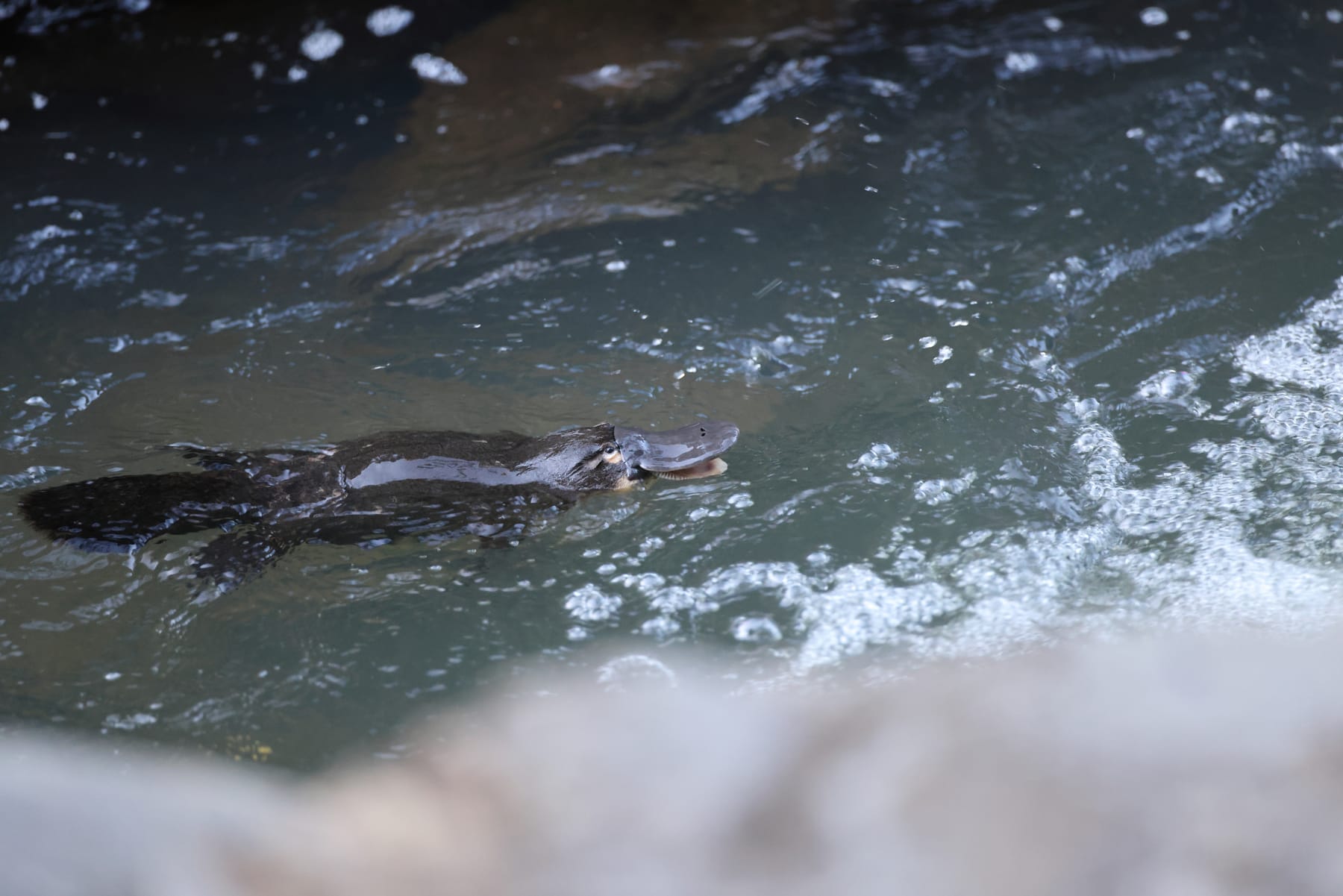
The platypus is a monotreme, not a marsupial, and the distinction matters. Monotremes lay eggs. There are only five species alive: the platypus and four echidnas.
A platypus hunts with its eyes, ears, and nostrils shut, navigating entirely by detecting the electrical fields of muscle contractions in prey buried in riverbed silt. It has no stomach. Males have a venomous ankle spur. It has ten sex chromosomes where most mammals have two. Monotremes split from every other mammal roughly 180 million years ago, and almost nothing about the animal has been normalized since.
Why marsupials have the worst extinction record of any mammal group
Australia has lost more mammal species since 1500 than any other country, and around 90% of those losses were marsupials. The reason is specific and it is not the climate.
Introduced predators. Foxes and feral cats arrived on a continent whose small mammals had evolved with nothing like them. Cats alone kill an estimated billion mammals a year in Australia. Small ground-dwelling marsupials in the range between roughly 35 grams and 5.5 kilograms were hit hardest, a band so consistent that ecologists named it the critical weight range.
Changed fire regimes. Aboriginal land management used frequent small burns that produced a patchwork of vegetation ages. Removing that produced fewer, larger, hotter fires, and a species that survived the old pattern does not survive the new one.
Habitat clearance. Koala habitat in Queensland and New South Wales continued to be cleared for development through the period the species was being listed as threatened.
The Australian Wildlife Conservancy puts the toll from cats alone in the hundreds of millions of animals a year.
The remedy that actually works is unglamorous and it is fences. Predator-proof enclosures and offshore islands cleared of cats and foxes have brought bilbies, numbats, and several bandicoot species back from the edge, and the IUCN Red List assessments now reflect that. The Australian government's threatened species list tracks which of them are recovering. It is close to the same solution that saved the kakapo in New Zealand, which our guide to flightless birds covers, and the logic is identical: when the threat is a specific introduced animal, removing that animal from a defined area is a finite engineering problem with an end point.
That is the unusual thing about marsupial conservation. Most threatened species need habitat, which is expensive and slow. These need a fence and a sustained eradication program, and where somebody has funded one, it has worked.