Seal or sea lion? You can settle it in one glance
The seal vs sea lion question has a one-second answer: look for an ear.
A sea lion has small visible ear flaps on the side of its head. A true seal has only a small hole. Everything else about the two animals, how they move, how they sound, where you see them, follows from a split that happened tens of millions of years ago and never converged again.
The five differences that actually settle it
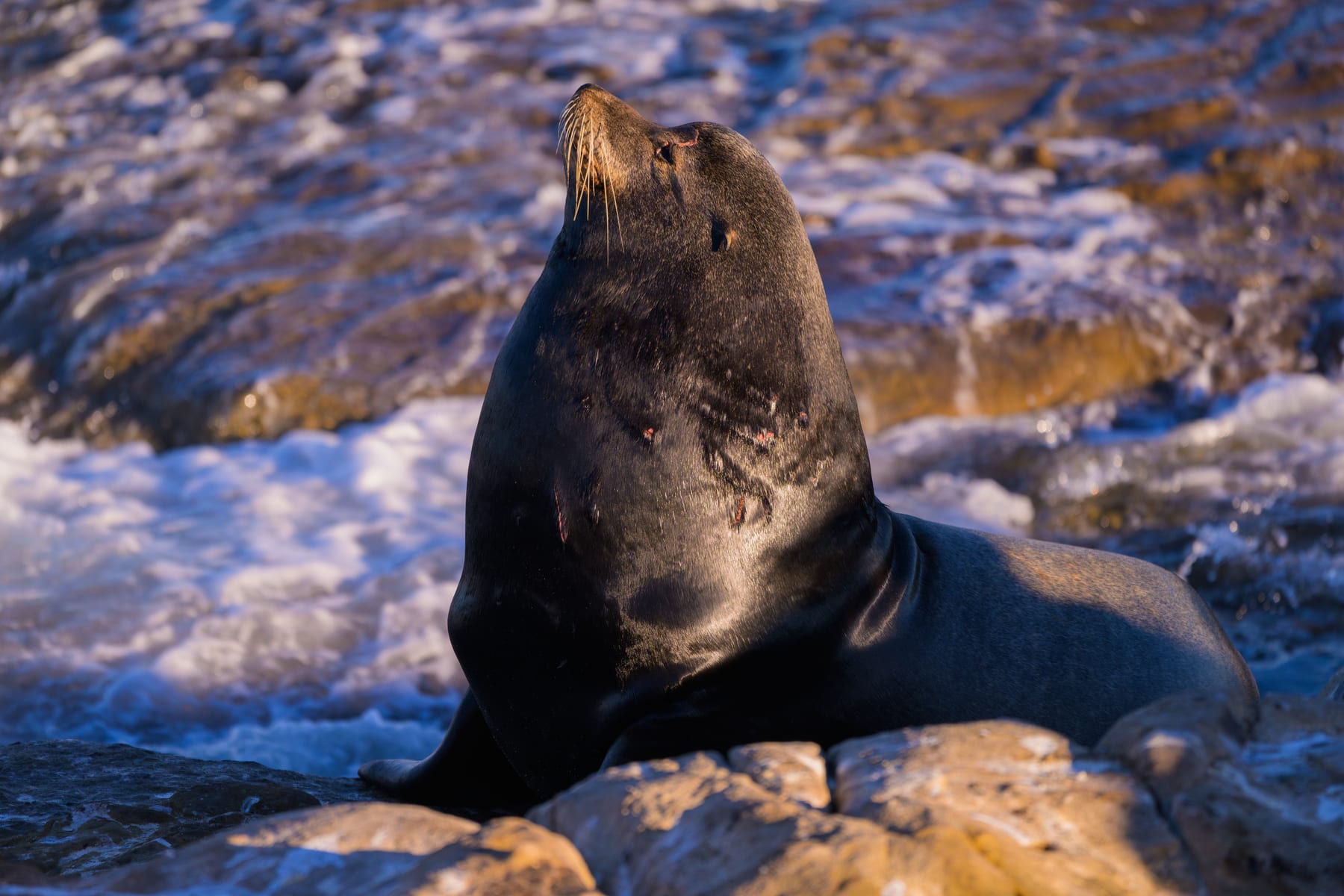
Ears. Sea lions and fur seals have external ear flaps. True seals do not. This is the reliable one and it works at a distance with binoculars.
Movement on land. A sea lion rotates its hind flippers forward underneath its body and walks, and can move fast enough on rock to be worth respecting. A true seal cannot rotate its hind flippers at all, so it moves by flopping and undulating on its belly.
Front flippers. A sea lion's are long, bare, and used like oars, and it swims mainly with its front end. A true seal's front flippers are short and furred with visible claws, and it swims by sweeping its hind flippers side to side.
Noise. Sea lions bark, loudly and constantly, which is why a harbor full of them is audible from a long way off. True seals are comparatively quiet, managing grunts and low snorts.
Posture. A sea lion can sit up on its front flippers. A true seal lies down, because there is nothing to prop itself up with.
Why seal vs sea lion is a 30-million-year-old split
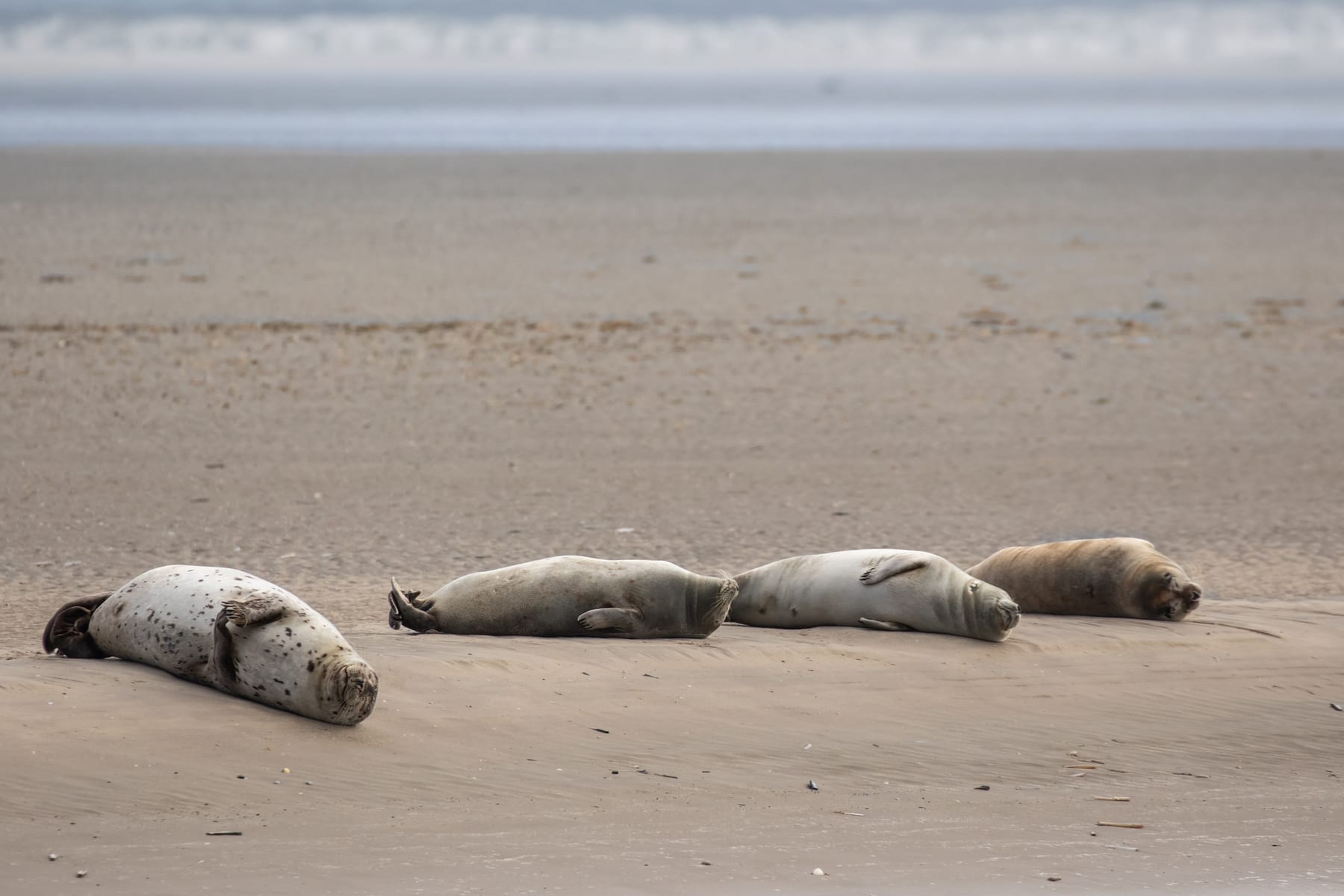
Both belong to the pinnipeds, along with the walrus, and both descend from a land carnivore related to bears and otters. They then solved the water problem differently.
Otariids, the eared seals, kept the land skeleton mostly intact and became front-flipper swimmers. That is why a sea lion is comfortable on rock, climbs, and hauls out in noisy heaps.
Phocids, the true seals, committed to the water entirely. Losing the ability to rotate the hind limbs is a cost on land and a benefit in the sea, because the hind flippers became a propulsion system rather than legs. True seals are generally the better and deeper divers as a result.
The walrus, which is neither
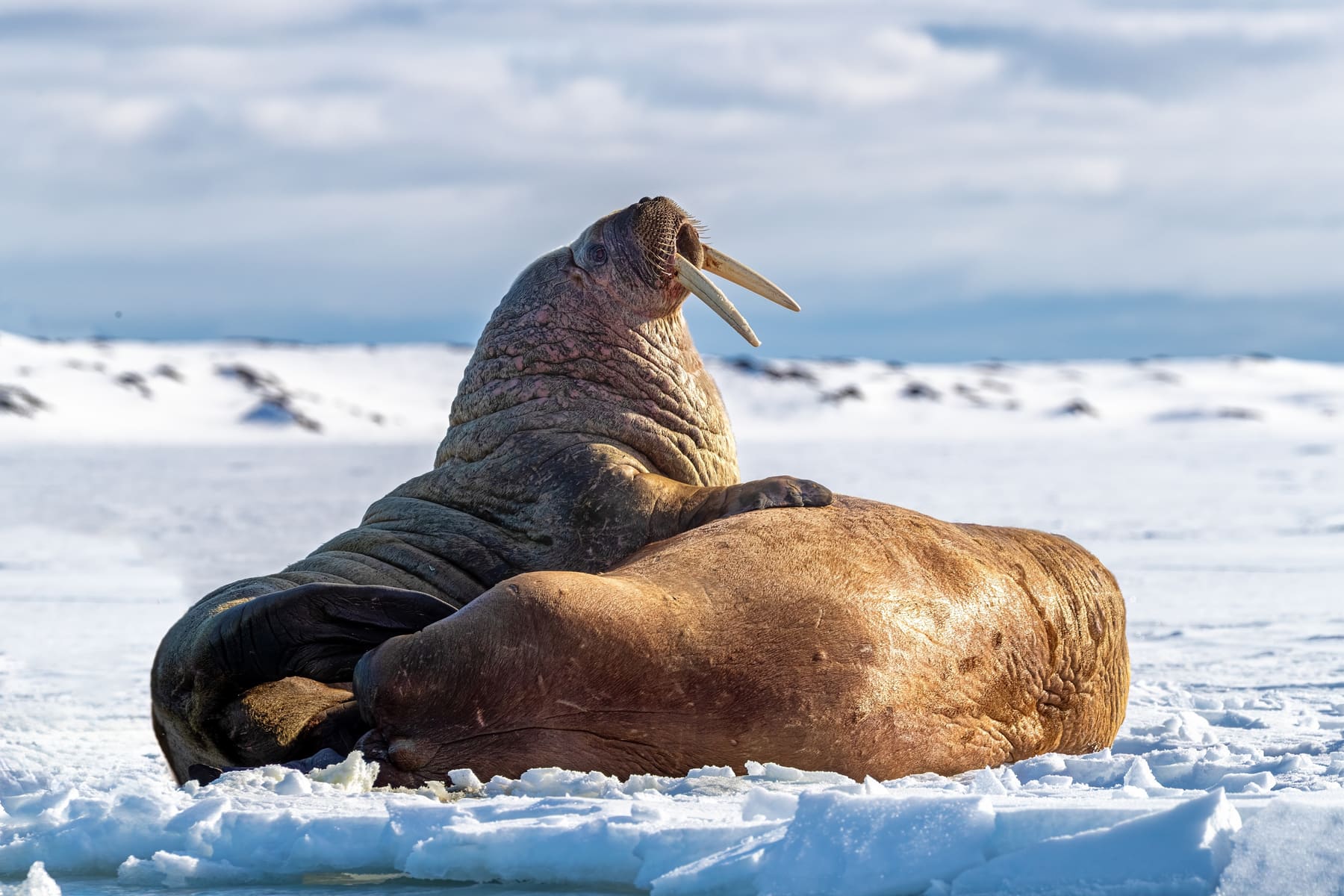
The walrus is the third group on its own, and it splits the difference: no external ear flaps, like a true seal, but it can rotate its hind flippers and walk, like a sea lion.
Its tusks are elongated canine teeth, present in both sexes, used for hauling its bulk onto ice, for display, and for fighting. It feeds by rooting along the seabed and detecting clams with a moustache of about 700 stiff whiskers, then suctioning the soft parts out and leaving the shell.
Which animals are which
Sea lions and fur seals include the California sea lion, the one in nearly every photograph and every marine park, plus the Steller sea lion, the Australian sea lion, the South American sea lion, and the Galápagos and northern fur seals. Note the naming trap: a fur seal is not a true seal. It has ear flaps and belongs with the sea lions.
True seals include the harbor seal, the gray seal, the harp seal, the leopard seal of Antarctica, the Weddell seal, the elephant seal, the ringed seal, and the Mediterranean and Hawaiian monk seals.
The elephant seal is the extreme of the group. Males reach four metric tons, and the species dives beyond 1,500 meters and stays under for up to two hours. It manages that by carrying most of its oxygen in blood and muscle rather than in its lungs, which it empties before descending, and by dropping its heart rate to a few beats a minute.
The leopard seal is the other extreme. It is the only pinniped that routinely hunts other pinnipeds, taking crabeater seal pups and penguins along the Antarctic ice edge, and it sings underwater for hours during the breeding season in a repertoire distinctive enough that individuals can be identified by sound.
The names are worse than the biology
Common names in this group are close to useless, and it is worth naming the traps.
A fur seal is a sea lion in everything but name. A sea lion is not a lion and not a seal. A sea leopard, better called the leopard seal, is a true seal and one of the top predators in Antarctica. And seal in casual speech usually means whichever pinniped is in front of you.
If you want to be right without being pedantic, "pinniped" covers all of them.
Which of them are threatened
The picture is uneven, and it does not correlate with which group an animal belongs to.
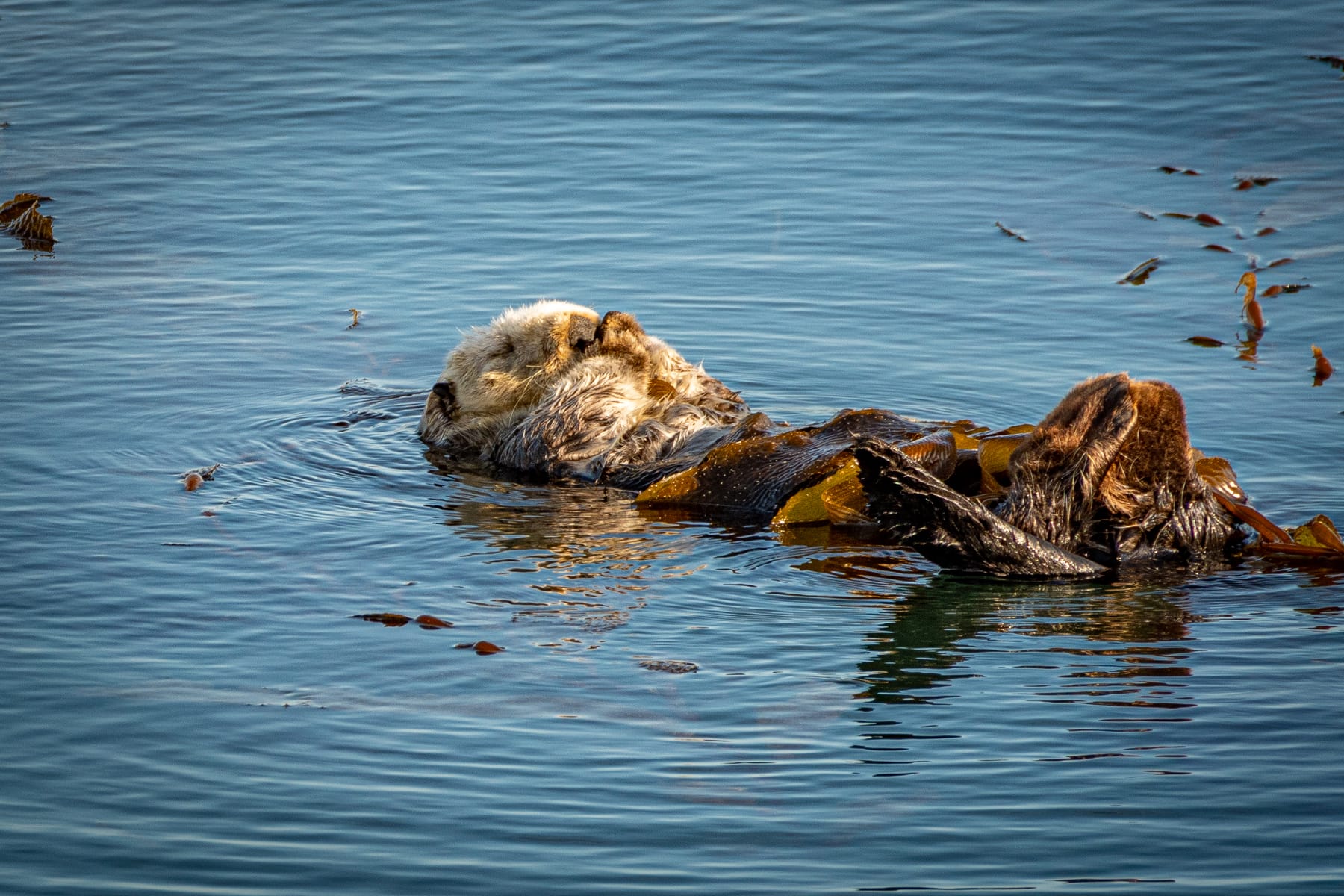
The Hawaiian monk seal is Critically Endangered, with roughly 1,500 animals left, and it is one of the most threatened marine mammals in the world. The Mediterranean monk seal is in comparable trouble, down to a few hundred, mostly in Greece and Turkey. Both are true seals confined to warm water, which is an unusual thing for the group and part of why their ranges are so small.
The Steller sea lion declined sharply in the western Aleutians through the late twentieth century, and the cause is still argued over: fisheries competition, a shift in prey quality, and predation have all been proposed.
The walrus is Vulnerable and its problem is straightforward. It feeds on the seabed and rests on sea ice above shallow water. As that ice retreats past the continental shelf, animals are forced onto land in enormous crowded haul-outs where stampedes kill calves.
Most other species are stable or recovering, and several are recoveries worth noting. Northern elephant seals came back from perhaps 100 animals in the 1890s to well over 100,000 today, which is one of the largest proportional recoveries of any mammal, and it left the species with almost no genetic diversity as a souvenir of how close it came. Gray seals in the North Atlantic have increased enough that they are now the subject of fisheries conflict rather than conservation concern.
The threats they share
Fisheries interaction. Entanglement in gear, and competition for the same fish much of the ocean depends on. This is the largest single cause of pinniped mortality worldwide.
Sea ice loss. For the ice-breeding species, ringed, harp, hooded, and the walrus, the ice is the pupping platform. There is no substitute, and the same retreat is working through everything else that breeds on it.
Disease and toxic algae. Phocine distemper has killed tens of thousands of harbor seals in the North Atlantic in separate outbreaks, and domoic acid from algal blooms strands hundreds of California sea lions in some years.
Pacific Marine Mammal Center and Seacoast Science Center both run the rehabilitation work that follows those events, and NOAA Fisheries manages the stock assessments in US waters, and the Marine Mammal Center publishes the annual strand counts that make an algal bloom visible before anything else does. The IUCN Red List holds the global assessments.
The short version
Ears means sea lion. No ears means true seal. Walking means sea lion. Flopping means true seal. Barking means sea lion. And if it has tusks, it is a walrus and the question does not arise.