8 facts about colorful animals that sound made up
Colorful animals are, on the face of it, doing something stupid. Bright color costs energy to produce, it makes an animal easy to find, and camouflage is the default for a reason.
So when an animal is genuinely colorful, the color is doing a job. There are essentially three: warning predators that you are dangerous, advertising to mates, or lying about the first one. Almost every animal below falls into one of those categories.
The colorful animals that are warning you
Biologists call it aposematism: conspicuous color that advertises a genuine defense. It works because predators learn, and a predator that survives one attempt avoids the pattern for life.
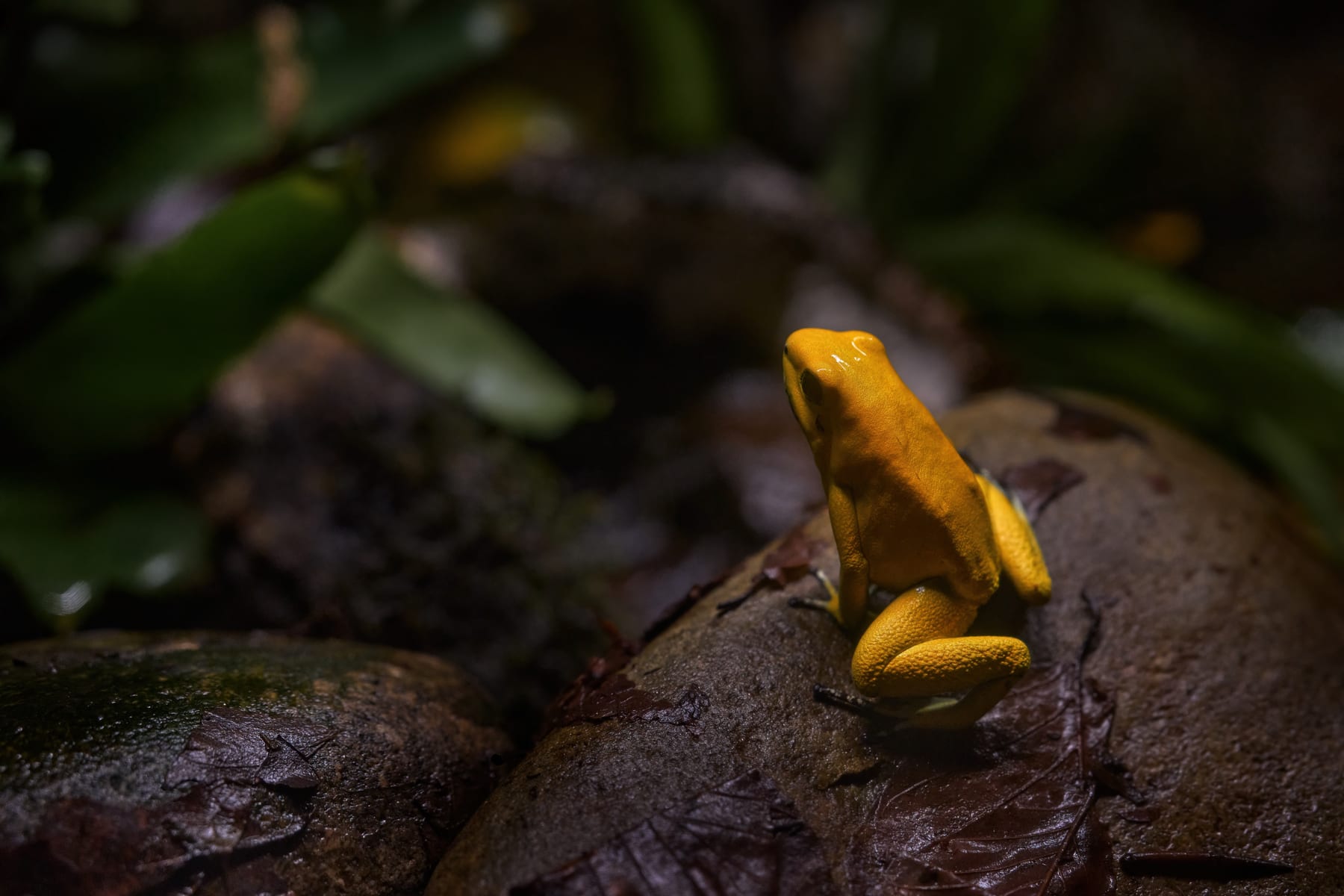
The golden poison frog is the strongest example alive. A single animal, about five centimeters long, carries enough batrachotoxin to kill several adult humans, and the bright yellow is a statement rather than decoration. It is Endangered, confined to a small area of Pacific coastal rainforest in Colombia, a habitat that produces more brightly colored species than anywhere else on Earth.
The toxin is not made by the frog. It comes from beetles and other invertebrates in its diet, which is why captive-bred poison frogs are harmless and why habitat loss removes the defense before it removes the animal.
Coral snakes, monarch butterflies, and skunks all run the same system. The monarch butterfly sequesters cardiac glycosides from milkweed as a caterpillar and carries the toxicity into adulthood, which is why its orange and black is copied so widely.
The ones that are lying
Mimicry is the cheat, and it is common enough to be a problem for the honest signallers.
The scarlet kingsnake carries the same red, black, and yellow banding as the venomous coral snake and is completely harmless. The rhyme people use to tell them apart works in North America and fails in South America, which is a good reason not to rely on it.
The viceroy butterfly was long taught as a harmless mimic of the monarch. That turned out to be wrong: the viceroy is unpalatable in its own right, so the two are co-mimics reinforcing each other's signal rather than one freeloading on the other.
Mimicry only works while the mimic stays rare. If the copies outnumber the originals, predators stop learning that the pattern means danger, and the signal collapses for everyone.
The ones advertising to mates
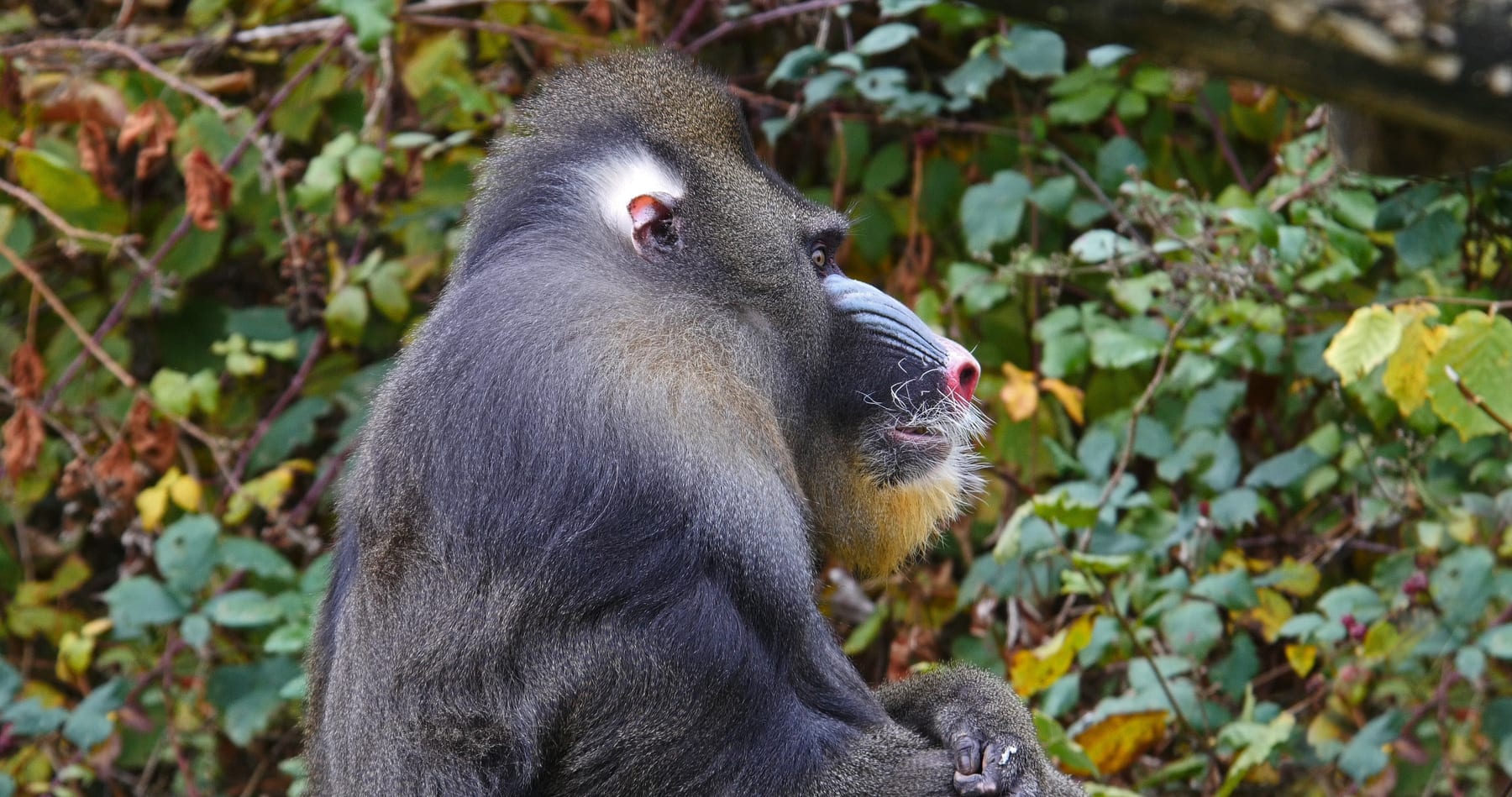
The mandrill is the most colorful mammal on Earth. The blue and red on a male's face intensifies with rank and testosterone, so color is a running scoreboard of status that other mandrills can read across a forest clearing. It is Vulnerable.
The blue is not a pigment. Mammals cannot make blue pigment at all. It is structural color, produced by collagen fibres arranged at a spacing that scatters blue wavelengths back, which is the same trick behind a blue jay's feathers and a morpho butterfly's wings.
Birds of paradise in New Guinea are the extreme case of sexual selection. Males have evolved plumage and displays so elaborate they impair flight, which is possible only because New Guinea's forests historically had few predators capable of exploiting a conspicuous bird.
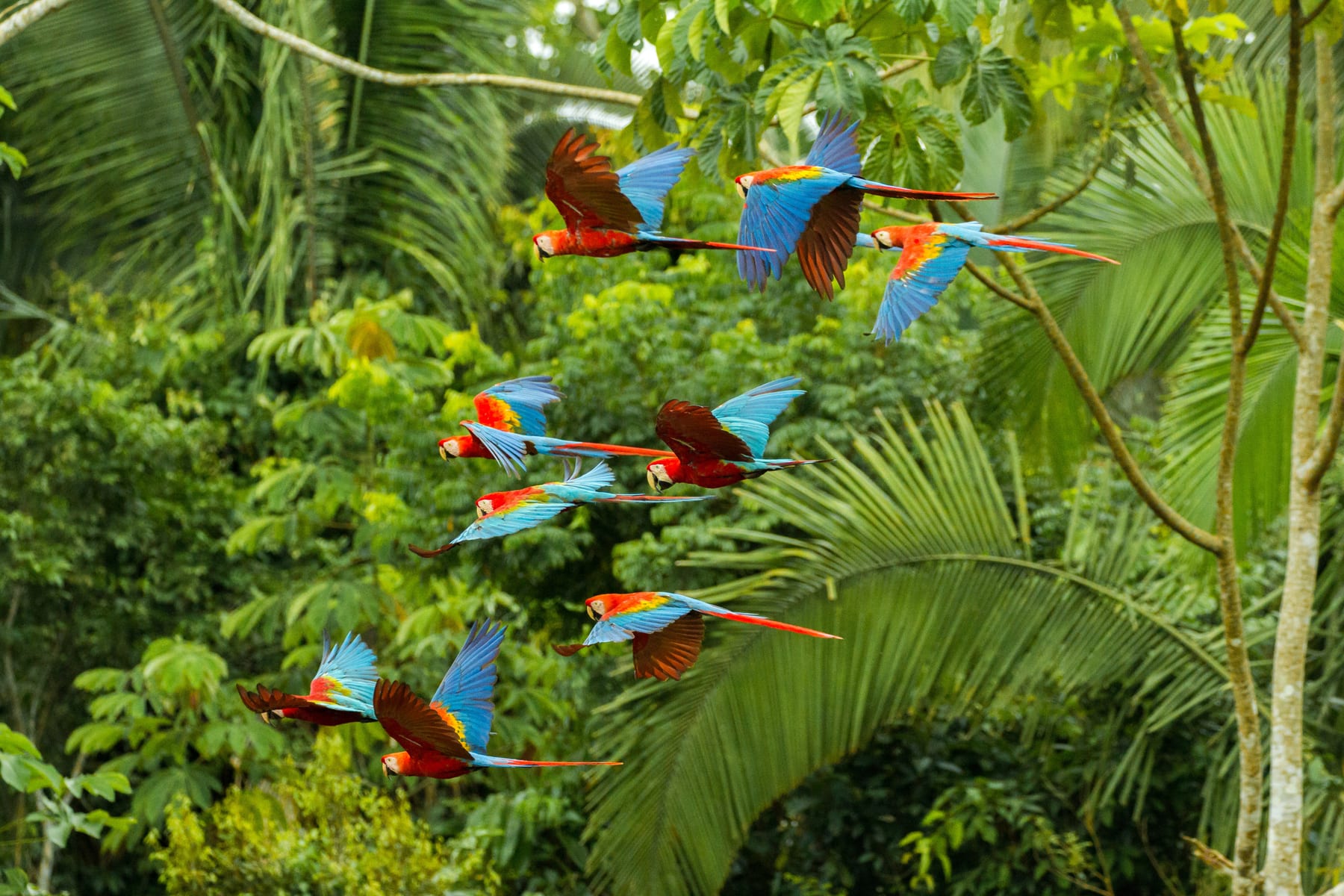
The hyacinth macaw is the largest flying parrot and is Vulnerable. The scarlet macaw is Least Concern globally but locally wiped out across much of Central America by the pet trade.
The ones colored by what they eat
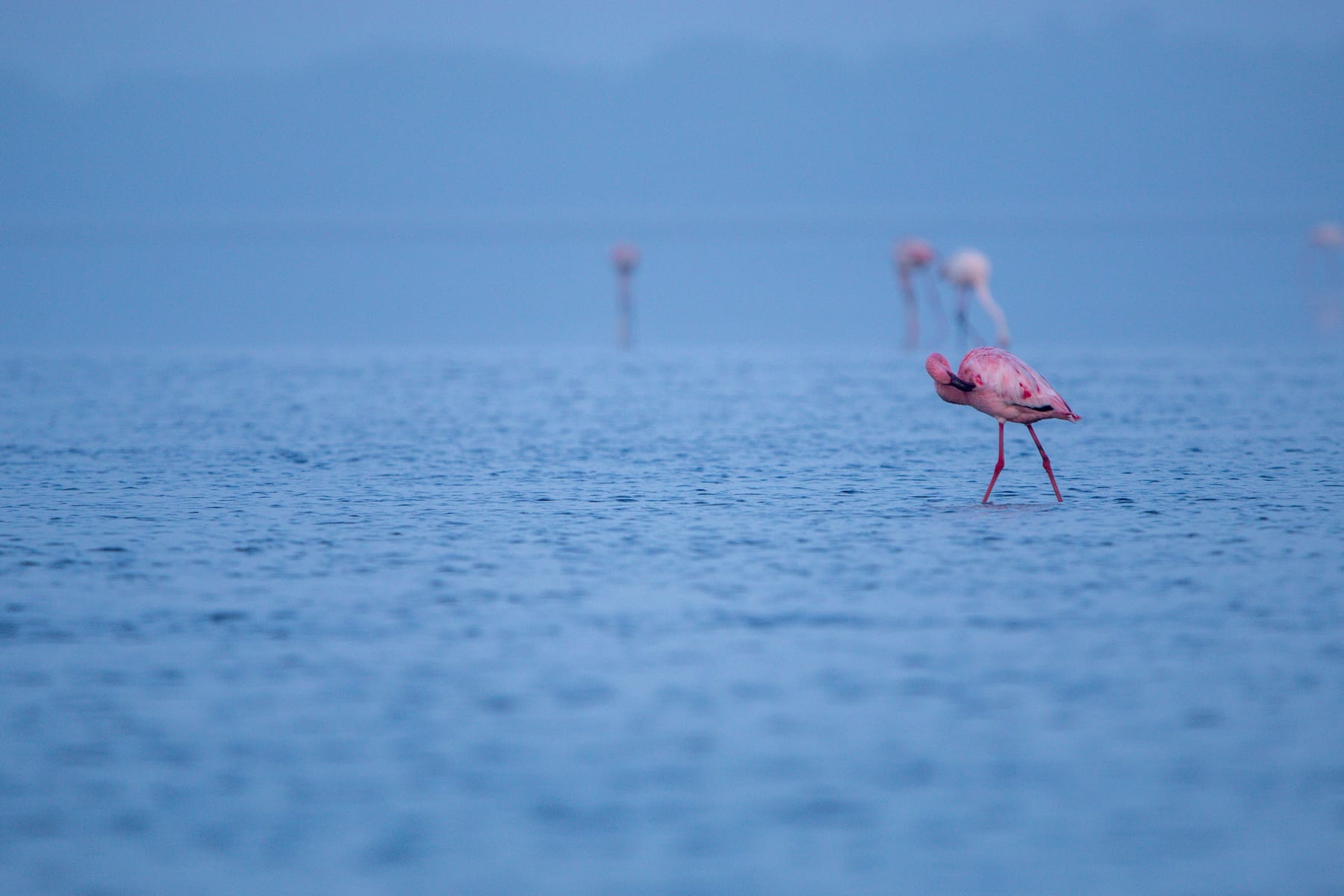
The greater flamingo is born gray. It turns pink from carotenoid pigments in the algae and brine shrimp it filters out of shallow saline water, and a flamingo taken off that diet fades.
This turns color into an honest signal, which is the point. A bright flamingo has been feeding well in good habitat, and in mating displays the brightest birds pair first. A pale flock is a readable sign that something is wrong with the lagoon.
The same logic runs through the roseate spoonbill, the scarlet ibis, and much of the red and orange in fish and crustaceans.
The ones hiding in plain sight
Not all bright color is meant to be seen from a distance. Some of it only works close up, or only in the right light.
A blue morpho butterfly is dazzling in flight and nearly invisible at rest, because the underside of its wings is brown and patterned like a dead leaf. The color switches on and off as it flaps, which breaks up its outline for anything chasing it.
Reef fish are a stranger case. Water absorbs red light within the first few meters, so a red fish at 20 meters is effectively black, and many of the most vivid reef species are camouflaged in their own habitat and only look extraordinary in a photograph taken with a flash.
Chameleons change color mainly to signal and to regulate temperature rather than to match backgrounds, which is the reverse of the popular belief. The mechanism is a lattice of nanocrystals in the skin that the animal actively spaces closer or further apart, changing which wavelengths are reflected.
The strangest color on the list
The mantis shrimp deserves its own note. It is spectacularly colored, and it has between 12 and 16 types of photoreceptor where humans have three. That was long assumed to mean it perceives color in extraordinary detail.
Testing suggests the opposite. Mantis shrimp are worse than humans at distinguishing similar shades. The many receptors appear to let them recognize color instantly, without the brain having to compare signals, which suits an animal that strikes prey with the acceleration of a small-calibre bullet and does not have time to deliberate.
What color costs when people are involved
Every trait in this article is a signal aimed at other animals, and every one of them also functions as an advertisement to us.
The pet trade. Parrots, poison frogs, reef fish, and chameleons are trapped because they are beautiful. Bright color is close to a risk factor for capture.
Feathers and shells. Historic plumage trade nearly ended several egret and bird-of-paradise populations, and it is why some of the earliest conservation legislation anywhere concerned hats.
Habitat. The largest threat is still the least specific one. Most of the species above live in tropical forest, coral reef, or wetland, and all three are being lost faster than the animals in them can adjust.
The IUCN Red List carries the assessments, CITES regulates the international trade in most of these species, and TRAFFIC monitors whether those rules are doing anything. Foster Parrots and MAARS Parrot Sanctuary take in the birds at the end of that pipeline, which is welfare work rather than conservation and lasts decades per animal, because a macaw can outlive its owner.
The pattern underneath
Color is never free. It is paid for in energy, in visibility to predators, and in the diet required to produce it, which means a colorful animal is one whose circumstances have been good enough to afford the display.
That is why fading is such a reliable early warning. A pale flamingo, a dull mandrill, or a poison frog that has lost its toxicity are all telling you something about the habitat before any population count would.
The eight, in order
- A golden poison frog carries enough toxin to kill several adults, and it does not make any of it. Take away the beetles in its diet and it is harmless.
- Mammals cannot produce blue pigment. A mandrill's blue face is structural, an effect of how collagen fibres scatter light.
- The viceroy butterfly was taught for decades as a harmless mimic of the monarch. It is genuinely unpalatable, so the two are reinforcing each other.
- Flamingos are born gray. The pink is dietary, which is why a pale flock is a readable warning about the lagoon.
- Mimicry collapses if the mimics outnumber the models, because predators stop learning that the pattern means danger.
- A mantis shrimp has up to 16 types of photoreceptor and is worse than you at telling similar shades apart.
- Most vivid red reef fish are effectively black at 20 meters, because water absorbs red light first. They are camouflaged in their own habitat.
- Chameleons change color mainly to signal and to manage temperature, not to match a background.