Wetland animals live on the ground we drain first
Wetland animals live in the habitat with the worst survival record of any on Earth. Wetlands cover roughly 6% of the planet's surface and support something like 40% of its species, and we have lost around 35% of them since 1970, at roughly three times the rate of forest loss.
The reason is that a wetland reads as wasted ground. Forest is timber, grassland is pasture, and a marsh is a problem to be drained before the land underneath becomes useful. That framing has cost more species than almost any other single idea in land management.
The engineers
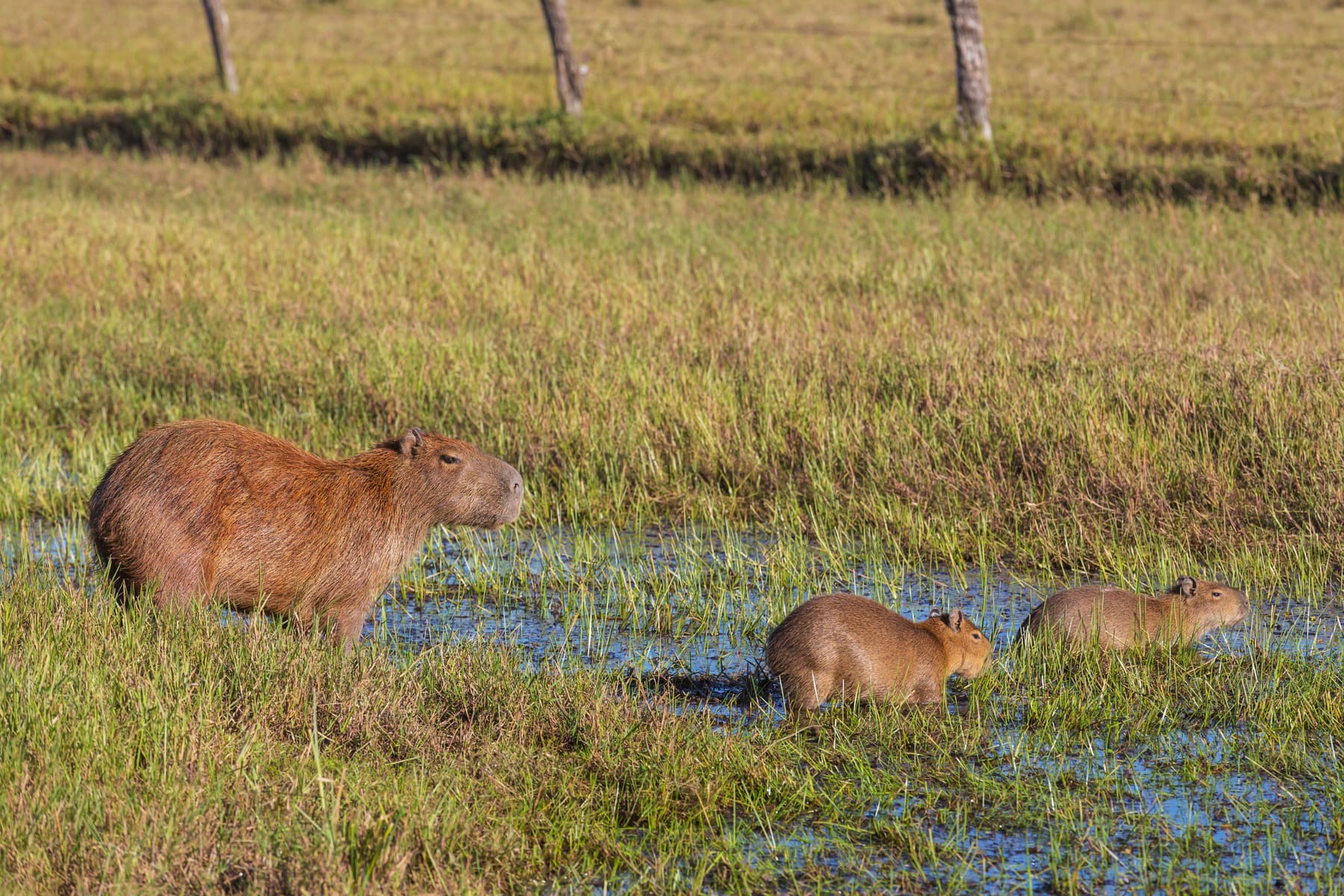
The capybara is the largest rodent alive, up to 65 kilograms, and functions as the wetland equivalent of a grazing herd. It feeds on aquatic grasses, keeps waterways open, and is prey for jaguars, caiman, and anacondas, which makes it a load-bearing species in the Pantanal food web.
Its eyes, ears, and nostrils sit high on the skull so it can stay almost entirely submerged and still see, hear, and breathe, and it can hold its breath underwater for five minutes to hide.
Beavers are the more literal engineers, and reintroducing them is now a mainstream flood management strategy in Britain and parts of Europe. A beaver dam slows water, spreads it across a floodplain, and recharges groundwater, which turns out to be cheaper than concrete.
The big reptiles
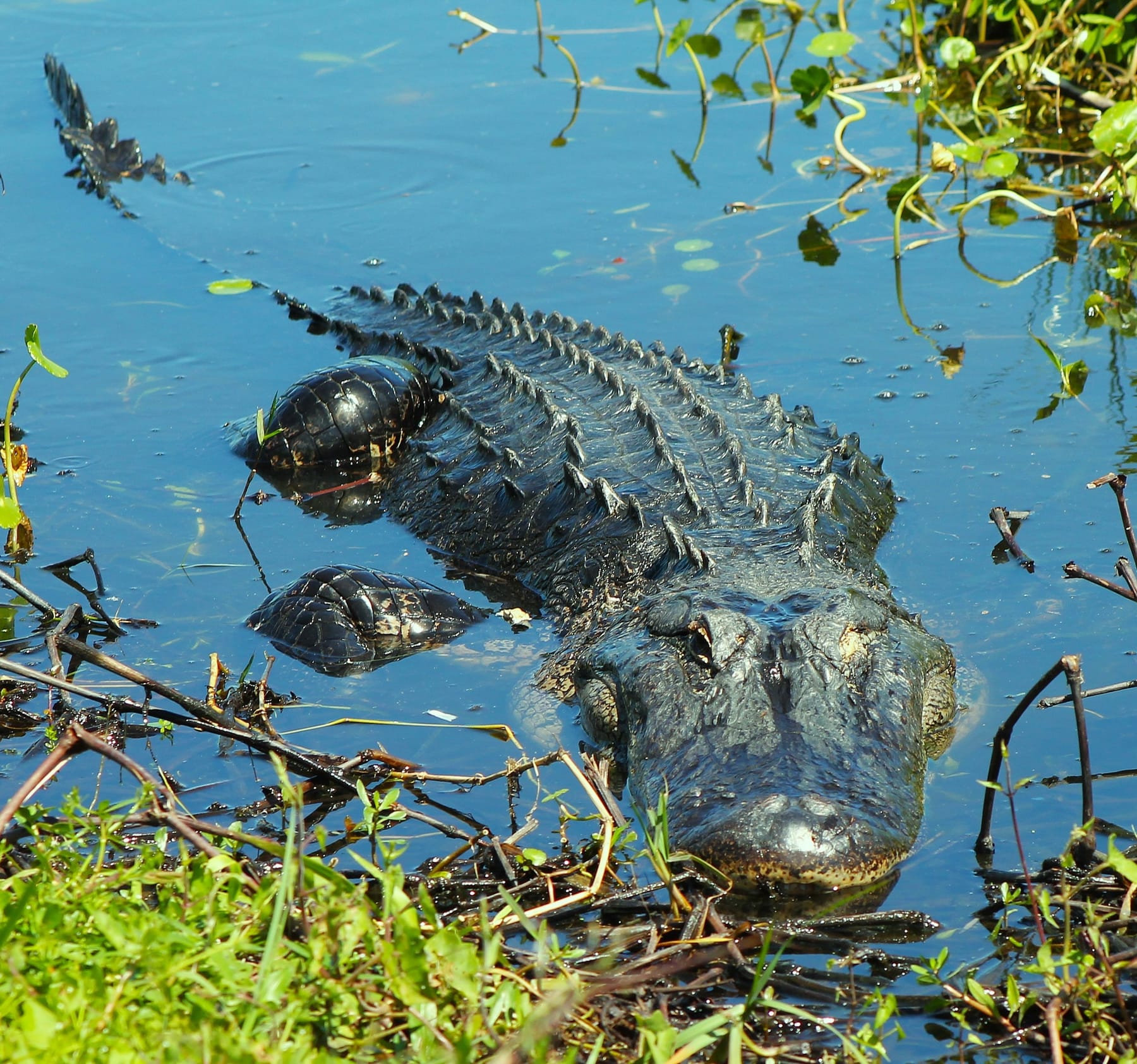
The American alligator is Least Concern and one of the clearest recoveries in conservation history. It was listed as endangered in 1967 and declared recovered in 1987, on the back of regulated hunting and, critically, protection of the wetlands themselves.
In the Everglades it digs what are called alligator holes, depressions that hold water through the dry season and become refuges for fish, turtles, and wading birds that would otherwise have nowhere to go. Removing the alligator removes the dry-season water.
The gharial is the counterexample and it is Critically Endangered. It is a fish-eating crocodilian with a long narrow snout, confined to a handful of Indian and Nepalese river systems, and its problems are dams, sand mining, and fishing nets. Fewer than 1,000 breeding adults remain.
The saltwater crocodile is the largest living reptile and occupies estuaries and mangrove from India to northern Australia. Our guide to alligator vs crocodile covers how to tell the two families apart.
The birds
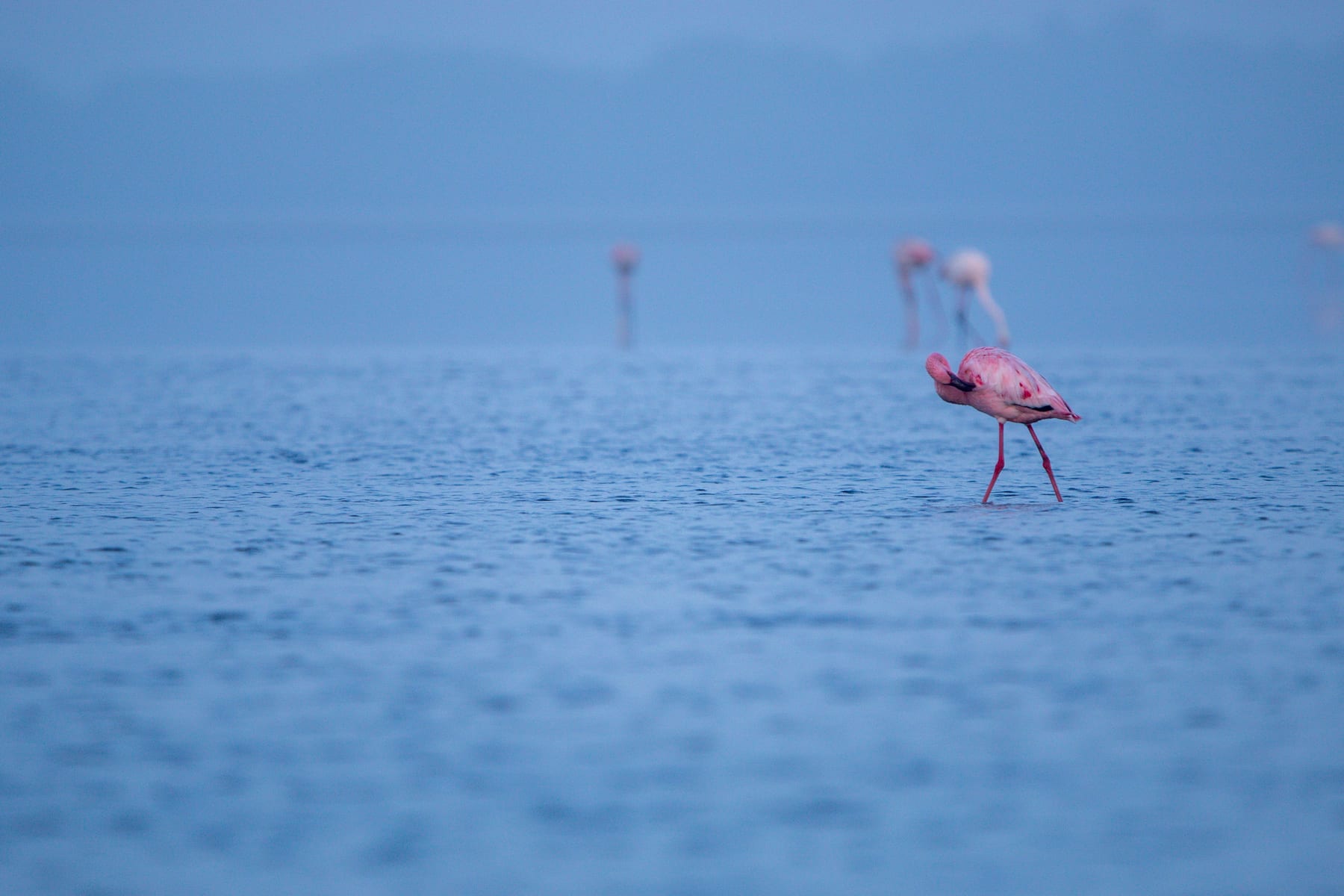
Wetlands are where most of the world's migratory birds refuel, which makes them a network rather than a set of independent sites. Removing one link breaks the whole route.
The greater flamingo filter-feeds in shallow saline lagoons, holding its head upside down and pumping water through a bill lined with filtering plates.
The whooping crane is Endangered and fell below 20 birds in the 1940s. Its recovery to several hundred required protecting both ends of a migration route running from Canada to the Texas coast, plus teaching captive-raised birds a route their species had forgotten.
Herons, egrets, storks, ibises, and spoonbills are the visible wetland birds, and the plume trade in egret feathers for hats around 1900 was the specific outrage that produced some of the first bird protection laws anywhere.
The fish nobody counts
Freshwater fish are the least visible wetland animals and among the most threatened. Roughly a quarter of assessed freshwater fish species are at risk, and the group includes some of the strangest animals in fresh water anywhere.
The arapaima of the Amazon reaches three meters, breathes air, and has to surface every 20 minutes, which makes it trivially easy to harpoon and is why it has been fished out of large stretches of river. Community-managed counting schemes, where villages census the surfacing fish and set their own quotas, have brought it back in parts of Brazil, and it is one of the better arguments that local management beats a distant ban.
The lungfish can survive a dry season buried in mud in a mucus cocoon, breathing air, for months and in some records years.
The mammals in the water
The hippopotamus is Vulnerable and spends its days submerged in rivers and lakes, grazing on land at night. It moves enormous quantities of nutrients from grassland into water through its dung, which fuels the invertebrates and fish downstream.
The West Indian manatee is Vulnerable and grazes seagrass and freshwater vegetation in Florida and the Caribbean. It has no natural predators. Nearly all of its mortality is from boat strikes and from seagrass die-offs caused by nutrient pollution.
The dugong is its Indo-Pacific relative, also Vulnerable, and the only strictly marine one of the group.
The amphibians, which are the real indicator
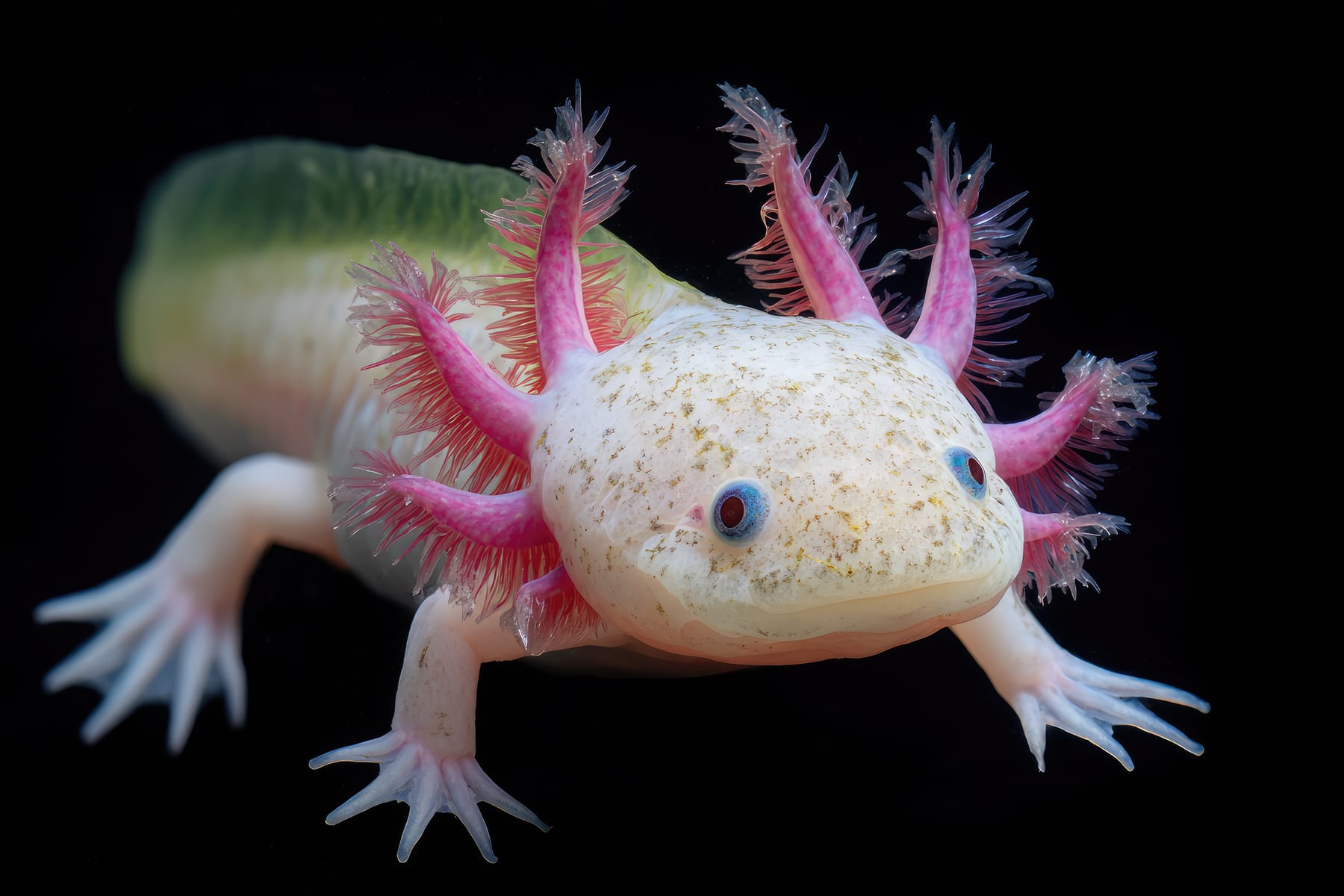
This is the part of a wetland that fails first.
Amphibians are the most threatened vertebrate class on Earth, with roughly 40% of species at risk, and wetland loss is the leading cause. A frog breathes partly through its skin, which makes it unusually exposed to whatever is dissolved in the water, so an amphibian decline is generally the earliest readable signal that a wetland is in trouble.
The axolotl is the emblem. It is Critically Endangered and survives in the wild only in the canal remnants of Lake Xochimilco in Mexico City, a wetland that was largely drained centuries ago.
Why wetland animals lose their habitat first
The threats are consistent worldwide and they are mostly not about wildlife at all.
Drainage for agriculture. The single largest cause, historically and now. Wetland soils are fertile once dried, which is exactly the problem.
Dams and flow regulation. A floodplain works because it floods. Regulating a river to stop that removes the mechanism the habitat is built on, which is the gharial's problem and the reason so many river systems now support a fraction of the fish they did.
Channelization. Straightening a river to move water faster downstream is the oldest flood-control instinct there is, and it removes the slow shallow margins where fish spawn and wading birds feed. Much of the restoration work happening in Europe now consists of undoing nineteenth-century channelization at considerable expense.
Peat extraction. Peatlands are drained for fuel and for horticultural compost, and the UN Environment Programme treats their restoration as one of the cheaper climate interventions available.
Nutrient pollution. Fertiliser runoff drives algal blooms, blooms crash and decompose, decomposition strips the oxygen, and what is left is a dead zone. This is what kills Florida seagrass and, with it, manatees.
Development. Coastal wetland is valuable real estate, and mangrove has been cleared at scale for shrimp farming across South and Southeast Asia, which removes the nursery much of the coastal ocean is stocked from.
The Ramsar Convention is the international treaty covering wetlands of importance and lists more than 2,500 sites, and the IUCN Red List carries the species assessments. Busch Wildlife Sanctuary in Florida rehabilitates animals from exactly the wetland systems described above.
The argument that actually moves people
Wetlands are worth defending on their own terms, and the case that persuades planning committees is a different one.
A wetland stores flood water, filters pollutants, recharges groundwater, and buffers coastlines against storm surge. Peatlands store more carbon than all the world's forests combined despite covering a fraction of the area, and draining one converts a carbon store into a carbon source. Restoring a marsh upstream of a town is repeatedly cheaper than building the flood defense that replaces it.
Which means the habitat we drain first is the one doing the most unpaid work, and protecting it outperforms almost every other intervention per dollar spent.