8 types of bears, and six are in more trouble than you would guess
There are eight types of bears alive, and they are more different from one another than most people assume. One is effectively a marine mammal. One eats almost nothing but bamboo. One has a tongue long enough to vacuum termites out of a mound.
Six of the eight are threatened on the IUCN Red List, and the two that are not are the two that adapted best to living near people.
Brown bear
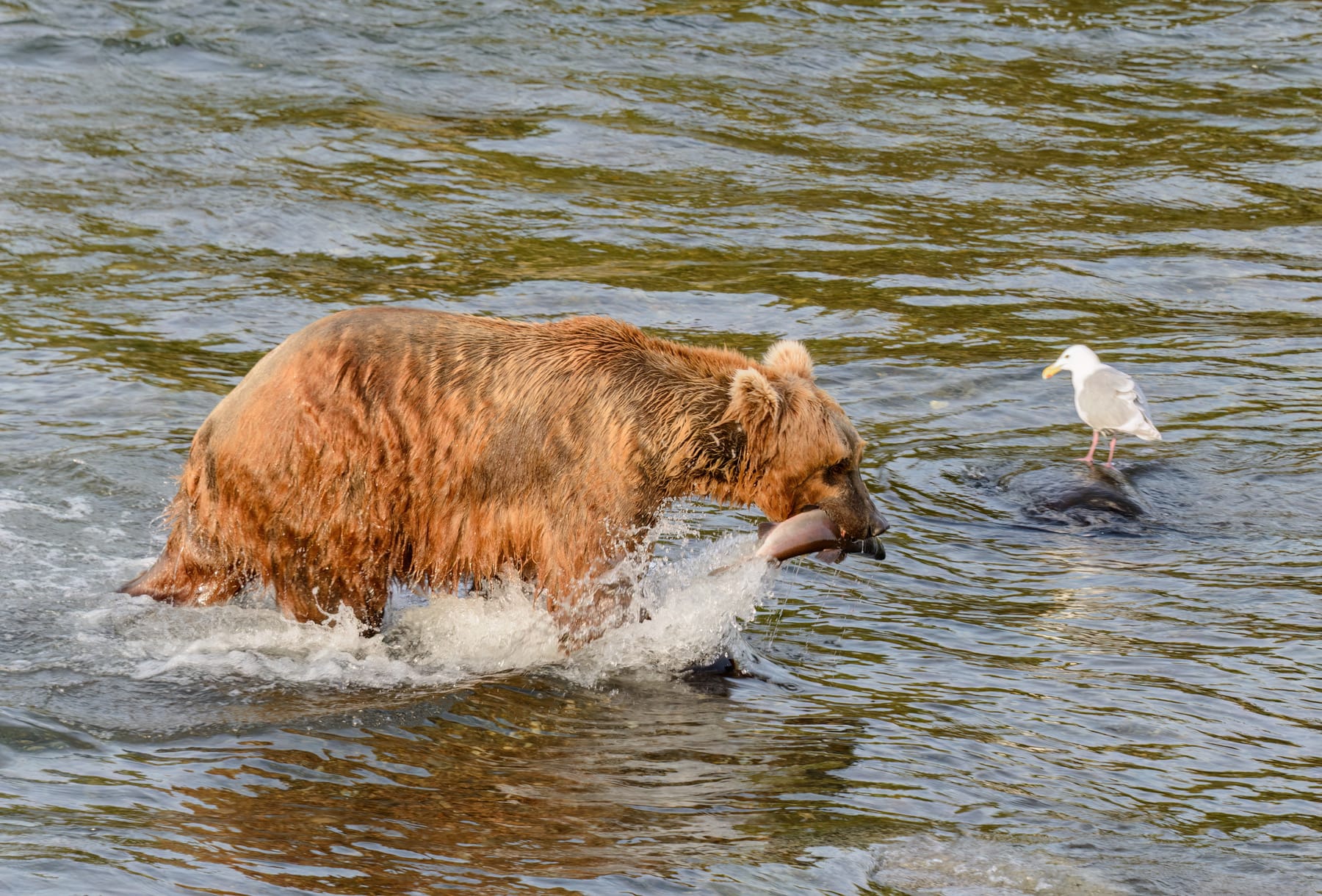
The brown bear has the widest range of any bear, across North America, Europe, and Asia, and includes the grizzly and the Kodiak as regional populations rather than separate species. Coastal populations with access to salmon grow far larger than inland ones on the same continent, which is a straightforward consequence of calorie supply.
It is Least Concern globally, and that global figure conceals the usual problem: brown bears were extirpated across most of western Europe and the contiguous United States, and the populations that remain there are small and isolated even though the species overall is secure.
Polar bear
The polar bear is the only bear classified as a marine mammal, and the only one that is an obligate carnivore. It hunts seals from sea ice, which is not a preference but a requirement: without a platform, it cannot reach its prey.
It is Vulnerable, and its threat is unusually simple to state and unusually hard to fix. Less sea ice means a shorter hunting season, which means thinner bears, fewer surviving cubs, and more animals coming ashore where they encounter people. Polar Bears International works on the ice-dependent populations and the conflict that follows them onto land. The same shortening season is working through every species that depends on that ice.
Giant panda
The giant panda is a carnivore by digestive anatomy that eats almost entirely bamboo, which is why it must consume 12 to 38 kilograms a day to extract enough energy. Its digestive system never adapted to the diet; its behavior did.
It is Vulnerable, upgraded from Endangered in 2016 after decades of Chinese habitat protection and reserve expansion, a change WWF attributes to a near-doubling of protected reserve area. It is the most cited example of what sustained, well-funded, single-species conservation can achieve, and also of how long it takes.
American black bear
The American black bear is the most numerous bear on Earth and Least Concern, with a population larger than all other bear species combined. It is the great generalist: it eats almost anything, tolerates human presence, and has expanded its range in parts of North America while other large mammals contracted.
Its color is unreliable as identification. Black bears can be cinnamon, blond, or in coastal British Columbia the white-phase spirit bear.
Sun bear
The sun bear is the smallest bear alive, at 27 to 65 kilograms, and lives in Southeast Asian forest. It has a 25 centimeter tongue for extracting honey and insects, powerful claws for climbing, and a pale chest patch that is unique to each animal.
It is Vulnerable, threatened by deforestation and by capture for the bile trade and the pet trade.
Sloth bear
The sloth bear of India and Sri Lanka is built around termites. It has a gap in its front teeth, closable nostrils, and lips it can extend into a tube, letting it vacuum insects out of a mound loudly enough to be heard 100 meters away.
It is Vulnerable, and it is the only bear that routinely carries its cubs on its back. Historically it suffered as the "dancing bear" of street performance, a practice now largely ended in India.
Spectacled bear
The spectacled bear is South America's only bear, living in Andean cloud forest from Venezuela to Bolivia, and is named for the pale markings around its eyes. It is Vulnerable, largely herbivorous, and an excellent climber that builds feeding platforms in trees.
Asiatic black bear
The Asiatic black bear, or moon bear, is Vulnerable and carries a distinctive pale crescent on its chest. It is the species most affected by the bile farming industry, which is what Animals Asia was founded to end.
What all eight types of bears have in common
For animals this different, bears share a surprising amount.
They are not true hibernators. Bears enter torpor, a state of reduced metabolism they can wake from within minutes, which is why the word hibernation is technically wrong for them. Ground squirrels hibernate. Bears doze heavily. Polar bears mostly do not do it at all, except pregnant females.
They give birth during it. Cubs are born tiny, blind, and helpless while the mother is in torpor, weighing under half a kilogram against a mother that can weigh 200. She nurses them without eating, drinking, or passing waste for months, losing up to 40% of her body mass.
Delayed implantation. A fertilized egg does not implant until autumn, and only if the female has built enough fat reserves. If she has not, the pregnancy simply does not proceed. It is a biological check that ties reproduction directly to food supply, and it is part of why bear populations recover slowly after a bad run of years.
They are smarter than their reputation. Bears solve latch mechanisms, remember food sources across years, and in captivity outperform most carnivores on problem-solving tests. That intelligence is exactly what makes them difficult neighbors: a bear that learns bins contain food will keep coming back, and the IUCN Bear Specialist Group treats food conditioning as one of the main drivers of bears being killed near settlements.
Which types of bears are actually threatened
| Species | IUCN status |
|---|---|
| Brown bear | Least Concern |
| American black bear | Least Concern |
| Polar bear | Vulnerable |
| Giant panda | Vulnerable |
| Sun bear | Vulnerable |
| Sloth bear | Vulnerable |
| Spectacled bear | Vulnerable |
| Asiatic black bear | Vulnerable |
The split is clean and worth reading carefully. The two Least Concern species are generalists in wealthy northern countries with strong wildlife agencies. The six Vulnerable ones are either specialists, tropical, or both.
That is not a coincidence about bears. It is a pattern across mammals: dietary flexibility plus a functioning management authority produces recovery, and specialization plus weak enforcement produces decline. The giant panda is the exception that proves it, because the specialization is extreme and the recovery happened anyway, on the back of an enormous and sustained national investment.
Bears in captivity
Bears are among the most commonly kept large carnivores outside their range, in roadside attractions, bile farms, and private ownership. Bile farming alone has held thousands of Asiatic black bears in cages sized to prevent movement, a practice Animals Asia has spent decades working to end through negotiated farm closures rather than confrontation. Animals Asia rescues bile-farm bears in Vietnam and China. Noah's Ark Animal Sanctuary and Lions Tigers & Bears take in bears from the exotic pet trade in the United States, animals that cannot be released and will need care for the rest of their lives.
What separates the eight
One thing predicts which bears are doing well, and it is not size, diet, or range.
It is whether the species tolerates people. American black bears and brown bears have both expanded their range in North America over the last fifty years, because they raid orchards and garbage and survive doing it. The sun bear, the sloth bear, and the Andean bear cannot, because each depends on a specific forest that is being cleared and none of them has anywhere else to go.
The bears in trouble are the specialists. That split explains the list above better than any threat category does, and it is why habitat protection does more for six of these species than anything aimed at bears specifically.